Can a simple cup change how you feel each day? You’re about to explore how a mindful tea ritual can support your body and mood while fitting into a balanced lifestyle.
Hormones act as tiny messengers that guide energy, metabolism, mood, and reproduction. Long-term imbalances can lead to stress, fertility issues, and thyroid concerns.
You’ll get a clear, friendly roadmap to five gentle brews and what early research suggests about their benefits. Expect practical tips on safe use, how these herbs may support insulin sensitivity, cortisol, or androgens, and when to check with your clinician.
This piece isn’t a quick fix. It shows how tea can complement better sleep, a nutrient-rich plate, regular movement, and less exposure to endocrine disruptors to build real balance in your life.
Why calming your hormones with tea makes sense right now
A brief, intentional tea moment can help you manage cortisol spikes and protect sleep and mood. Chronic stress shifts cortisol and can throw the HPA axis out of balance. When that happens, sleep and mood often suffer and hormonal signals across your body begin to falter.
Small lifestyle steps matter. Better sleep, consistent movement, and simple stress management work with a cup of tea to support steady hormones. Chamomile and green options are commonly used to ease tension and may aid sleep and metabolic markers linked to PCOS.
- You can use a tea pause as a daily anchor to reduce stress and keep hormones on a steadier track.
- Pair your cup with breathing, a short walk, or screen-free time to boost the benefit.
- People with PCOS or other hormone issues may notice better energy and mood when small habits stack up.
- Think of tea as supportive—not a cure—and combine it with sleep and movement to amplify results.
- Track how your body responds: calmer focus, improved sleep, or gentler mood swings signal progress.
Herbal teas for hormones: what to expect and how they may help
Small, regular cups can nudge your body toward steadier rhythms by acting on insulin, cortisol, and estrogen-like pathways.

What to expect: You’ll see three main ways tea may help balance day-to-day patterns—steadier insulin signaling, calmer cortisol responses to stress, and mild estrogen-like effects from certain plants.
Top ways tea may help balance hormones
Early studies suggest some ingredients influence these pathways. Ashwagandha has lowered cortisol in small human trials and may support thyroid markers. Marjoram showed reduced fasting insulin in a small PCOS trial.
Other herbs show estrogen-like activity in lab or animal work. That can affect hormone levels but may not be appropriate if you’re sensitive to hormones like estrogen.
Smart expectations and pairing with lifestyle
- Evidence is promising but limited: many studies use extracts, not everyday tea, so effects tend to be modest.
- Use tea as part of broader management—sleep, movement, and diet are still the main drivers of long-term change.
- Track your response over weeks—energy, cravings, sleep—and check with a clinician if you take medications, are pregnant, or have endocrine conditions.
The five teas list: soothing brews that support balance
Consider these five calming drinks as targeted options to pair with sleep, movement, and steady meals. Each cup has different strengths, so rotate them based on your goals.
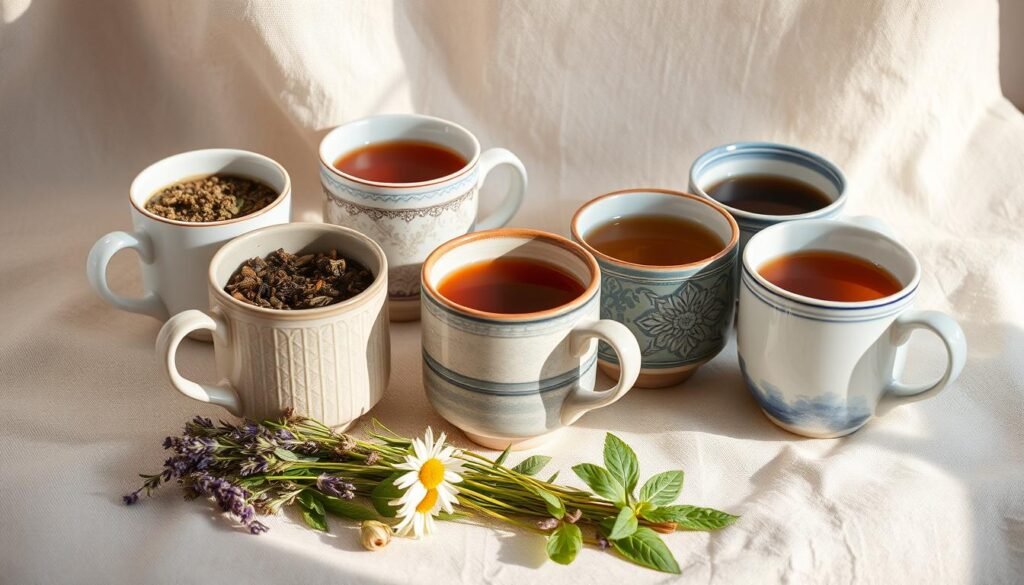
- Spearmint: Choose this if you’re managing high androgens or PCOS symptoms like acne, hair changes, or weight gain. Routines often aim for up to three cups daily.
- Chamomile: Sip in the evening to downshift, ease stress, and improve sleep quality—key steps for healthier cortisol rhythms.
- Green tea / matcha: Drink earlier in the day for antioxidants like EGCG and a potential nudge toward better insulin sensitivity and steadier post-meal energy.
- Nettle: Use to support blood sugar balance and calm inflammation, which can help fatigue, breakouts, and cycle irregularities common in PCOS.
- Marjoram: Explore this gentle option; small studies reported reduced fasting insulin and possible effects on estradiol and cortisol when used twice daily.
Practical tips: Rotate cups by time of day—metabolic support in the morning, stress relief at night. Track energy, sleep, and cycle changes over 2–4 weeks. If you take meds or have hormone-sensitive conditions, check with your clinician before regular use.
How tea supports hormone balance under the hood
Small daily choices ripple across systems. A single cup can influence metabolism, stress response, and sleep — three things that shape hormone and hormone levels in your body. You’ll learn the main pathways and practical signals to watch as you add calming rituals to your routine.
Insulin and blood sugar: why balanced sugar levels help hormone balance
Steady insulin keeps appetite, energy, and cycles more predictable. Antioxidants like EGCG in green tea have been studied for effects on insulin sensitivity, which is relevant to PCOS and insulin resistance.
Keeping blood sugar levels steady reduces spikes that can ripple through other hormone systems.
Cortisol and stress: adaptogenic and calming effects to steady hormone levels
Adaptogenic herbs such as ashwagandha have shown cortisol-lowering effects in small trials. Less stress means fewer cortisol peaks and fewer next-day crashes.
Use a calming cup and a short breath practice to blunt stress and support balanced hormone action.
Sleep and mood: supporting melatonin rhythms and emotional balance
Better sleep aligns melatonin and cortisol, which helps mood and metabolic health. Improved rest can boost insulin sensitivity and reduce late-night cravings.
- Why it matters: small changes—one less spike or one more hour of sleep—add up.
- Timing: uplifting tea earlier; soothing blends at night.
- Watch for signs: steadier afternoon energy, fewer cravings, easier sleep.
How to drink your hormone-balancing teas for best results
Choosing the right format helps you stick to a routine that supports sleep, sugar control, and stress management. Match the form to your day so the ritual stays simple and useful.

Pre-bagged tea: Use it when you need speed. Pick plant-based, plastic-free bags to avoid microplastics and keep your cup cleaner of contaminants.
Loose-leaf: Brew this when you want maximum flavor and possibly stronger active compounds. Use an infuser and a timer to get a steady steep each time.
Instant tea: Handy on busy days or travel, but understand it can lose delicate aromatics and some polyphenols during processing.
Crystallized tea: Keep packets in your gym bag or car. They dissolve in hot or cold water and make a fast, portable drink when you need a quick pick-me-up.
- Build a simple routine: morning green tea for metabolic support, afternoon nettle or spearmint, and chamomile at night.
- Sip slowly and consistently—regular use often shows clearer benefits than sporadic cups.
- Read labels for sourcing and purity and log what you drink and how you feel to find your one best approach.
- Coordinate timing with meals, meds, and hydration to protect sugar balance and overall health.
Who should be cautious when using hormone-influencing herbs
Not all natural options are safe for every body—know when to pause and ask a clinician. The safest ways to use plants that alter hormone action are uncertain and vary by person. That means you should be careful if you have specific life stages or health conditions.

Pregnant, breastfeeding, trying to conceive, or on hormone therapy
Check with your clinician first. Even common herbs and tea can change hormone levels and affect pregnancy or fertility treatments.
Thyroid, autoimmune, mental health, or endocrine disorders
If you have thyroid disease, autoimmune problems, mental health conditions, or other endocrine issues, some herbs may cause unexpected effects. Ashwagandha and black cohosh have reports of adverse events in sensitive people.
- Keep a running list of everything you take—supplements, tea, and meds—and share it with your provider.
- Start low and go slow; note any side effects in sleep, mood, digestion, bleeding, skin, or blood markers.
- Avoid stacking several hormone-influencing herbs at once; evaluate one change at a time.
- Choose reputable sources and avoid products that promise quick fixes for hormonal imbalances or PCOS.
- Prioritize safety and use plants as a supportive tool alongside professional care, not as a replacement.
Remember: Reports exist of rare but serious side effects. If you see worrying symptoms, stop use and seek medical advice to protect your long-term health and balance.
Make tea part of a balanced routine for hormone health
A warm cup can anchor small lifestyle changes that support steady insulin and calmer cortisol. Use tea as a cue to tune the rest of your day: food, movement, sleep, and a cleaner environment all help keep hormones in better balance.
Diet upgrades: protein, healthy fats, fiber, and fewer added sugars
Choose meals that steady blood sugar. Lean protein, healthy fats, and fiber slow glucose spikes and support insulin resistance improvements over time.
Limit added sugars and high-refined carbs so your tea routine boosts, not undoes, metabolic goals.
Gentle movement and stress management to reduce cortisol
Build simple movement you enjoy—walks, yoga, or light strength sessions—to help insulin use and weight control.
Add short breathwork or a calm cup before bed to reduce stress and improve sleep, which supports hormone balance.
Limit endocrine disruptors in plastics, fragrances, and household products
Tidy your environment: choose glass or stainless, skip fragrance-heavy cleaners, and reduce plastic food contact to lower exposure that can affect hormone balance.
- Lean on green tea earlier in the day to nudge metabolism; pick calming blends at night to cue sleep.
- Hydrate steadily and use a warm cup as a wind-down cue to help sleep and steady sugar levels.
- If you have PCOS, focus on insulin resistance, stress reduction, and consistent sleep to ease symptoms and reduce weight gain pressure.
Conclusion
, A simple cup can become a steady habit that nudges your body toward better balance and clearer daily rhythms.
Evidence suggests green tea has the strongest metabolic signal while chamomile helps calm and improve sleep. Small trials—like marjoram in PCOS—show potential insulin benefits, but effects are modest and need more study.
Use tea in a routine with nourishing meals, gentle movement, and regular rest. Track energy, mood, and sleep to see changes and start low and slow.
Remember: there’s no one best tea for everyone. Talk with your clinician if you have PCOS, take meds, or have hormone-sensitive concerns such as testosterone issues. Then brew a cup and make the ritual work for your life and health.
FAQ
What are the best teas to help calm your hormones?
You can try spearmint, chamomile, green tea (or matcha), nettle, and marjoram. Each targets different pathways — spearmint can lower androgen activity, chamomile helps reduce stress and improve sleep, green tea supports insulin sensitivity, nettle helps blood sugar and inflammation, and marjoram may influence cortisol and estradiol. Pair them with diet and lifestyle changes for clearer effects.
Why might drinking these teas make sense for your hormones right now?
Many people face sleep issues, higher stress, and rising weight gain linked to insulin resistance and cortisol. These brews offer calming compounds, antioxidants, and mild insulin- or cortisol-supporting actions that can help you manage symptoms while you adopt longer-term changes like better diet, movement, and sleep.
How do these teas actually affect insulin, cortisol, and estrogen-like activity?
Compounds in these drinks can improve insulin sensitivity (green tea catechins), exert calming or mild adaptogenic effects that lower cortisol (chamomile, marjoram), and influence androgen or estrogen-like pathways (spearmint may reduce testosterone effects). Effects are usually modest and additive to other habits.
What should you realistically expect from drinking these brews?
Expect gentle, supportive benefits — better sleep, reduced stress, modest improvements in blood sugar control, and symptom relief for PCOS-related acne or hirsutism over weeks to months. Tea is not a cure; combine it with dietary changes, exercise, and medical care when needed.
How should you prepare and drink these teas for the best results?
For potency, steep loose-leaf or properly brewed bags according to instructions (usually 3–10 minutes depending on the herb). Drink regularly — 1–3 cups daily is common. Matcha or high-quality green tea works best for antioxidants; chamomile is ideal before bed. Avoid excess sugar and pair tea with balanced meals to protect blood sugar levels.
Are there differences between pre-bagged, loose-leaf, instant, and crystallized options?
Yes. Loose-leaf often gives the richest flavor and most active compounds. Pre-bagged is convenient; choose non-plastic bags to avoid microplastics. Instant and crystallized options offer speed but may be lower in beneficial nutrients and higher in additives or sugar — read labels.
Who should be cautious about using these hormone-influencing herbs?
If you’re pregnant or breastfeeding, trying to conceive, on hormone therapy (like birth control or HRT), or have thyroid, autoimmune, endocrine, or serious mental health conditions, check with your clinician. Some herbs can interact with medications or affect fertility and thyroid function.
Can these teas help with PCOS symptoms specifically?
Yes, certain brews like spearmint have evidence for reducing androgen-related symptoms in PCOS, and green tea may help with insulin resistance often seen in PCOS. Still, results vary; use tea alongside proven strategies: diet, exercise, and medical guidance.
Are there side effects or risks from drinking these teas regularly?
Side effects are uncommon at moderate intake but can include digestive upset, sleep changes (if caffeinated green tea is consumed late), or herb–drug interactions. High intakes of some plants could affect hormone-sensitive conditions. Start slowly and consult your provider if you take medications.
How long until you might notice changes in mood, sleep, or weight?
Some people notice improved sleep or reduced stress within days to weeks. Changes in blood sugar, acne, or menstrual symptoms may take several weeks to months. Consistency plus diet and lifestyle shifts speeds meaningful results.
Can tea replace medical treatment for hormonal imbalance?
No. Tea can complement treatment but shouldn’t replace prescribed therapies for conditions like PCOS, thyroid disease, or diabetes. Use tea as part of a broader plan and keep regular care with your healthcare provider.
How can you make tea part of a balanced routine for hormone health?
Drink tea alongside a diet higher in protein, healthy fats, and fiber and lower in added sugar. Add gentle movement, stress management (meditation, breathwork), and better sleep habits. Also reduce exposure to endocrine disruptors in plastics and personal-care products to support overall balance.