Did you ever wonder why PMS or perimenopause feels worse some months? Many women assume those symptoms are “normal.” Frequent high-sweet eating can raise insulin, lower SHBG, and upset estrogen-progesterone balance. You can learn how small shifts ease those swings.
You’ll discover how steady blood sugar helps protect your hormonal health across the day. We’ll name the key players—insulin, estrogen, testosterone, thyroid hormones, plus cortisol—and show how your body reacts at different levels.
Ready for simple, real-life tools? Start with label reading and smarter swaps. For a nutrition plan that fits life, check this nutrition blueprint for women over 35 to get practical steps you can use today.
Why your 30s and 40s are a pivotal time to tame sugar for hormonal health
In your 30s and 40s, everyday food choices have an outsized effect on how you feel from morning to night. Small, repeated treats can raise insulin and lower SHBG, which may amplify PMS-like symptoms such as bloating, mood shifts, and breakouts.
Your body also changes the way it stores fat. Visceral adipose tissue makes extra estrogen, which can tilt hormone levels and raise metabolic risk. That makes preventing early insulin resistance a real priority for long-term health.
- Stabilizing blood sugar curbs cravings and energy dips throughout day.
- Small, regular meals with protein, fiber, and healthy fats help your cells respond to insulin better.
- Better sleep and stress management reduce cortisol spikes and ease hormonal imbalance.
- Simple swaps in common foods protect weight and metabolic markers without strict dieting.
If bloating, sleep changes, or sudden weight shifts show up, tightening your diet and daily rhythm often leads to quick, noticeable relief. These practical steps protect your body now and through perimenopause and beyond.
From blood sugar to hormones: how insulin shapes your day-to-day balance
When insulin surges, it redirects glucose into muscle, fat, and liver cells—shaping how you feel hour to hour. This shift affects energy, appetite, and short-term hormone signals that influence mood and bloating.
Insulin spikes, blood sugar swings, and what happens in your cells
Insulin helps shuttle glucose from your blood into cells. Repeated sharp spikes make your body less responsive over time and raise the risk of resistance.
Glycemic load versus glycemic index: practical ways to steady energy
The Glycemic Index shows speed; glycemic load adds portion size. Aim for lower GL choices (about 45 or less) to prevent big rises and long crashes.
Meal timing and smaller, balanced meals to support insulin sensitivity throughout the day
Smaller, frequent meals—paired with protein, fats, and fiber—slow absorption and blunt spikes. Research finds up to six modest meals can improve insulin sensitivity and steadier energy.
- Add a protein source at breakfast to anchor the day.
- Combine fiber-rich carbs with healthy fats to avoid rapid climbs in blood sugar.
- When you have sweets, pair them with protein or fat to slow absorption.
Sugar and Hormones: estrogen, testosterone, thyroid, and adrenal connections
Fast rises in blood fuel biochemical changes that affect estrogen, testosterone, thyroid, and stress systems.

Estrogen dominance, SHBG changes, and why PMS and bloating can worsen
Higher sugar intake often raises insulin, which can lower SHBG. Lower SHBG frees more estrogen and testosterone, and that can worsen PMS, bloating, and breast tenderness.
Studies link sweetened drinks to higher estrogen in premenopausal women, so small swaps matter for long-term hormone levels.
Insulin, testosterone, and PCOS risk in women
When insulin stays high, cells become less responsive and the body makes more androgens. That pattern can raise testosterone and increase PCOS risk.
More free hormones mean irregular cycles and skin changes. Stabilizing insulin helps rebalance levels and reduce symptoms.
Cortisol, stress, and the adrenal response to sugar spikes
Quick glucose swings act like a stressor and trigger cortisol bursts. Chronic cortisol can fuel weight gain, anxiety, and worse sleep.
Thyroid function, metabolic syndrome, and blood sugar resistance
Insulin resistance often coexists with thyroid dysfunction and metabolic slowdowns. Visceral fat adds estrogen, which feeds further imbalances.
Calmer blood sugar rhythms help recenter your body, ease mood swings, and reduce monthly symptoms. Small steps—less liquid sugar, more fiber and protein—cut the sugar hormonal ripple across systems.
“Lower SHBG means more free hormones circulating, skewing hormone levels and amplifying symptoms you feel.”
When sugar spirals: insulin resistance, metabolic syndrome, and the weight gain link
When refined treats become routine, you may begin a slow slide toward insulin resistance and related health risks.

Early symptoms you might notice: cravings, energy crashes, mood swings
If sweets show up often, you may feel intense cravings and big energy drops after meals. These are common early symptoms of shifting metabolism.
Unexplained mood swings and afternoon crashes are warning signs. Noticing them lets you act before patterns harden.
How visceral fat and fat cells’ signaling can tilt hormone levels
Fat stored around the belly does more than add size. Abdominal adipose tissue releases estrogen and inflammatory signals that change hormone levels and make blood sugar harder to control.
That altered signaling raises cardiometabolic risk and increases chances of prediabetes or type diabetes over time.
- If sugar keeps climbing, your body may drift toward insulin resistance with more frequent crashes and cravings.
- Cutting back on liquid sugar and ultra-refined sweets quickly calms spikes and steadies your day.
- Simple food upgrades—more fiber, smarter snacks, balanced meals—help reverse resistance and ease imbalances.
Build balanced meals to prevent sugar spikes and support hormone levels
Build meals that keep your blood stable so your body runs smoother all day. Small tweaks to the foods on your plate slow glucose absorption and give steadier energy throughout day.

Your plate: protein, healthy fats, fiber-rich carbs for steadier hormone signaling
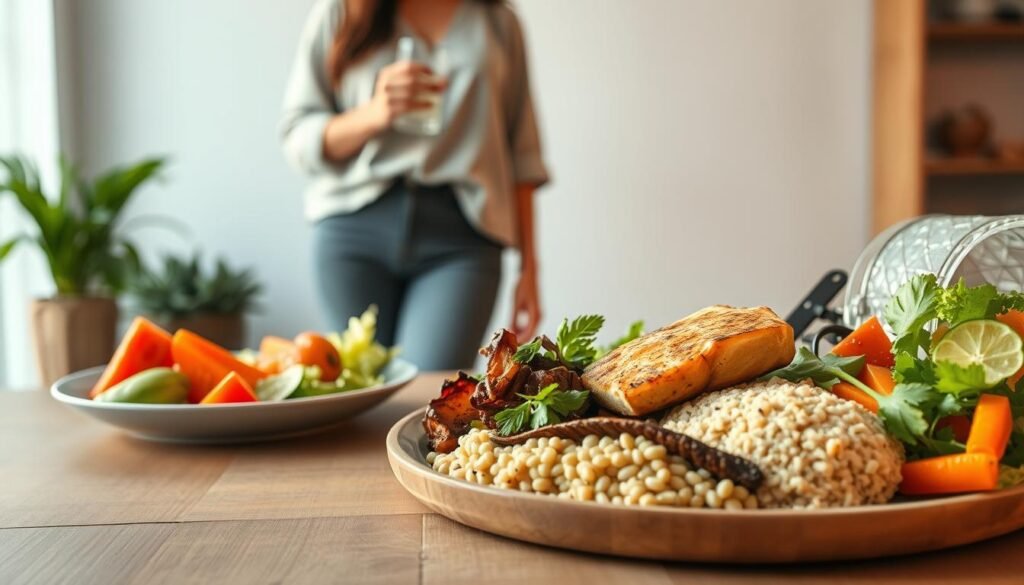
Center meals on a protein source with fiber-rich carbs and healthy fats. This trio blunts rapid rises, supports better hormone levels, and keeps you full longer.
Low-GI and low-GL swaps you can make today
Choose lower glycemic load options (aim near 45) and watch portions. Swap refined grains for whole grains, beans, berries, or sourdough to reduce spikes without strict restriction.
What to drink: water first, skip sugary beverages, smart smoothie tips
Start with water and skip sweet drinks. If you blend a smoothie, add protein and fats and bulk with greens to prevent big rises.
- Build each plate around protein, fiber-rich carbs, and healthy fats to blunt sugar spikes and support hormones.
- Choose low glycemic load foods and mind portions for practical blood sugar control.
- Use simple swaps—ancient grains, beans, berries, and sourdough—to stay satisfied without the crash.
- Keep balanced snacks handy so you stay steady throughout day and avoid urgent cravings.
- Start mornings with protein to anchor energy and reduce mid-afternoon dips.
Cravings, added sugars, and sweeteners: realistic strategies that work
Cravings often arrive suddenly, but simple pairing tricks can stop a spiral fast. Use small, doable moves so you stay consistent and feel better today.

What to do when a craving hits
Have the treat with a bit of protein and some healthy fats. Adding fiber or a handful of nuts slows absorption and keeps you full.
Reading labels: keep added sugar under 50g per day
Scan the “Added Sugars” line and pick items with about 10g or less per serving to manage overall sugar intake. This habit lowers spikes that can lead insulin to rise and reduce future imbalances.
Real sugar vs non-nutritive sweeteners
Low-calorie sweeteners like stevia or monk fruit are reasonable in drinks that would otherwise be straight sugar. Real-sugar treats can work too when you portion them and pair with yogurt or nuts.
- Keep lower-glycemic load snacks ready to avoid mid-day dips.
- Avoid all-or-nothing thinking; steady changes protect long-term health.
- Notice patterns: missed meals often trigger stronger urges later in the day.
Your decade-by-decade plan: navigating perimenopause and menopause transitions
A gentle decade-by-decade strategy helps you ride perimenopause and menopause with fewer surprises. As cycles shift, small routines around meals, sleep, movement, and stress protect mood and metabolic balance.
In your 30s to early 40s: cycle-aware nutrition, stress, sleep, and movement
Focus on steady meals that keep blood sugar steady throughout day. Smaller plates with protein, fiber, and lower-GL carbs blunt cravings and reduce monthly symptom flare-ups.
Plan meals around your cycle: add more protein and fiber in the luteal phase to ease mood swings and cravings. Prioritize sleep and short daily movement to cut stress responses.
Late 40s and menopause: easing mood swings, hot flashes, and weight shifts
Balance your plates and keep movement consistent to manage weight and hot flashes. Choose lower-GL carbs at dinner to support better overnight recovery and sleep quality.
Build calming routines: earlier wind-down, morning light exposure, and gentle breathwork reduce stress signals and help the body find balance.
- Keep sweets modest and pair them with protein to limit rapid rises.
- Aim for consistent meal timing each day to steady appetite and sleep.
- Track symptoms so you can fine-tune food, movement, and bedtime rituals over time.
For a full approach that ties daily fitness to these steps, see this foundations of physical fitness to support your plan as the years change.
Personalization and tools: CGMs, supplements, and lifestyle habits
Real-time tracking helps you see which choices send your levels up or down within hours. A continuous glucose monitor (CGM) shows your blood response after a meal so you can tweak portions, timing, and pairings that stabilize energy.
Using a continuous glucose monitor to map your responses
A CGM reveals which breakfasts, snacks, or dinners cause sharp blood rises. Use trends to pick a best morning meal, an ideal pre-workout snack, and a calmer evening plate.
When you test, change one variable at a time. That makes it easier to link a food to a spike rather than guessing.
Evidence-informed helpers: berberine, cinnamon, fiber, probiotics, vitamin D
Discuss supplements with your clinician before starting. Research shows berberine can match metformin for some people with prediabetes and may improve insulin resistance.
Add soluble fiber, cinnamon, probiotics, and vitamin D to support gut markers, lower inflammation, and boost insulin action. These work best paired with sleep, movement, hydration, and stress care.
- Try one test today: swap a carbohydrate for a fiber-rich option and watch the CGM trend.
- Track non-scale wins—better energy, fewer afternoon dips, calmer appetite—to see hormone changes.
- Keep what works; tweak what doesn’t to personalize your plan over time.
Conclusion
Changing one meal or snack often gives faster wins than a complete overhaul. , Small, steady swaps cut sugar spikes and ease strain on insulin pathways that can lower SHBG and raise estrogen over time.
Keep it simple: center meals on protein, fiber-rich carbs, and healthy fats. Drink water first, pick lower-GL choices, and watch portions to steady blood sugar and reduce weight gain risk.
Use tools like a CGM, or discuss supplements such as berberine, cinnamon, fiber, probiotics, and vitamin D with your clinician. Improve sleep, move daily, and reduce stress so changes last.
You don’t need perfection—start with one swap today and build from there. You’ve got this.
FAQ
How does refined sweet intake affect my hormones in my 30s and 40s?
Consuming refined sweets frequently can cause repeated blood glucose spikes and higher insulin release. Over time this reduces insulin sensitivity, which influences estrogen, testosterone, thyroid signaling, and can worsen PMS, bloating, and midsection weight gain. Focus on whole foods, protein at meals, and healthy fats to reduce frequent spikes and protect hormonal balance.
Why are my 30s and 40s a critical period for improving metabolic and hormonal health?
In these decades your metabolism and reproductive hormones naturally shift. Lifestyle factors such as diet, stress, sleep, and movement have a larger impact now. Small, consistent changes — balanced meals, regular activity, and better sleep — help maintain insulin sensitivity and keep hormones like estrogen and cortisol in better balance as you age.
What happens in my body when blood glucose and insulin surge?
Rapid increases trigger insulin to move glucose into cells. Repeated surges cause cells to respond less effectively, creating resistance. That drives chronic inflammation, alters fat-cell signaling, and shifts hormone production. You may notice fatigue, cravings, and mood swings as a result.
How do glycemic load and glycemic index differ, and which should I use?
Glycemic index rates a food’s impact per serving; glycemic load accounts for typical portion size. GL is more practical for day-to-day choices because it reflects real meals. Aim for lower-GL meals by pairing carbohydrates with protein, fiber, and fats to steady energy and hormones.
How can meal timing help improve insulin sensitivity throughout the day?
Eating smaller, balanced meals every 3–4 hours helps prevent large peaks and crashes. Include protein and healthy fats with each meal, avoid long gaps that trigger intense cravings, and consider a consistent eating window to support circadian and metabolic rhythms.
How does high sweet intake affect estrogen, testosterone, thyroid, and adrenal function?
Excessive refined carbs raise insulin, which can increase ovarian androgen production and lower SHBG, raising free testosterone and boosting PCOS risk. Elevated insulin and inflammation also disrupt thyroid conversion and interact with cortisol, making stress responses and mood swings worse.
Can cutting back on sweets reduce PMS, bloating, or menstrual symptoms?
Yes. Lowering refined carbs and refined sweet foods can reduce insulin-driven estrogen dominance and inflammation. That often eases bloating, cramping, and mood shifts. Pair dietary changes with sleep and stress reduction for better results.
How do cravings, energy crashes, and mood swings signal early insulin resistance?
Frequent intense cravings, afternoon energy dips, and irritability after meals suggest your body is struggling to keep glucose steady. These symptoms appear before labs change and are useful early warning signs to adjust food choices and habits.
What role does visceral fat play in hormonal imbalance?
Visceral fat is metabolically active and releases inflammatory signals and hormones that worsen insulin resistance. That shifts overall hormone balance, promoting weight gain and making it harder to regulate estrogen, testosterone, and cortisol.
What should I build on my plate to support steady hormones?
Base meals on lean protein, fiber-rich carbohydrates (vegetables, legumes, whole grains), and healthy fats like olive oil, avocado, nuts, and seeds. This mix slows glucose absorption, curbs cravings, and supports steady hormone signaling.
What easy swaps lower glycemic load right now?
Swap white bread for whole-grain or legume-based options, replace fruit juice with whole fruit, choose quinoa or barley over white rice, and add beans or lentils to meals. Small swaps cut overall glycemic load without drastic dieting.
What should I drink to protect my metabolic and hormonal health?
Water is your best choice. Avoid sugary beverages and limit sweetened coffees and teas. If you make smoothies, add protein and fiber, avoid fruit-only blends, and watch portion sizes to prevent large glucose spikes.
How can I handle sweets cravings without derailing progress?
When a craving hits, pair a small portion with protein and healthy fat — for example, a square of dark chocolate with almonds or yogurt with berries and chia. That combo blunts the blood glucose rise and keeps you satisfied longer.
How do I read labels to keep added sugars in check?
Look at the nutrition facts for “added sugars” and aim to stay under 50 grams per day, focusing on whole foods. Watch for hidden sweeteners in sauces, bread, and condiments, and choose products with minimal ingredient lists.
Are non-nutritive sweeteners better for hormonal health than real sugar?
Low-calorie sweeteners can reduce calorie and glucose load, but they may alter gut microbes or appetite regulation for some people. Use them sparingly and prioritize whole-food patterns that naturally provide balance.
What dietary focus should I have in my 30s and early 40s to stay cycle-aware?
Support regular cycles with consistent protein, iron-rich foods as needed, regular movement, stress management, and sufficient sleep. Track how different foods affect your energy and symptoms and adjust carbs around activity and cycle phase.
How can I ease weight shifts and hot flashes in late 40s and menopause?
Emphasize strength training, adequate protein, and healthy fats, and limit refined carbs to reduce insulin-driven weight gain. Address sleep and stress to lower cortisol, which helps with hot flashes and mood stability.
Should I consider a continuous glucose monitor (CGM) to personalize choices?
A CGM can reveal how specific foods, portions, and activities affect your glucose responses. Paired with a food and symptom log, it helps you tailor meals to minimize spikes and improve hormonal outcomes.
Which evidence-backed helpers might improve insulin sensitivity?
Some supplements show promise: berberine and cinnamon can modestly improve glucose control, soluble fiber supports gut and metabolic health, probiotics help some individuals, and vitamin D supports overall metabolic function. Talk with your clinician before starting supplements.