Curious which scale will actually help you track real progress, not just weight?
You want clear answers and tools that fit your life. This guide breaks down top models like Etekcity, Arboleaf, QardioBase X, Withings Body Cardio, Withings Body Smart, and the HumeHealth Body Pod so you can compare features fast.
Expect an easy list of products, key metrics, and real app behavior so you can match a model to your goals. We explain which readings matter most—such as body fat and muscle trends—and how often to weigh for useful results.
Wi‑Fi syncing, rechargeable batteries, carpet support, and segmental readings can change how useful a scale is in daily life. You’ll learn which features boost accuracy and which only add clutter.
Why you’re here: finding smart scales that track more than weight
You’re here to find a scale that tells you more than just pounds on the display. That extra information helps you judge progress and make choices about training, diet, and recovery.
User intent at a glance: compare, verify accuracy, and buy with confidence
Compare models on which measurements they report and how they sync to apps. Look for clear displays and multi-user profiles so everyone in your home can track privately.
Key metrics that matter: body fat percentage, muscle mass, water percentage, bone mass, bmi
Focus on metrics you’ll actually use week to week: body fat percentage, muscle mass, water percentage, bone mass, and bmi. These readings pair with weight to show trends rather than one-off swings.
- Understand how measurements are estimated and what causes day-to-day variation.
- Use consistent timing and placement to improve measurement stability.
- Expect app integrations that store trends and let you share information with providers if needed.
Editor’s quick picks: best smart bathroom scales right now
To save you time, we tested and ranked top bathroom scales by accuracy, features, and price.
Top overall value: Etekcity HR Smart Fitness Scale — excellent balance of metrics, Wi‑Fi, rechargeable battery, and third‑party app sync. Great for most households.
Budget Wi‑Fi pick: Arboleaf Smart Fitness Scale — attractive design, 14 tracked metrics, and clear healthy ranges that help you interpret trends.
Precision body fat pick: QardioBase X — top choice when accurate body fat readings matter. Works on carpet and adds a safe pregnancy mode.
Cardio insights pick: Withings Body Cardio — offers Pulse Wave Velocity and on‑scale heart rate for vascular tracking; premium features and rechargeable design.
Starter-friendly pick: Withings Body Smart — focused on weight and BMI, seamless app links, and wide compatibility for easy setup.
Segmental alternative to DEXA: HumeHealth Body Pod — handheld bar for arms, legs, and torso mapping; deep metrics for athletes but no Wi‑Fi and limited pregnancy mode.
- Quick shortlist to match goals, budget, and preferred features.
- Each pick lists trade‑offs so you avoid surprises after purchase.
Etekcity HR Smart Fitness Scale: accurate, Wi‑Fi connected, 14 metrics
For families that need dependable trends and easy app sync, this model stands out. It balances a useful feature set and a price under $100 so most households get real value.
The Etekcity HR tracks 14 key measurements beyond simple weight, including body fat, muscle mass, water percentage, bone mass, and heart rate via BIA. The results show on a customizable color display that highlights goal progress at a glance.
Why it stands out
The rechargeable battery cuts waste and keeps the scale ready. Built‑in Wi‑Fi syncs your weigh‑ins even when your phone is away, while Bluetooth offers quick pairing for on‑the‑spot updates.
Best for
This unit is ideal if you want reliable daily weight and trend lines without a steep price. Multi‑user profiles prevent profile overlap, so everyone in your home can track separate progress.
Connectivity and app sync
The companion app adds charts, context, and goal tracking. It also links to popular fitness apps, so your metrics flow into your existing health ecosystem. Overall, the Etekcity HR blends clear readings and smooth syncing into a wallet‑friendly package.
Arboleaf Smart Fitness Scale: affordable Wi‑Fi plus clear health ranges
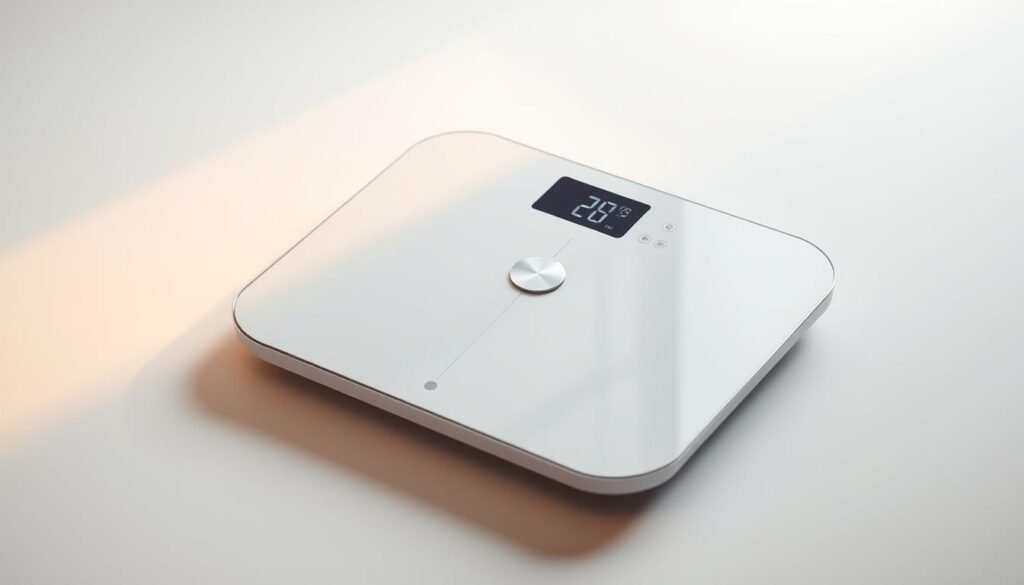
If you want dependable Wi‑Fi syncing on a budget, the Arboleaf is worth a look. It packs 14 tracked metrics into a clean design and often sells for under $50.
Highlights: metrics, users, and design
Tracks essentials such as weight, BMI, body fat, water percentage, muscle mass, protein, and more.
Multi‑user support lets up to eight users keep separate profiles so data stays personal.
- Wi‑Fi plus Bluetooth helps your weigh‑ins sync even if your phone is not nearby.
- The companion app displays where each reading falls against healthy ranges for quick context.
- Integrates with Apple Health, Google Fit, and Fitbit; does not support MyFitnessPal or Samsung Health.
- At this price, you get reliable daily tracking and a neat on‑scale look for most bathrooms.
Good to know: gaps and safety
The Arboleaf lacks heart rate and a pregnancy/weight‑only mode. It uses BIA, so it’s not safe for people with pacemakers.
“Great value for Wi‑Fi syncing and clear health ranges at a low price.”
Bottom line: If you want an affordable smart scale that tracks useful metrics and supports multiple users, Arboleaf gives strong value. Just check app compatibility and safety notes before you buy.
QardioBase X: when accurate body fat readings are your priority
If precise fat tracking is your priority, the QardioBase X aims to be the benchmark. It focuses on delivering repeatable, clinical-style body fat percentage and related metrics you can trust.
What you get: highly accurate body fat readings, Wi‑Fi and Bluetooth syncing, carpet support, and 14 tracked metrics including heart rate. The unit syncs to Apple Health, Google Fit, MyFitnessPal, and Samsung Health so your data stays centralized.
It includes pregnancy and implanted-device safe modes so you can still track weight while disabling BIA. Up to eight users can keep separate profiles, which helps trainers, families, and clinics manage multiple trajectories.
Who it fits
This scale is best for data‑driven users and professionals who value precision over a slim footprint. Expect slightly slower measurements and a bulkier design, which are fair trade‑offs for more accurate readings.
“If your main goal is to validate fat loss changes over time, the QardioBase X fits the brief.”
- Price: about $129.99 in the US.
- Pros: repeatable body fat results, carpet-friendly, broad app support.
- Cons: larger footprint, slower measurement speed.
Withings Body Cardio: arterial health, heart rate, and premium design
If cardiovascular insights matter to you, this premium scale brings vascular metrics into your daily routine.
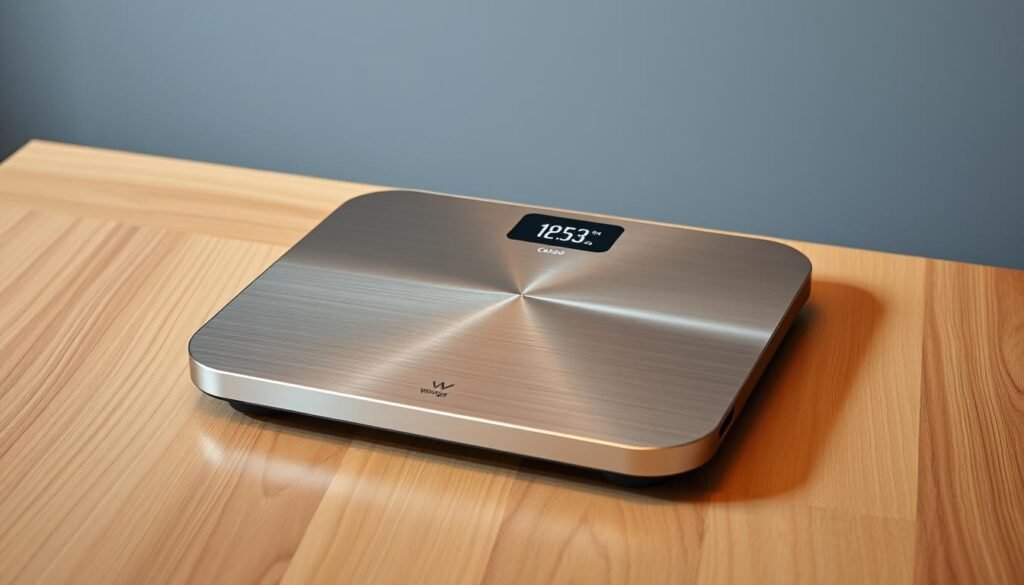
The unit measures weight, fat, water, bone mass, and on‑scale heart rate. It also estimates arterial health via Pulse Wave Velocity in supported regions.
Unique perks
Pulse Wave Velocity gives an arterial health estimate that can add context to your fitness plan.
The rechargeable battery and low‑profile design make it a durable bathroom companion.
- Wi‑Fi and Bluetooth connectivity for automatic logging.
- Weather display on the top of the unit for a quick glance before you leave.
- The Withings app organizes trends and links to other health platforms.
Trade‑offs
The unit costs more than most, so price is a clear downside if you only need basic metrics.
There is no pregnancy mode to disable BIA, and heart readings can vary between tries. Arterial features may need several days to settle into stable readings.
“A refined pick if you want cardio-centric insights alongside reliable weight tracking.”
Withings Body Smart: the streamlined, app‑friendly starter scale
The Withings Body Smart focuses on weight and clear trend lines so you can build a routine without distraction.
Essentials done right: it reports weight and bmi, syncs via Wi‑Fi and Bluetooth, and links to over 100 third‑party apps.
The on‑scale display shows healthy ranges and local weather so your morning check is quick and useful.
Why this is a good starter pick
If you want basics that just work, Body Smart keeps things simple. Up to eight users can share the device, and automatic recognition assigns readings to the right profile.
- Reliable Wi‑Fi syncing that logs weigh‑ins even when your phone is away.
- Plays well with many apps, so your metrics feed into your existing health tools.
- Clean app dashboards make trends easy to follow and goals easy to track.
Who should buy it: you, if you want an affordable, fuss‑free scale that focuses on weight and BMI and grows into a broader health setup through app integrations.
“A simple, reliable starter that keeps your daily routine friction‑free.”
HumeHealth Body Pod: segmental analysis as a DEXA‑style alternative
If you need limb-level detail, the HumeHealth Body Pod maps how mass shifts across arms, legs, and trunk.
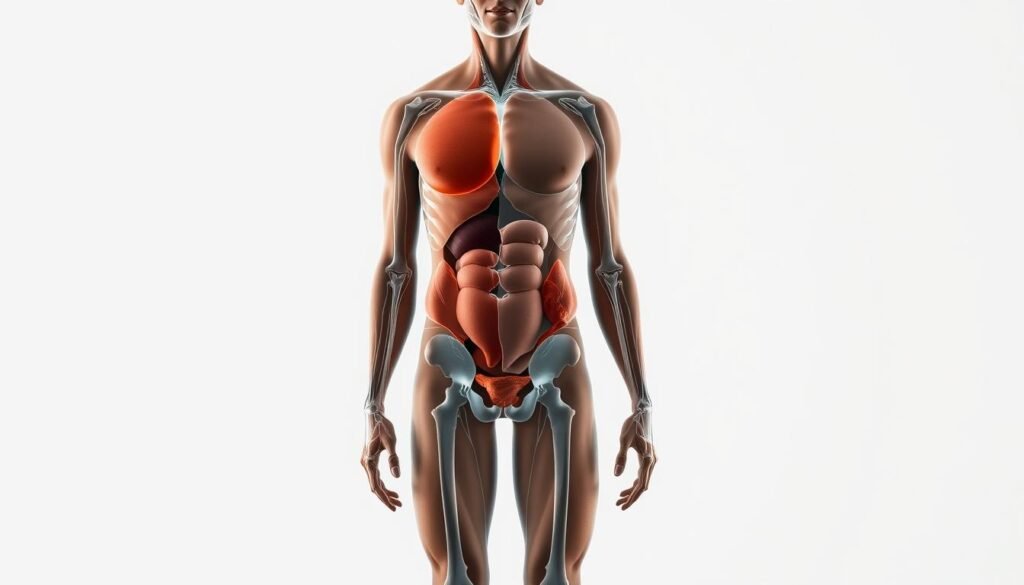
The device uses BIA and a handheld scanner bar to estimate fat and muscle per limb. That creates a DEXA-style view at home and helps you see where body fat drops and muscle mass rises.
How it measures
Handheld bar sends current through limbs while the app collects readings. It reports 17 key measurements and turns raw numbers into clear graphs.
Ideal for athletes
You get segmental reports that trainers can use to tune strength work and recovery. The app groups measurement data into visuals so you act on trends, not guesses.
- Pro: DEXA-like limb mapping and detailed reports.
- Con: No Wi‑Fi or onboard storage; Bluetooth syncing can be slow.
- Note: No safe pregnancy or implanted-device mode.
“If you skip frequent DEXA scans, this unit can pay for itself while guiding targeted training.”
Price: About $229 in the US. Consider consistent posture and setup for reliable measurements.
How accurate are body composition readings on bathroom scales?
Every bathroom scale gives numbers, but not every reading tells a useful story. You can use these devices to track trends, but single-day swings often reflect hydration or timing rather than true change.
BIA vs. multi‑frequency BIA
BIA basics and what multi‑frequency adds
BIA sends a tiny electrical current through you to estimate fat, muscle, water, and bone density. Multi‑frequency models sample at different speeds and better separate tissues, which improves precision and makes a scale accurate more often.
Segmental measurements matter
Why limb and trunk readings help
Segmental systems add a handheld path or extra electrodes so upper and lower limbs are measured separately. That reduces assumptions and gives clearer limb vs. trunk trends for targeted training.
Consistency tips for reliable readings
Timing, hydration, placement
Weigh at the same time each day, on a level surface, and note hydration because water shifts change impedance. Use Wi‑Fi models when possible; they sync more reliably than Bluetooth‑only units and cut sync loss variability.
“Use trends over weeks, not single measurements, to judge fat loss and muscle gain.”
- Measure on firm tile, not carpet.
- Log context (exercise, salt, hydration) in your app notes.
- Consider clinical tests if you need medical‑grade accuracy.
Connectivity and apps: Wi‑Fi vs. Bluetooth, and ecosystem compatibility
Daily weigh‑ins only help when the data actually lands in your account. Wi‑Fi scales push readings straight to the cloud, so your trends update even if your smartphone stays in another room. That makes tracking effortless.
Why Wi‑Fi wins for multi‑user homes
Wi‑Fi removes the need to pair a phone every time. It reliably separates profiles and stores data for each user. In tests, Bluetooth-only units sometimes left gaps because the phone needed to be nearby or the reading wasn’t buffered.
Popular integrations
Check which services a scale supports before you buy. Arboleaf links to Apple Health, Google Fit, and Fitbit. QardioBase X adds MyFitnessPal and Samsung Health. Withings works with 100+ third‑party apps, making it easy to route weight, fat, and other metrics into the tools you already use.

- Wi‑Fi: effortless uploads and fewer lost readings.
- Bluetooth: good for travel and quick pairing, but can require your phone nearby.
- Tip: look for clear on‑scale indicators and app notifications that confirm a successful sync and correct user match.
“If you often leave your smartphone elsewhere, pick a Wi‑Fi model to prevent gaps in your data history.”
Modes that matter: pregnancy, athlete, baby, and eyes‑closed
Choosing the right mode makes readings safer and more meaningful for everyday tracking.
Pregnancy / weight‑only mode: turning off BIA safely
Pregnancy or weight‑only modes disable electrical impedance so you can keep tracking weight without passing current through your body.
QardioBase X offers a pregnancy mode and implanted‑device safe options. Note that Withings Body Cardio lacks the pregnancy mode, so choose a different scale if you need BIA off.
Athlete mode: adapted algorithms for trained bodies
Athlete mode tunes algorithms for higher muscle mass and different hydration patterns. This helps improve how the device reports body fat and bone density for active users.
Baby mode and multi‑user detection: easy family tracking
Baby Mode lets you hold an infant and the app subtracts your weight for an accurate reading. Automatic user detection supports up to eight users on many models, keeping data separate for each person.
Eyes‑Closed and practical tips
Eyes‑Closed Mode hides numbers and offers motivational cues so you focus on habits over daily swings.
- Double‑check the app to confirm the mode is active before you step on.
- Modes are small toggles that improve safety and the relevance of measurements.
- Pick a scale that supports the specific mode you need for your life stage.
“Modes are small toggles with big quality‑of‑life gains, especially in busy multi‑user households.”
smart scales with body composition analysis: choosing the right metrics for you
Pick metrics that actually change with your training so the numbers guide action, not distraction. Use a clear set of readings to track real progress instead of chasing every value the app offers. Focus on what you will act on.
Must‑have metrics
Fat percentage, muscle mass, water percentage, and bone mass are the core numbers to watch.
These four metrics show meaningful shifts in body composition over weeks. If you train hard or manage nutrition closely, they help you tweak recovery, hydration, and strength phases.
Nice‑to‑have extras
Heart rate, vascular age, and segmental data add useful context. They help athletes spot imbalances or cardio trends.
- Multifrequency BIA and posture guidance improve small-change tracking.
- Segmental reads highlight limb vs trunk gains for targeted training.
- Pick features that sync to your training app so metrics feed your plan automatically.
Tip: fewer, clearer numbers often beat a crowded dashboard—choose the feature set that keeps you consistent and informed about your health.
Price, deals, and value in the United States
Deals can turn an OK buy into a smart one. You’ll find usable models near $20 and premium units above $150. Match price to how much time you want to spend syncing, reading trends, and managing profiles.
What to expect: budget Bluetooth picks vs. mid‑range Wi‑Fi vs. premium insights
Budget (about $17–$50): many Renpho and GE options fall here. They often use bluetooth only. They track weight and core body metrics but may lack buffering or broad app support.
Mid‑range ($50–$130): expect Wi‑Fi, multi‑user profiles, and smoother syncing to apps. Etekcity and Eufy often sit in this band during sales.
Premium ($150+): add vascular metrics, segmental mapping, rechargeable batteries, and richer displays. These cost more, but they give deeper data and long‑term reliability.
Current standouts: Renpho, Eufy, GE, and Etekcity deal watch
- Renpho: strong budget brand; frequent discounts can push a model to about $17. Great for basic composition tracking and bluetooth syncing.
- Eufy: balanced features, friendly apps, and steady US discounts around $30–$40.
- GE and Etekcity: regular sale prices under list; Etekcity models often land near $19 and add good mid‑range value.
- Arboleaf: often around $23 and a solid bargain when you want Wi‑Fi on a budget.
“If you only need weight and BMI, a discounted starter model may be the best value per dollar.”
Quick buy guide: cheaper picks save money now, but paying a bit more for reliable syncing and better data handling usually pays off for habit building. Consider total cost of ownership—rechargeable batteries and Wi‑Fi convenience cut ongoing costs and sync headaches.
Data privacy and health information: what your scale shares with apps
Connecting a scale to an app is easy; knowing what data the app logs is the part most people miss.
Permissions, user profiles, and secure syncing
Before you link accounts, check what information the app requests. Some platforms share readings to third‑party services like Apple Health or Google Fit. You can often control which integrations receive your metrics.
- Check app permissions: see exactly which data fields leave your account.
- Create separate profiles: keep each person’s readings tagged to the right users.
- Confirm encryption: top brands encrypt data in transit and at rest; verify this in the privacy policy.
- Review sharing defaults: opt in only to apps you trust and disable others.
If you change your smartphone, sign out of old devices and enable two‑factor authentication. Be careful with data exports; they help coaches but contain sensitive body and health numbers.
“Transparent controls and strong passwords keep your history useful and private.”
Conclusion
Now you can choose a scale that turns daily checks into clear progress signals for your body.
Pick the model that fits how you live and train. Etekcity HR wins for overall value. Arboleaf is the budget Wi‑Fi pick. QardioBase X is best for accurate body fat and safe modes.
For vascular insight, consider Withings Body Cardio. For a simple starter, the Withings Body Smart works well. HumeHealth Body Pod helps if you want segmental detail for targeted fitness goals.
Choose Wi‑Fi for effortless syncing, confirm modes for your life stage, focus on the few measurements you will actually use, and keep timing consistent to track trends.
Tip: hunt deals in the US and lock privacy settings so your health data stays secure as you form a daily habit.
FAQ
How accurate are bathroom weight and body fat readings?
Readings from bathroom devices vary. Single‑frequency BIA gives a useful trend but can shift with hydration, recent exercise, and placement. Multi‑frequency or segmental systems are closer to DEXA for muscle and fat distribution. For the most reliable tracking, take measurements at the same time each day—ideally morning—on a hard floor and follow the manufacturer’s guidance.
Which metrics should you prioritize when choosing a device?
Focus on fat percentage, muscle mass, water percentage, and bone mass first. Heart rate, segmental data, and vascular age are helpful extras if you want deeper insight. Pick features that match your goals: weight loss, strength gains, or clinical tracking.
Can you trust the scale’s muscle mass and bone readings?
Devices estimate muscle and bone via bioelectrical impedance models. They track changes well over time, but absolute values can differ from clinical tests. Use the readings to monitor trends rather than one‑time diagnostics.
What’s the difference between Wi‑Fi and Bluetooth syncing?
Bluetooth pairs directly with your phone for nearby syncs; it’s simple and power‑efficient. Wi‑Fi uploads automatically to the cloud so data appears across devices instantly and works better for multi‑user homes. If you want hands‑off syncing, choose Wi‑Fi.
Are there safety concerns for pregnant users?
Yes. Most manufacturers advise disabling impedance measurements during pregnancy and using weight‑only or pregnancy modes where available. Always follow the product manual and consult your healthcare provider for personalized advice.
How do athlete and pregnancy modes change results?
Athlete mode adjusts the device’s algorithm to account for higher muscle mass and lower body fat typical of trained users, improving accuracy. Pregnancy or weight‑only mode turns off BIA so the device reports safe, straightforward weight without electrical impedance.
Will the device work on carpet or uneven floors?
Many models struggle on carpet; readings become inconsistent. Look for carpet‑friendly designs or feet that stabilize the unit. For best results, place the device on a flat, hard surface like tile or wood.
How many user profiles can most devices handle?
Entry models often support 4–8 users, while midrange and premium devices can recognize a dozen or more profiles automatically. Check the product specs if you have a large household.
Do scales sync with Apple Health, Google Fit, or MyFitnessPal?
Many modern devices support integrations with Apple Health, Google Fit, Fitbit, and MyFitnessPal. Verify the product page for confirmed integrations and whether third‑party apps require a separate setup step.
How should you time measurements for consistency?
Measure first thing in the morning after using the restroom and before eating or drinking. Avoid weigh‑ins right after workouts or sauna sessions. Consistent timing reduces daily variability and highlights real trends.
Can you use these devices for clinical bone density testing?
No. Consumer devices estimate bone mass but don’t replace DXA or clinical bone density scans. They’re useful for trend monitoring but not for diagnosing osteoporosis or other conditions.
What privacy concerns should you consider about app data?
Check permissions, data storage location, and whether the app shares information with third parties. Reputable brands use encrypted syncing and let you control sharing with apps like Apple Health. Review the privacy policy before linking accounts.
How often should you replace batteries or recharge the unit?
Battery life depends on model and connectivity. Bluetooth devices can run months on AAA batteries; rechargeable units may last weeks per charge. Look at the spec sheet for expected runtime and choose a power style that fits your routine.
Are premium devices worth the higher price?
Premium models often add multi‑frequency BIA, segmental analysis, superior build, and dependable Wi‑Fi sync. If you need clinical‑grade trend tracking, multi‑user support, or advanced metrics like pulse wave velocity, a higher upfront cost can pay off in data quality and convenience.
Which brands offer the best value for accurate fat percentage tracking?
Renpho, Etekcity, and Withings commonly balance price and performance. For more advanced fat‑percentage precision, consider devices that advertise multi‑frequency BIA or segmental measurements and check independent reviews for real‑world accuracy.