
Can a few simple plate changes really steady your mood, appetite, and energy after 35?
Yes — and it doesn’t require strict rules or expensive supplements. Hormones are chemical messengers that shape appetite, weight, mood, and how your body uses fuel. As you age and follow typical Western eating patterns, those signals can shift.
This guide gives a clear plan to support your hormones with everyday meals. You’ll learn why protein targets (about 25–30 g per meal), more fiber, and healthy fats like omega-3s help insulin and fullness signals.
We’ll also link food to sleep, stress, gut health, and movement so your whole system works together. Expect practical tips, meal-building ideas, and research-backed targets that help steady levels and keep your energy reliable.
Why Your Hormones Shift After 35—and How Food Helps
By 35, normal aging and daily habits can change how your body makes and reads hormone signals. These shifts may affect appetite, weight, sleep, and mood.
A few practical plate and habit changes can help. A nutrient-dense eating pattern with protein, fiber, and healthy fats supports steady levels. Regular exercise improves receptor sensitivity and boosts insulin use independent of weight loss.
Lowering added sugar smooths glucose swings and steadies daytime signals. Quality sleep—aiming for 7+ hours—helps melatonin, growth hormone, and keeps cortisol, leptin, and ghrelin in better sync.
- After 35, physiological changes alter how your body responds to hormones.
- Balanced plates plus movement and sleep reduce imbalances and stabilize energy.
- Daily stress management and smart food choices lower long-term risk.
“Studies show that healthy patterns can improve metabolic and reproductive risk over time.”
Small, consistent shifts—meal by meal—are an effective way to support your hormone health.
Eat Enough Protein at Every Meal to Support Hormone Signals
Prioritizing protein each meal helps your body make key peptide messengers tied to appetite and repair. This is a practical way to steady hunger and keep energy reliable through the day.
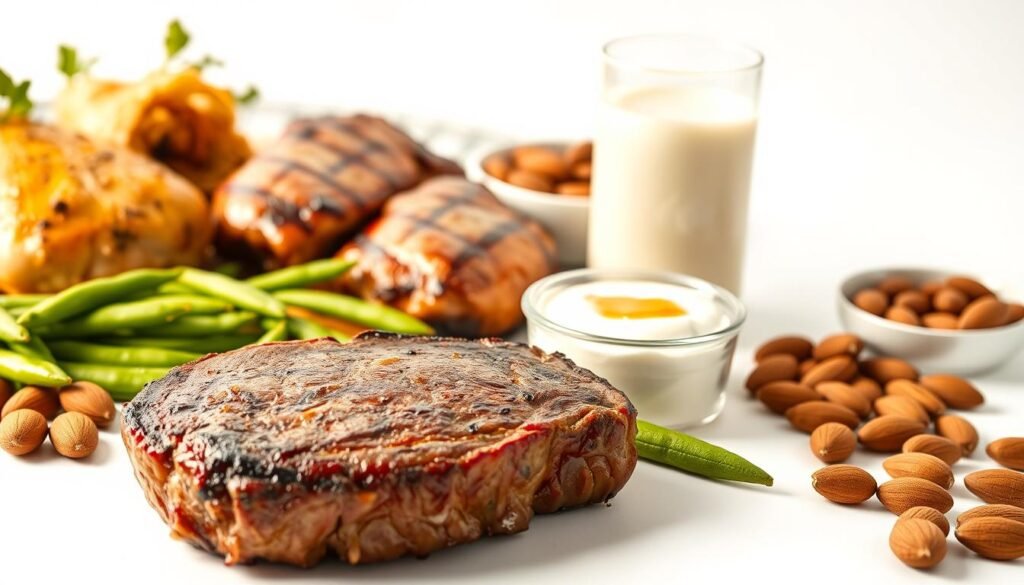
How protein influences ghrelin, fullness signals, and energy
Protein provides essential amino acids your body uses to produce peptide hormones involved in growth, energy metabolism, appetite, stress, and reproduction. Eating about 25–30 grams per meal lowers ghrelin and boosts fullness hormones, which helps steady levels between meals.
Easy protein wins you can use
- Two eggs plus Greek yogurt or a chicken breast—simple, high-quality choices.
- A serving of fish or a cup of lentils gives plant or animal sources without fuss.
- Keep quick options handy: tuna packets, hard-boiled eggs, cottage cheese, or tofu.
“Consistent protein across meals matters more than perfection at one meal.”
Tip: Build plates around a lean or plant protein first, then add colorful sides. If you’re active, prioritize protein after workouts to help recovery. If hitting targets is hard, a quality protein powder can be a convenient backup.
Choose Healthy Fats to Help Reduce Cortisol and Balance Hormones
Choosing unsaturated fats and omega-3 acids can calm stress signals and improve insulin sensitivity. These fats help reduce appetite and may prevent cortisol from rising as much during stressful moments. Include a mix of quick-burning and slow-release fats to keep your body fueled and satisfied.
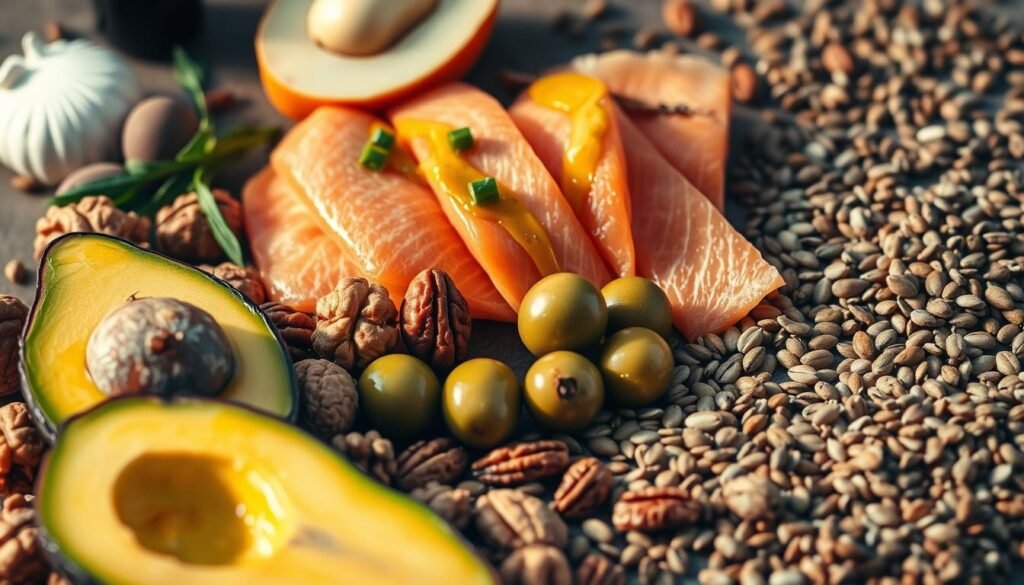
Omega-3s, MCTs, and unsaturated fats: roles in stress and insulin sensitivity
Omega-3 fats increase insulin sensitivity and support a calmer stress response. MCTs are used rapidly for energy and are less likely to be stored as fat. Unsaturated fats slow digestion, which helps blunt post-meal glucose spikes and steadier levels all afternoon.
Food sources to include regularly
- Fatty fish like salmon or tuna 1–2 times weekly for EPA and DHA.
- Avocados, nuts, and seeds as easy add-ons to slow digestion and add satisfaction.
- Extra-virgin olive oil on salads and veggies to boost fullness and plate balance.
- Pure MCT oil in smoothies or coffee for quick-burning energy when you need it.
- Consider algae-based omega-3 supplements if you skip fish, after talking with your provider.
“Prioritize unsaturated fats and omega-3 acids to support insulin sensitivity and a calmer stress response.”
Practical tip: Combine these fats with protein and fiber at each meal to help reduce spikes and keep your energy steady.
Fiber and Whole Grains for Insulin Balance and Steady Energy
Fiber-packed meals slow digestion and support steadier insulin responses as you age. Soluble fiber (like oats and beans) forms a gel in the gut that increases fullness and blunts glucose spikes. Insoluble fiber (leafy greens, whole grain breads) adds volume and helps regularity.
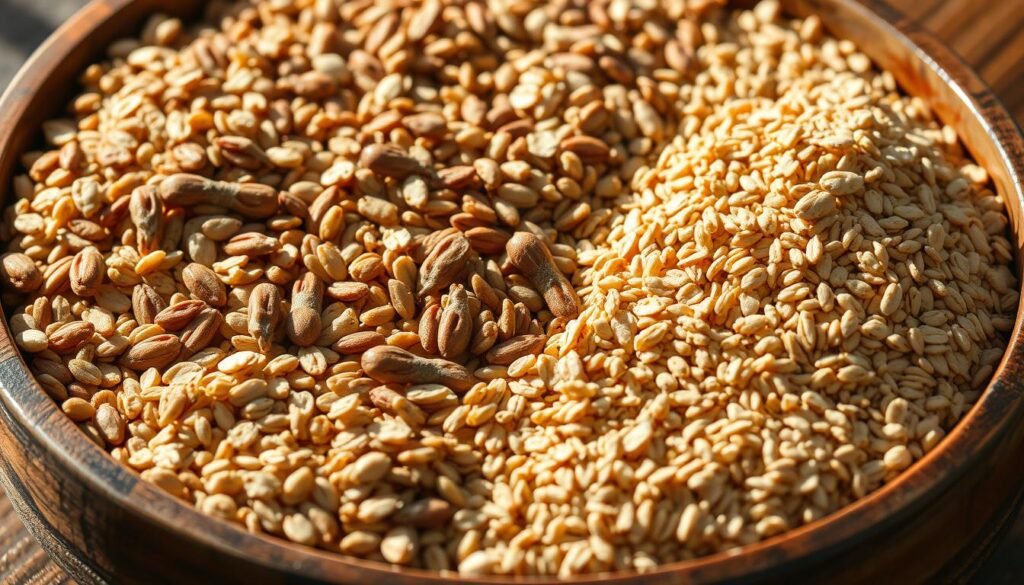
Soluble vs. insoluble fiber: fullness and glucose regulation
Soluble fiber strongly raises satiety and can improve insulin sensitivity by slowing sugar absorption. Insoluble fiber supports stool bulk and keeps you comfortable as intake increases.
Smart picks to include daily
- Start mornings with oats or quinoa to set steady energy.
- Build lunches around beans and leafy greens for volume and protein pairing.
- Add avocado, nuts, or whole grains to meals to boost fiber and healthy fat.
How fiber may help reduce disease risk after 35
Higher fiber patterns, especially Mediterranean-style eating with whole grains and cruciferous veg, link to better metabolic health and may help reduce estrogen-related cancer risk. Studies support that regular fiber intake can nudge your body toward improved insulin sensitivity and overall health.
“Add fiber at every meal and pair it with protein and healthy fat to keep levels steady.”
Nutrition for Hormonal Balance Across Your Cycle
Syncing meals with cycle phases helps you meet changing energy and mood needs each month. Use phase-aware plate choices to support how your body feels without strict rules.

Menstrual phase
Focus on iron-rich beans, lentils, and leafy greens. Pair them with vitamin C sources like citrus or bell peppers to boost absorption.
This simple swap helps restore iron and can ease fatigue during your flow.
Follicular phase
Build meals around lean protein, non-starchy vegetables, and healthy fats. Add high-fiber carbohydrates to support rising signals and steady intake.
Ovulation
Your energy may climb. Keep balanced plates with nutrient-dense carbohydrates—such as quinoa and fruit—plus protein and veggies to match demand.
Luteal phase
Emphasize complex carbohydrates, steady hydration, and whole-food treats like dark chocolate, nuts, or fruit to manage cravings and PMS.
- Plan a few phase-friendly foods each week to stay ahead of cravings and support mood.
- Keep easy options on hand—bagged greens, canned beans, pre-cooked grains—to make intake effortless.
- If symptoms worsen, reduce alcohol, caffeine, and added sweets which can intensify them for some people.
“Use cycle syncing as a guide, not a rigid plan—respond to your body’s signals and adjust portions of carbohydrates and salt as needed.”
Want more practical templates and shopping ideas? Try this phase-friendly meal guide to build simple, hormone-supporting habits.
Build an Insulin-Friendly Plate to Help Regulate Hormones
A simple plate pattern makes it easy to support steady insulin and keep your energy predictable. Aim to include protein, fiber, and healthy fats at each meal so glucose rises more slowly and appetite stays calmer.
The trio at meals: protein, fiber, and fat for glucose control
Protein and fiber slow digestion while fats blunt spikes. This PFF approach helps your body use insulin more smoothly and supports steady hormone levels across the day.
Snack combos that steady energy
Choose combos that pair a little protein with fiber and fat. Try apple + peanut butter or a handful of nuts with berries. Pre-portion nuts or pack yogurt cups to make on-the-go choices simple and supportive.
Sample hormone-friendly day: whole grains, legumes, fish, and greens
- Breakfast: eggs, greens, and whole-grain toast.
- Lunch: chickpeas, roasted veggies, and olive oil over quinoa.
- Dinner: fish with a big salad, beans, and a drizzle of olive oil.
- Tip: on an active day, add more whole-food carbs to match demand.
“Consistency across the week is what helps your hormone levels feel more predictable.”
Build each meal this way, move regularly to boost insulin sensitivity, and check out a practical plan like this fitness guide to pair plate changes with activity.
Gut Health Matters: Feed Your Microbiome to Support Hormone Levels
A thriving gut ecosystem sends metabolites that influence how you feel full and how your body handles carbs. The trillions of bacteria in your digestive tract play a clear role in insulin sensitivity and appetite signaling.
Microbiome’s role in fullness signals and insulin sensitivity
Your gut makes compounds that talk to the brain and liver. That affects hunger, glucose handling, and several key hormones. A diverse, fiber-rich diet helps those microbes make helpful metabolites that steady energy and appetite.
Foods that love your gut: legumes, nuts, whole grains, leafy greens
- Fill your week with legumes, leafy greens, and whole grains to feed beneficial microbes.
- Nuts add fiber and polyphenols your bacteria “eat,” producing usable nutrients for your body.
- Rotate plant choices and try fermented foods like yogurt or kefir to boost live cultures.
- Lower ultra-processed items and added sweets, increase fiber slowly, and drink water to adapt comfortably.
“A happier gut often shows up as better appetite signals and more steady afternoons.”
Lower Added Sugar to Help Reduce Insulin and Cortisol Spikes
B. Small swaps away from sugary drinks and treats make a big difference to how your body handles fuel.
Added sugars — especially in drinks — drive quick glucose rises and can raise insulin and cortisol over time. Fructose hides in many sodas, juices, and energy drinks and is a common culprit.
Spot the culprits: sugary beverages, refined sweets, and hidden fructose
Scan labels on sodas, coffee syrups, energy drinks, and “healthy” juices. Many list added sugar or fructose syrup.
- Swap sweetened beverages for water, sparkling water with citrus, or unsweetened tea to cut intake.
- Keep desserts intentional — enjoy a portion you love and pair it with a protein-forward meal.
- Look for hidden fructose in sauces, dressings, and bars and pick lower-sugar options.
- Combine sweet snacks with protein or fat (yogurt with fruit, nuts) to blunt spikes.
- Over time, these swaps lower your risk of metabolic disruption and fewer afternoon slumps.
“Reducing added sweets can support your sensitivity and help you feel more even across the day.”
Tip: You don’t have to be perfect. Small daily cuts add up and help you balance hormones while still enjoying treats.
Sleep, Stress, and Lifestyle: Daily Habits That Balance Hormones
Good sleep and small daily habits are as powerful as meal choices when it comes to steadying your internal signals. Poor sleep disrupts insulin, cortisol, leptin, ghrelin, and growth hormone. Aim for at least 7 hours of high-quality rest each night to help melatonin and nighttime HGH do their work.
Sleep 7+ hours: melatonin and growth hormone thrive in deep sleep
Prioritize 7–9 hours of consistent sleep to support melatonin and nighttime growth hormone release.
Create a wind-down routine: dim lights, limit late caffeine and alcohol, and power down screens to help you fall and stay asleep.
Manage stress: simple practices to keep cortisol in check
Chronic stress raises cortisol and can push you toward sugary, high-fat cravings. Dedicating even 5 minutes daily to breathwork, a short walk, or journaling can help normalize responses.
- Keep a regular sleep-wake schedule, even on weekends, to steady your body’s daily rhythms.
- Pair stress tools with nourishing meals so your levels feel steadier and cravings stay calmer.
- Batch cook or plan easy dinners to reduce evening decision fatigue that spikes stress.
- Short strength sessions or gentle walks boost energy and help you unwind without overtaxing the body.
“Protecting sleep and brief stress practices pays off with calmer evenings, more even mornings, and steadier appetite cues.”
Make lifestyle choices that guard your sleep and manage stress. When you protect these basics, every food and movement choice you make supports better hormones, more reliable mood, and smoother energy across the day.
Targeted Nutrients After 35: Vitamin D, Iron, Iodine, Selenium, and Zinc
Certain vitamins and trace minerals play an outsized role in keeping hormones working well after 35. These targeted nutrients help energy, thyroid function, and reproductive signals across your system.
Key sources to include
- Vitamin D: fatty fish like salmon and tuna, egg yolks, or fortified milk and juice support reproductive hormone function. If you avoid sun, ask your clinician about testing.
- Iron & Zinc: legumes, animal proteins, broccoli, and whole grains help energy and normal function.
- Iodine: use iodized salt in home cooking, enjoy milk or seaweed occasionally to support thyroid hormone production.
- Selenium: add Brazil nuts once or twice weekly, eggs, yellowfin tuna, or whole grains for a simple boost.
Build grocery lists around these sources so everyday meals cover important roles without complex plans. If you follow a plant-based pattern, lean on fortified sources and nutritional yeast to fill gaps.
“If you rarely get sun or follow restrictive patterns, check vitamin D levels with your clinician and consider targeted supplementation.”
Tracking these picks helps support steady hormone levels and overall health while keeping meal prep simple and affordable. Small, consistent choices let your body use nutrients where they matter most.
Conclusion
, Tiny shifts—one extra vegetable, one fewer sweet drink—may help your body feel steadier and your hormones work more smoothly.
Build simple, balanced plates with protein, fiber, and healthy fats. Pair those choices with movement, quality sleep, and brief stress breaks to support better energy and insulin responses.
Use cycle-aware tweaks when needed and include targeted nutrients like vitamin D, iron, iodine, selenium, and zinc to cover key roles in the system. Mediterranean-leaning patterns with fish and whole foods also may help lower long-term risk.
If you notice persistent imbalances in weight, mood, or cycle regularity, talk with your clinician and consider testing. Small, consistent changes add up—one walk, one earlier bedtime, one fewer sweet drink at a time.
FAQ
What should you eat after 35 to support healthy hormone function?
Focus on balanced plates that include a good source of protein at every meal, healthy fats like fatty fish and olive oil, and fiber-rich whole grains and vegetables. These choices help steady insulin and support hormones that regulate appetite, energy, and mood.
Why do hormone patterns change after age 35, and how can food help?
Aging, shifts in body composition, and longer-term stress can alter insulin, cortisol, and sex hormones. Eating nutrient-dense meals, managing added sugar, and prioritizing sleep and protein can reduce imbalance and improve energy and mood.
How much protein should you aim for per meal to support hormone signals?
Aim for roughly 25–30 grams of protein per meal. That target helps control ghrelin and fullness hormones, supports muscle, and keeps energy steady through the day.
What are quick, practical protein options you can use daily?
Keep eggs, canned or fresh fatty fish (like salmon), chicken breast, Greek yogurt, and lentils on hand. They cook fast or require minimal prep and pair well with whole grains and veggies.
Which fats help reduce stress hormones and improve insulin sensitivity?
Prioritize omega-3s and unsaturated fats—found in salmon, mackerel, avocados, olive oil, walnuts, and flaxseed. Medium-chain triglycerides (MCTs) from coconut oil can also provide quick energy without large insulin spikes.
How does fiber help stabilize glucose and support hormone balance?
Soluble fiber slows glucose absorption and promotes fullness, while insoluble fiber supports regularity. Together they blunt insulin spikes and lower disease risk. Choose oats, quinoa, beans, leafy greens, and whole grain breads.
What should you eat during different menstrual cycle phases to support hormonal needs?
In the menstrual phase, prioritize iron plus vitamin C (beans, lentils, citrus, and greens). During the follicular phase, focus on lean protein and nonstarchy veggies. Around ovulation, include nutrient-dense carbs and balanced plates for higher energy. In the luteal phase, choose complex carbs, stay hydrated, and allow whole-food treats to ease cravings.
How do you build an insulin-friendly plate that helps regulate hormones?
Combine protein, fiber, and healthy fat at each meal—think salmon with quinoa and roasted vegetables, or a bowl of lentils, greens, and avocado. This trio slows glucose rises and supports balanced hormone signaling.
What snack combos help keep hormones steady between meals?
Pair a fruit with a nut butter, like an apple with peanut butter, or a small handful of nuts with berries. These combos add protein, fiber, and healthy fats to steady blood sugar and curb cortisol-driven cravings.
How does gut health influence hormone levels, and what foods support it?
A healthy microbiome helps regulate fullness cues and insulin sensitivity. Feed it with legumes, whole grains, nuts, seeds, and plenty of leafy greens, and consider fermented foods like yogurt or kefir for added benefit.
What common foods raise insulin and cortisol that you should limit?
Watch sugary drinks, refined sweets, and highly processed snacks with hidden fructose. These items cause rapid glucose swings and cortisol responses that can disrupt long-term hormone balance.
How important are sleep and stress management for hormone balance after 35?
Extremely important. Aim for 7+ hours of quality sleep to support melatonin and growth hormone. Use simple stress-reduction habits—deep breathing, short walks, or consistent routines—to keep cortisol in check.
Which specific nutrients are especially important after 35, and where do you get them?
Key nutrients include vitamin D, iron, iodine, selenium, and zinc. Find them in fatty fish, egg yolks, iodized salt, legumes, whole grains, shellfish, and Brazil nuts. If you have concerns, check levels with your clinician before supplementing.
Can changing your diet really reduce risk of disease linked to hormonal imbalance?
Yes. Eating whole foods, lowering added sugar, and prioritizing fiber and healthy fats can improve insulin sensitivity, reduce chronic inflammation, and lower long-term risk for metabolic disease and other hormone-related conditions.