

Did you know that what you eat can directly impact how your gut feels? For millions of Americans, digestive discomfort is a daily struggle. But what if the solution lies in the meals you prepare?
Research from Monash University shows that 75% of individuals with irritable bowel syndrome experience symptom relief by following a fodmap diet. This approach focuses on reducing certain carbohydrates that can stretch the intestines and cause pain in sensitive individuals.
By adopting a gut-friendly diet, you can reduce bloating, discomfort, and other symptoms. Monash University’s 3-step process—elimination, reintroduction, and personalization—helps you identify which foods work best for your body.
In this article, we’ll explore delicious recipes for breakfast, mains, and snacks that align with this approach. Let’s dive into a world of meals designed to support your health and well-being.
Key Takeaways
- 75% of IBS patients see improvement with a low-FODMAP diet.
- FODMAPs can cause intestinal stretching and pain in sensitive individuals.
- Monash University’s 3-step process helps personalize your diet.
- 1 in 4 IBS patients may need additional therapies.
- Recipes include breakfast, mains, and snacks for variety.
What Is a Low-FODMAP Diet and How Can It Help Your Gut?
Certain foods can trigger discomfort, especially for those with sensitive digestive systems. This is where understanding FODMAPs becomes essential. FODMAPs are short-chain carbohydrates found in many everyday foods like dairy, apples, and beans. For some people, these carbs can lead to bloating, gas, and pain.
When undigested, FODMAPs attract water into the intestine and ferment in the colon. This process produces three times more gas than usual. For individuals with irritable bowel syndrome (IBS), this can trigger gastrointestinal symptoms like cramping and irregular bowel movements.
Understanding FODMAPs and Their Impact on IBS
FODMAPs stand for Fermentable Oligo-, Di-, Mono-saccharides And Polyols. These are types of carbs that are poorly absorbed in the small intestine. When they reach the colon, bacteria break them down, causing gas and bloating. For IBS patients, this can lead to significant discomfort due to heightened sensitivity in the gut.
Why Low-FODMAP Diets Are Recommended for IBS Patients
Research shows that reducing FODMAPs can alleviate symptoms in many individuals. Studies from Monash University highlight four key benefits: reduced pain (87%), less bloating (79%), better bowel regularity (82%), and improved quality of life. This approach is now a first-line therapy recommended by the ACG Clinical Guidelines.
The Science Behind Low-FODMAP Diets and IBS Relief
The way your gut reacts to certain foods is rooted in science. When you eat, your body breaks down carbohydrates, but some types can cause trouble. These carbs, known as FODMAPs, can lead to discomfort if your digestive system is sensitive.
How FODMAPs Affect Your Digestive System
FODMAPs travel through your mouth to the small intestine, where they attract water. This can stretch the intestines, causing bloating. When they reach the colon, gut bacteria ferment them, producing gas. For individuals with bowel syndrome, this process can lead to abdominal pain and irregular bowel movements.
Research shows that the type of gas produced matters. Methane gas is linked to constipation, while hydrogen gas is associated with diarrhea. Understanding this can help you manage your symptoms more effectively.
Research-Backed Benefits of a Low-FODMAP Diet
Studies highlight the effectiveness of reducing FODMAPs. A 2022 meta-analysis found that this approach is superior to a placebo for improving global symptoms. Other research shows a 68% reduction in diarrhea frequency and a 52% decrease in constipation severity.
Monash University recommends a 2-6 week trial to see improvements. The British Society of Gastroenterology strongly supports this approach. However, unsupervised diets carry a 33% risk of nutrient deficiencies, so it’s best to consult a professional.
“Reducing FODMAPs can significantly improve quality of life for people with digestive issues.”
By understanding the science, you can make informed choices about your diet and health.
Getting Started with a Low-FODMAP Diet
Starting a new eating plan can feel overwhelming, but with the right guidance, it’s easier than you think. The elimination phase is the first step in this journey. It typically lasts 2-6 weeks, according to NICE guidelines. During this time, you’ll remove high-FODMAP foods to identify triggers and improve your gut health.
Step-by-Step Guide to the Elimination Phase
Begin by removing foods high in FODMAPs, such as certain fruits, dairy, and legumes. Replace them with gut-friendly options like rice, carrots, and zucchini. Keep a food diary to track your meals and symptoms. This helps you gather valuable information about what works for your body.
Here’s a simple table to help you plan your meals:
| Meal | Low-FODMAP Options |
|---|---|
| Breakfast | Oatmeal with blueberries, lactose-free yogurt |
| Lunch | Grilled chicken with quinoa and spinach |
| Dinner | Baked salmon with roasted carrots and rice |
Tips for Successfully Transitioning to Low-FODMAP Eating
Here are some practical tips to make the process smoother:
- Use the Monash FODMAP Diet App for accurate food tracking. It has a 92% success rate in helping users stick to the plan.
- Stock your kitchen with staples like lactose-free yogurt, rice cakes, and maple syrup.
- Batch-cook quinoa and freeze it in 1-cup portions for quick meals.
- Avoid common mistakes like portion stacking or using hidden garlic powder.
With these strategies, you’ll find it easier to adapt to a fodmap diet and enjoy the benefits of better gut health.
Low-FODMAP Foods You Can Enjoy
Discovering the right foods can transform how your body feels and functions. When it comes to supporting your gut, not all ingredients are created equal. Some are gentle on your system, while others can cause discomfort. Let’s explore the safe and delicious options you can enjoy without worry.
Fruits, Vegetables, and Grains That Are Safe to Eat
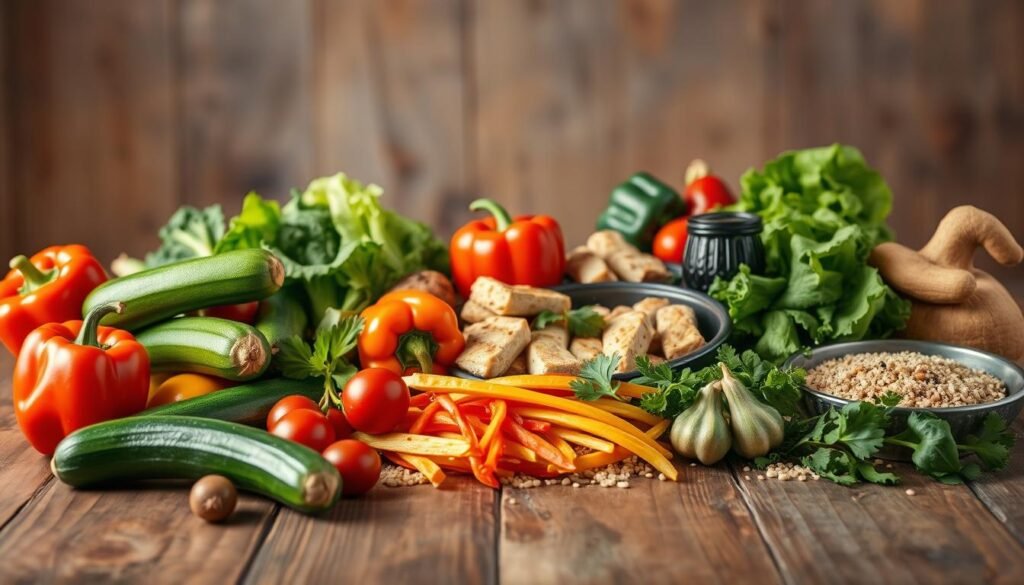
When it comes to vegetables, options like bok choy, carrots, and zucchini are excellent choices. These are easy to digest and packed with nutrients. For fruits, stick to small portions of berries, oranges, or grapes. They’re sweet, satisfying, and won’t upset your stomach.
Grains are another essential part of a balanced diet. Gluten-free options like quinoa, oats, and rice pasta are great alternatives to wheat. They’re versatile and can be used in a variety of meals, from breakfast to dinner.
Protein Sources and Dairy Alternatives for a Low-FODMAP Diet
Protein is crucial for energy and muscle repair. Safe options include eggs, tempeh, and shrimp. These are easy to prepare and can be incorporated into many dishes. For those who enjoy dairy, lactose-free milk, brie, and almond milk are excellent swaps.
Here are some unexpected safe foods you might not have considered:
- Dark chocolate (in moderation)
- Popcorn (plain, without added flavors)
- Sushi rice (great for homemade rolls)
Remember, even safe foods should be consumed in moderation. For example, cherry tomatoes are fine in small amounts, but eating four or more can trigger symptoms.
“Choosing the right ingredients can make all the difference for your gut.”
By focusing on these gentle options, you can enjoy a variety of meals while keeping your digestive system happy. Experiment with different combinations to find what works best for you.
High-FODMAP Foods to Avoid for a Happier Gut
Some ingredients can quietly disrupt your digestive system without you realizing it. Certain foods, especially those high in FODMAPs, can cause bloating, gas, and discomfort. Knowing which ones to avoid can make a big difference in how you feel.
Common Trigger Foods That Worsen Symptoms
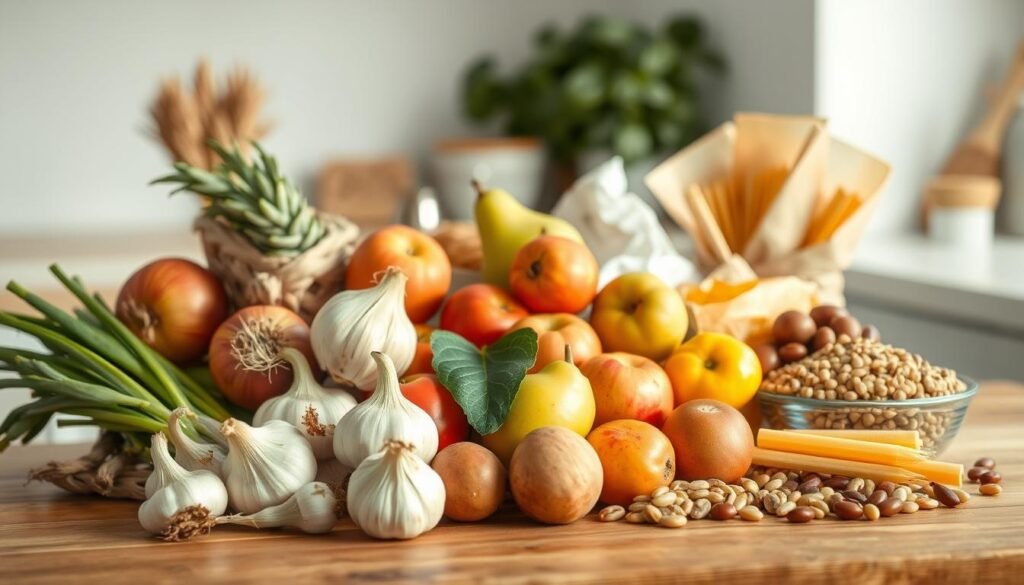
Garlic and onions are two of the biggest culprits. They contain fructans, which can be hard for your gut to process. Apples and legumes like lentils are also problematic due to their fructose and GOS content. Even seemingly healthy choices like cauliflower and rye bread can trigger symptoms.
Here’s a list of 12 common offenders to watch out for:
- Garlic
- Onions
- Apples
- Lentils
- Cauliflower
- Agave syrup
- Rye bread
- Mushrooms
- Broccoli
- Soy milk
- Ice cream
- Sugar alcohols (e.g., sorbitol)
How to Identify and Eliminate High-FODMAP Ingredients
Hidden sources of FODMAPs can sneak into your diet if you’re not careful. Ingredients like onion powder, inulin, and chicory root are often found in processed foods. Reading labels is essential—look out for terms like “natural flavors” or whey.
When dining out, consider using a restaurant card to communicate your needs. This can help you avoid garlic and onions, which are common in many dishes. Another tip is to avoid FODMAP stacking, where multiple high-FODMAP foods are eaten in one meal. For example, combining broccoli, mushrooms, and soy milk can overwhelm your system.
If you’re missing the flavor of garlic, try these substitutes:
- Garlic-infused oil
- Chives
- Asafoetida
“Eliminating high-FODMAP foods can significantly reduce digestive discomfort and improve your quality of life.”
By being mindful of these ingredients, you can take control of your gut health and enjoy meals without worry.
Delicious Low-FODMAP Recipes to Try Today
Eating well doesn’t have to mean sacrificing flavor or variety. With the right ingredients, you can create meals that are both delicious and gentle on your stomach. Whether you’re looking for breakfast, lunch, dinner, or snacks, these recipes are designed to support your digestive health while satisfying your taste buds.
Breakfast Ideas That Won’t Upset Your Stomach
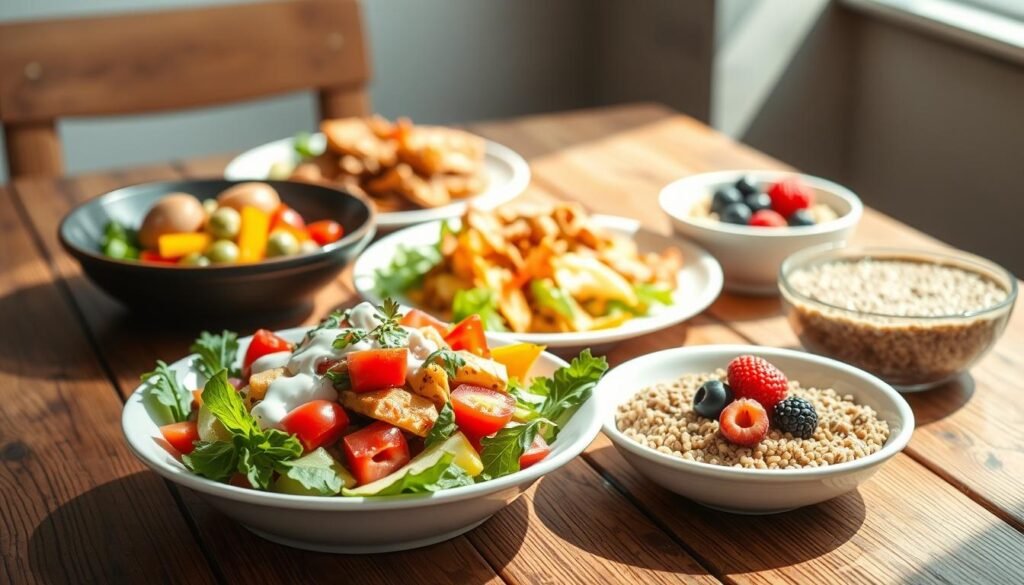
Start your day with a spinach-feta omelet and a slice of sourdough toast. This combination is light, nutritious, and easy to digest. For a quick option, try lactose-free yogurt with a handful of blueberries. According to Monash University, 90% of people tolerate 2 tablespoons of peanut butter, making it a great addition to your morning toast.
Lunch and Dinner Recipes Packed with Gut-Friendly Ingredients
For lunch, whip up zucchini noodles with grilled chicken and a drizzle of pesto. This dish is flavorful and easy on your system. Dinner can be just as simple with ginger-soy salmon served alongside jasmine rice and steamed green beans. Roasting vegetables like carrots or zucchini enhances their natural sweetness without adding discomfort.
Snacks and Desserts That Are Low in FODMAPs
Craving a snack? Try rice cake pizzas topped with tomato paste and mozzarella. They’re quick, satisfying, and won’t upset your stomach. For dessert, indulge in lactose-free vanilla chia pudding with 10 raspberries. Dark chocolate (30g) or strawberry sorbet are also safe options for a sweet treat.
Here are three chef tips to elevate your cooking:
- Use citric acid instead of lemon juice for a tangy flavor without the FODMAPs.
- Roast vegetables to bring out their natural sweetness.
- Batch-cook quinoa and freeze it in portions for quick meals.
“Simple swaps and smart cooking techniques can make all the difference for your gut health.”
With these recipes and tips, you can enjoy a variety of meals while keeping your digestive system happy. Experiment with different combinations to find what works best for you.
Practical Tips for Maintaining a Low-FODMAP Lifestyle
Maintaining a gut-friendly lifestyle doesn’t have to be complicated, even with a busy schedule. Whether you’re dining out or meal prepping at home, a few simple strategies can help you stick to your diet and avoid discomfort. Let’s explore how you can make this approach work for you.
How to Dine Out While Staying Low-FODMAP
Eating out can be stressful when you’re following a specific diet. Studies show that 68% of people report social stress in these situations. But with a little planning, you can enjoy meals without worrying about gas or pain.
Here are five safe cuisines to consider:
- Japanese: Opt for sashimi or sushi with rice vinegar.
- Thai: Try tom kha soup without onions or garlic.
- Italian: Choose dishes with gluten-free pasta and olive oil.
- Mexican: Go for corn tortillas and grilled meats.
- Mediterranean: Enjoy grilled fish with lemon and herbs.
When ordering, use these translations to communicate your needs:
- Spanish: “Sin ajo ni cebolla”
- French: “Pas d’ail ni d’oignon”
- German: “Kein Knoblauch oder Zwiebeln”
- Italian: “Niente aglio o cipolla”
- Japanese: “ニンニクとタマネギなし”
- Chinese: “不要大蒜和洋葱”
Meal Planning and Prep Strategies for Busy Days
Meal preppers are three times more likely to stick to their diet. With a few freezer hacks, you can save time and stay on track. Here are three ideas to get started:
- Pre-portioned smoothie bags: Blend spinach, berries, and lactose-free yogurt.
- Marinated tofu cubes: Freeze in batches for quick stir-fries.
- Cooked quinoa: Store in 1-cup portions for easy meals.
For travel, pack these snacks to avoid temptation:
- Low-FODMAP protein bars
- Rice crackers
- Carrot sticks with hummus
- Dark chocolate (in moderation)
- Almond butter packets
Finally, incorporate stress-reduction techniques like mindful eating or a post-meal walk. These habits can help you feel more in control and reduce digestive discomfort.
“Small changes in your routine can make a big difference in your gut health.”
By following these tips, you can maintain a fodmap-friendly lifestyle without sacrificing convenience or enjoyment. Experiment with what works best for you and embrace the journey to better health.
Conclusion: Embrace a Low-FODMAP Diet for Long-Term Gut Health
Taking control of your digestive health starts with small, intentional steps. Research shows that 81% of people maintain relief from symptoms at six months when following a personalized plan. This approach focuses on gradual reintroduction and professional guidance to ensure success.
Here are five actionable steps to begin your journey: download the Monash app for accurate food tracking, join a support group for shared experiences, consult a dietitian for tailored advice, keep a food diary to identify triggers, and experiment with recipes to find what works best for you.
Your path to comfort begins with one gut-friendly bite. By making informed choices, you can support your bowel health and improve your overall well-being. Embrace this lifestyle with confidence and take the first step toward a happier, healthier you.
FAQ
What are FODMAPs, and why do they affect my gut?
FODMAPs are short-chain carbohydrates that some people find hard to digest. They can ferment in your gut, causing bloating, gas, and discomfort, especially if you have irritable bowel syndrome.
How does a low-FODMAP diet help with IBS symptoms?
This diet reduces foods high in FODMAPs, which can trigger symptoms like abdominal pain and bloating. By limiting these foods, you may experience relief and improved digestive health.
What foods should I avoid on a low-FODMAP diet?
Avoid high-FODMAP foods like onions, garlic, wheat, certain fruits, and dairy products. These can worsen symptoms like gas and cramping in sensitive individuals.
Can I still enjoy dairy on a low-FODMAP diet?
Yes, but opt for lactose-free options like almond milk or lactose-free cow’s milk. Regular dairy can be high in FODMAPs and may cause discomfort.
Are there any sweeteners I can use on this diet?
Yes, choose sweeteners like stevia or maple syrup in moderation. Avoid high-FODMAP sweeteners such as honey or high-fructose corn syrup.
How long should I follow the elimination phase?
Typically, the elimination phase lasts 2-6 weeks. This helps identify which foods trigger your symptoms before reintroducing them one at a time.
Can I eat out while on a low-FODMAP diet?
Absolutely! Just plan ahead by checking menus and asking about ingredients. Stick to simple dishes like grilled proteins and steamed vegetables.
What are some easy low-FODMAP snacks?
Try rice cakes with peanut butter, carrots with hummus, or a handful of nuts. These options are quick, satisfying, and gentle on your gut.
Will this diet help with long-term gut health?
Yes, many people find long-term relief by identifying and avoiding their trigger foods. It’s a sustainable way to manage symptoms and improve overall digestive wellness.


