
Did you know your body’s ability to naturally detoxify changes after 35? As you age, maintaining fluid balance becomes crucial for flushing toxins and supporting organ function. But how do you optimize this process effectively?
According to OSF HealthCare expert Hope Quilling, proper fluid intake helps your immune system and prevents constipation—key factors in overall health. Yet, many overlook how lifestyle and diet adjustments can enhance detoxification.
Discover simple ways to combine hydration and cleansing in your routine. From nutrient-rich foods to mindful habits, small changes make a big difference. For deeper insights, explore our nutrition blueprint tailored for women over 35.
Why Hydration Matters for Women Over 35
After 35, your body’s water balance becomes a silent guardian of vitality. With 65% of your weight coming from fluids, even slight dips can impact brain clarity, heart function, and metabolism. Prioritize staying hydrated to keep these systems running smoothly.
Chronic dehydration affects 3 in 4 Americans, but aging ups the risk. Thirst signals weaken, and kidneys retain less water. The result? Fatigue, headaches, and slower detoxification. Women face higher risks than men due to hormonal shifts.
Check your urine color—pale yellow means you’re on track. Darker shades signal it’s time to drink up. Mass General Brigham research shows proper hydration also prevents heat exhaustion, a critical care tip for active lifestyles.
Small sips throughout the day beat chugging water. Your joints, skin, and energy levels will thank you.
How Much Water Should You Drink Daily?
Finding the right balance of fluids isn’t one-size-fits-all—especially after 35. Your body’s needs change with activity levels, climate, and metabolism. Let’s break down the science behind optimal intake.
General Recommendations
The Academy of Nutrition and Dietetics suggests 9 cups (72 ounces) daily for women and 13 cups for men. That’s about five to eight 16-ounce water bottles per day.
But these are baseline numbers. For precise measurement, try the sweat test:
- Weigh yourself before and after exercise
- Drink 3 cups of fluid per pound lost
- Monitor urine color (pale yellow = optimal)
Adjusting for Activity and Climate
In heat or humidity, add 1-2 extra cups. Athletes need 4-8 ounces every 15-20 minutes during sports. Pre-workout, drink 17-20 oz 2-3 hours before starting.
Watch for overhydration signs:
- Nausea or headaches
- Confusion or muscle cramps
- Swollen hands/feet
Remember: Drinking enough water matters, but timing matters too. Space your intake evenly throughout waking hours for best absorption.
Hydration Beyond Water: Foods That Keep You Hydrated
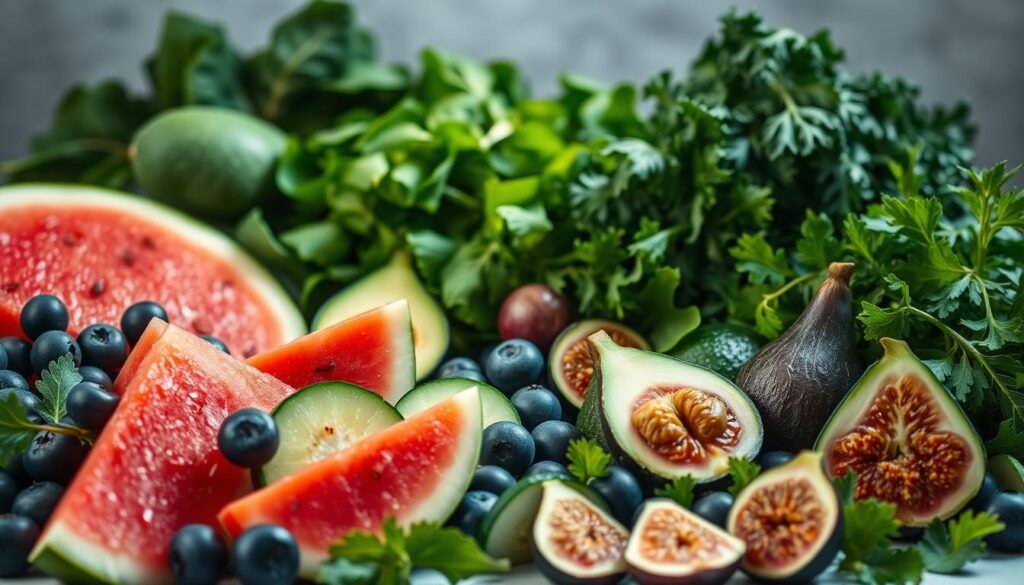
Your journey to better fluid balance doesn’t end with drinking water—it starts with what’s on your plate. Many fruits and vegetables contain over 90% water, making them powerful allies for maintaining fluids naturally.
Top Hydrating Fruits and Vegetables
These 10 foods pack the highest water content per serving:
| Food | Water Percentage | Equivalent to |
|---|---|---|
| Cucumber | 96% | ½ cup water |
| Watermelon | 92% | ⅓ cup water |
| Strawberries | 91% | ¼ cup water |
| Celery | 95% | ⅓ cup water |
| Spinach | 93% | ¼ cup water |
For comparison, most sports drinks contain only 5-10% electrolytes. Coconut water offers natural potassium without added sugar found in processed options like Liquid I.V.
Incorporating Hydrating Foods into Your Diet
Try these simple swaps to boost your intake:
- Add cucumbers and watermelon to summer salads
- Blend strawberries into morning smoothies
- Snack on celery sticks with hummus
During colder months, opt for low-sodium broths instead of creamy soups. Watch portion sizes with sugary fruits like grapes—balance them with protein to slow sugar absorption.
Practical Hydration Tips for Women Over 35
Small daily habits can transform how your body maintains fluid balance after 35. Consistency matters more than occasional gulps. Here’s how to make it seamless.

Carry a Reusable Water Bottle
Invest in a water bottle designed for convenience. Brands like Owala FreeSip or Hydro Flask keep liquids cold for hours, encouraging sips throughout the day. Choose one with volume markers to track progress.
Set Hydration Reminders
Apps like Waterllama send nudges to drink. Tie reminders to routines—post-meal or during work breaks. A study found timed alerts boost intake by 27%.
Flavor Your Water Naturally
Skip sugary drinks. Try antioxidant-rich infusions:
- Raspberry + mint (supports digestion)
- Lemon + basil (boosts vitamin C)
Limit caffeine to 2 cups of coffee daily to avoid dehydration. Herbal teas count toward your total!
Recognizing and Addressing Dehydration
Your body sends clear signals when fluid levels drop dangerously low—are you listening? After 35, these warnings become harder to notice but more critical to address. Catching dehydration early prevents fatigue, kidney strain, and cognitive fog.
Common Symptoms
Mild cases often start with dry mouth or headache. Watch for these escalating signs:
- Dark yellow urine (less than 3 bathroom trips daily)
- Dizziness when standing quickly
- Muscle cramps during routine activities
Seek immediate care for severe symptoms like confusion, rapid heartbeat, or no urination for 8+ hours. These indicate your body needs professional intervention.
Quick Rehydration Strategies
For moderate cases, try this effective way to restore balance:
| Method | Best For | Time to Effectiveness |
|---|---|---|
| Homemade solution (1L water + 6tsp sugar + ½tsp salt) | Mild cases | 30-45 minutes |
| Pedialyte or Liquid I.V. | Sports recovery | 15-30 minutes |
| IV therapy | Severe cases | Immediate |
Avoid alcohol and soda—they worsen fluid loss. In heat, sip coconut water for natural electrolytes. Most drinks with added sugars slow absorption, so check labels carefully.
Conclusion
Small tweaks to your routine can amplify hydration benefits long-term. Aim for 9 cups of fluids daily, using a water bottle with markers to track progress. Your body thrives when you pair this with fiber-rich foods like cucumbers or berries.
Consistency beats perfection. Start with one change—like herbal tea instead of coffee—and add another each week. Over time, your skin, energy, and kidney function will reflect the effort.
Ready to stay hydrated effortlessly? Grab our free 7-day challenge checklist to build habits that last.
FAQ
How does age affect hydration needs?
As you get older, your body holds less fluid, and your sense of thirst may weaken. This makes it easier to become dehydrated. Drinking enough water helps maintain energy, digestion, and skin health.
What’s the best way to track daily water intake?
Carry a reusable bottle and mark time-based goals (e.g., finish one by noon). Apps or smart bottles can also remind you to sip throughout the day.
Can foods help with staying hydrated?
Yes! Fruits like watermelon, cucumbers, and oranges are over 90% water. Adding these to meals boosts fluid intake without extra effort.
Does coffee or tea count toward hydration?
In moderation, yes. While caffeine has mild diuretic effects, the liquid still contributes to your total. Balance with plain water or herbal teas.
What are quick signs of dehydration?
Dark urine, fatigue, and dizziness are key red flags. Sip fluids slowly and eat water-rich snacks like celery or berries to recover.
How can I make water more appealing?
Try infusing it with mint, citrus, or cucumber slices. Sparkling water or a pinch of sea salt can also enhance flavor without added sugar.