Curious which time-tested herbs can ease stress and bring your energy back?
You’re not imagining it: chronic stress can nudge cortisol higher and leave you with foggy thinking, poor sleep, and low mood.
This short guide shows the top adaptogens used in traditional chinese medicine and ayurvedic medicine that may help your endocrine system, including adrenal and thyroid glands, to regain steadier levels.
We’ll connect modern studies on cortisol with practical tips, like clinically studied doses of KSM-66 Ashwagandha and simple blends that pair roots with antioxidant berries.
Expect clear takeaways—how these herbs can support energy, sleep, mood, and libido so you can choose what fits your life.
Want a deeper plan? Check the nutrition blueprint to see where these options fit into a broader routine.
Why adaptogens matter for your hormones right now
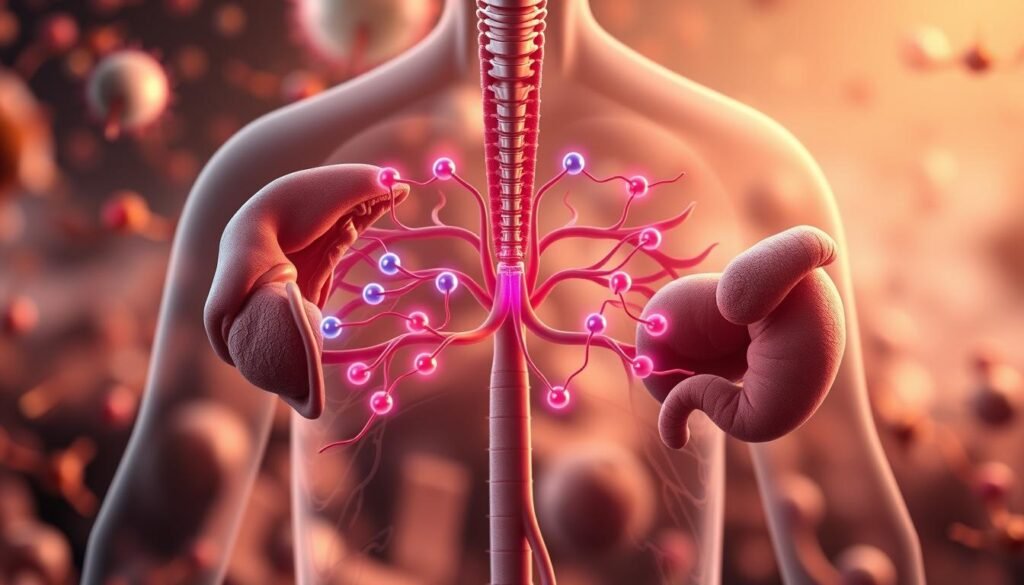
When daily pressure stacks up, your body’s stress circuitry, the HPA axis, can push key hormones out of their usual rhythm.
The HPA axis links your brain to glands that set hormone levels. Chronic stress ramps the body stress response and raises cortisol. That shift can nudge sex hormones and thyroid signals, and affect sleep, mood, and energy.
- Brain fog, anxious feelings, or low motivation tied to a taxed stress response.
- Sleep disruption and day‑to‑day dips in energy when cortisol spikes and falls.
- Stronger symptoms during the perimenopause-to-menopause transition as the endocrine system changes.
How the HPA axis affects your endocrine system
Ongoing activation of the HPA axis can dysregulate gland function across the endocrine system. Small changes add up over years and may worsen common midlife symptoms.
Human studies show some extracts can lower cortisol and improve sleep, while preclinical work suggests certain herbs help reset HPA responses under repeated stress.
Bottom line: reducing daily stressors and supporting resilience can help your body find steadier levels and ease symptoms as you navigate midlife.
Best adaptogens for hormone balance: your short list
Here’s a brief, practical guide to four botanicals that many women use to ease stress and support sleep, mood, energy, and libido.
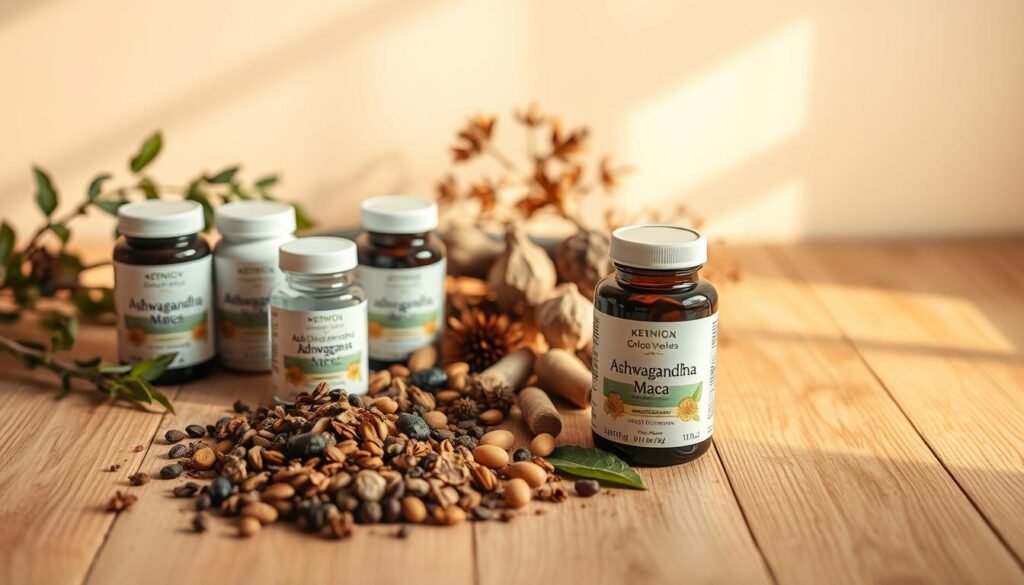
Ashwagandha: cortisol support, mood, sleep, libido
Ashwagandha (KSM-66 at ~300–500 mg) has clinical data showing up to a 28% drop in circulating cortisol. It can help calm stress, improve sleep quality, and support sexual function.
Maca root: energy, estrogen balance, sexual function
Maca is linked to better daytime energy, higher libido, and improved mood. Some studies suggest it may gently modulate estrogen pathways and ease menopausal symptoms.
Shatavari: Ayurvedic support from PMS to menopause
Shatavari (Asparagus racemosus) is used in ayurvedic medicine to aid menstrual regularity, fertility, and menopausal comfort. A 2018 study noted antioxidant effects that may offset stress-related damage.
Schisandra: Traditional Chinese Medicine berry for resilience and clarity
Schisandra, prized in traditional chinese medicine, supports the nervous system and can sharpen focus under pressure. Animal HPA models show anti-stress effects, especially when paired with Rhodiola.
“Match each herb to your main symptom — sleep, energy, mood, or libido — rather than taking everything at once.”
- If stress is the primary issue, Ashwagandha is the top adaptogen to smooth cortisol and promote calm.
- For steady daytime energy and sexual well-being, try Maca.
- When menstrual or menopausal symptoms dominate, Shatavari is a traditional choice.
- To lift clarity without jitters, choose Schisandra.
Tip: each herb has distinct benefits, so rotate or stack thoughtfully and track outcomes like sleep quality, afternoon energy, and sexual desire to see what helps your body most.
Ashwagandha spotlight: calm cortisol, balance hormones, boost libido
If stress leaves you wired at night but drained by afternoon, Ashwagandha may gently reset your rhythm.
Evidence snapshot: Clinical studies using standardized KSM-66 root extract at 300–500 mg per day showed up to a 28% drop in circulating cortisol and improved sleep in adults. These results point to real shifts in cortisol levels that can help restore daytime energy and clearer thinking in the brain.
Endocrine support during menopause symptoms: In traditional use, this adaptogen is called an adrenal tonic. It may ease hot flashes, night sweats, and shifting mood by supporting endocrine levels and calming the HPA axis. Lowering stress can also help libido recover when sexual desire has been dampened by chronic tension.
How to dose and stack with magnesium or B vitamins
Most studies use 300–500 mg/day of KSM-66. Take it in the evening for calmer nights or split the dose if you need steady daytime energy.
- Pair with magnesium to support relaxation and HPA recovery.
- Add B vitamins to aid neurotransmitter production and daytime energy.
- Use daily for 6–8 weeks and watch sleep, mood, and energy trends.
Tip: choose full‑spectrum root extracts with third‑party testing and clinically studied standardization.
Maca root benefits for women 35+: mood, energy, and healthy hormonal balance
Maca (Lepidium meyenii) acts like a nutrient-rich tonic that can support daytime vitality and emotional well‑being.
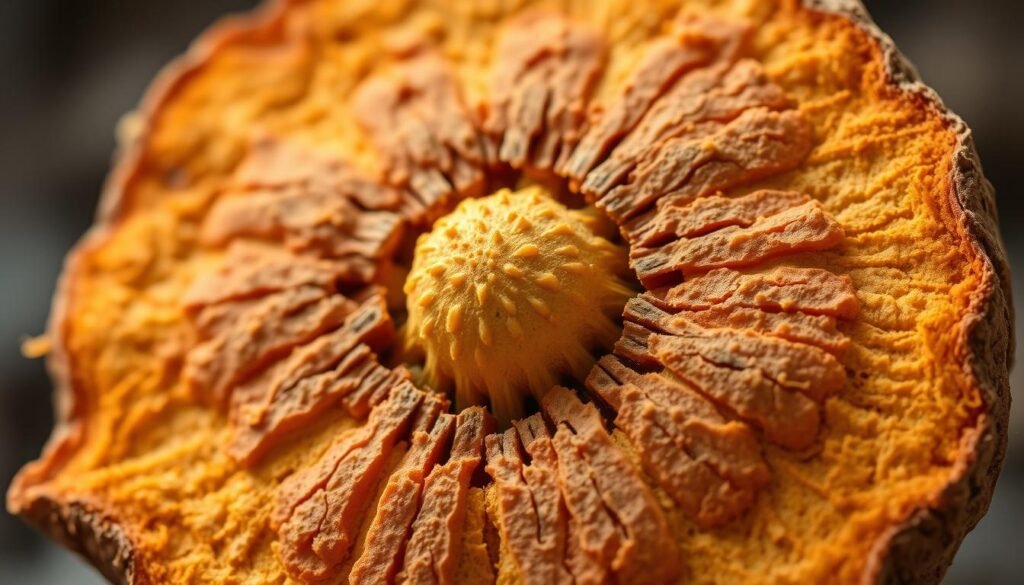
What it helps most: many women report higher energy and improved mood after daily use. Maca is rich in antioxidants and may ease menopause-related symptoms and help menstrual regularity.
Libido and sexual well-being during midlife
Maca has clinical and traditional support for boosting libido and sexual function, especially when persistent stress has dulled desire. Try it daily and track changes over a month.
Estrogen modulation and menopausal comfort
Maca may gently modulate estrogen pathways, which can ease hot flashes and sleep disruption in perimenopause. Pairing Maca with Ashwagandha often combines energy and stress support without stimulants.
“Use gelatinized Maca if you have a sensitive stomach and choose standardized products to know what you’re taking.”
- Powder mixes easily into smoothies or warm drinks.
- Capsules offer precise dosing and convenience.
- Monitor your levels of comfort, mood, and libido across the cycle to fine‑tune dose.
Other standout adaptogens from Ayurveda and Traditional Chinese Medicine
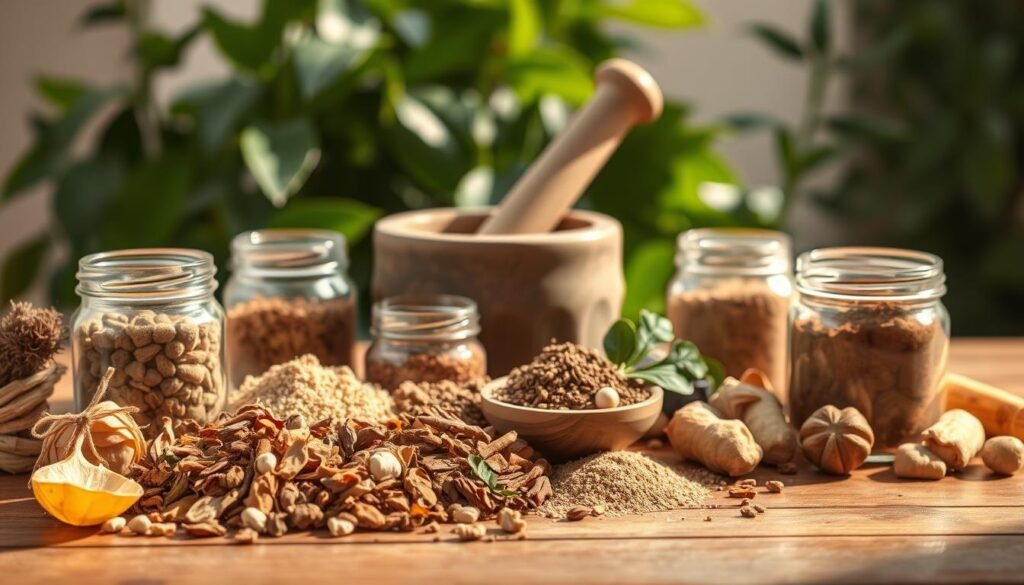
Across Ayurvedic texts and chinese medicine, a few herbs stand out for menstrual support, mental clarity, and lasting energy.
Shatavari: menstrual regularity, fertility, and stress resilience
Shatavari has long been used at different life stages to ease PMS, regulate cycles, and support fertility.
A 2018 study noted antioxidant benefits that may counter stress‑related damage. This herb can help reduce symptoms tied to a taxed stress response.
Schisandra: HPA response, focus, and gentle energy
Schisandra is a prized berry in traditional chinese medicine known as a “beauty and longevity” tonic.
Animal work shows Schisandra with Rhodiola can calm the HPA response and sharpen the brain. Use it when you need steady energy and clearer focus rather than a stimulant spike.
Siberian and Korean ginsengs: stamina, mood, and libido
Siberian ginseng (Eleutherococcus senticosus) and Korean ginseng are time‑honored choices to boost stamina and overall function during perimenopause.
They support mood and libido while also offering gentle vitality. Think of them as an energizing complement to milder herbs like Ashwagandha or Maca.
- If cycle irregularity or PMS bothers you, try Shatavari first and track changes at 2 and 4 weeks.
- Choose Schisandra when focus and HPA balance are your top goals.
- Pick Siberian or Korean ginsengs to lift stamina, mood, and sexual drive.
- Rotate or stack lightly and always check quality cues like species name and third‑party testing to support endocrine function.
“Match the herb to your main symptom—comfort, cognition, or endurance—and give each a fair trial.”
Science, safety, and what studies suggest
Researchers are mapping how plant extracts interact with the stress response and what that means for common midlife complaints.
What the evidence shows: Human trials report Ashwagandha can lower cortisol and improve sleep. Small studies and observational work suggest Maca may boost libido and ease menopausal discomfort. Shatavari’s antioxidant actions have been explored for reproductive health under stress.
Animal models show Schisandra and Rhodiola modulate the HPA axis, which helps explain shifts in energy and mental clarity. Nutrients matter too—magnesium calms the HPA axis and B vitamins support neurotransmitters in the brain.
Expect realistic timelines: give a supplement 4–8 weeks and track changes in sleep, energy, and mood.
- How to track: note symptoms, daytime calm, and mental clarity each week.
- Safety: check interactions (ginsengs can be stimulating) and consult your clinician if pregnant, breastfeeding, or on medications.
- Lifestyle: sleep, movement, and protein-forward meals amplify results.
Bottom line: the current body of evidence is promising but mixed. Use targeted supplements alongside lifestyle shifts to manage stress and support your endocrine system.
How to choose and use adaptogen supplements to help regulate hormones
Start by naming your top symptom—restless nights, low energy, foggy thinking, or low libido—and pick a supplement to target it.
Match your symptoms
Choose one primary goal and a single supplement that targets it. If stress spikes dominate, KSM-66 Ashwagandha (300–500 mg) can support cortisol levels and sleep.
Low daytime energy or libido often responds to Maca. If brain fog is your issue, try Schisandra with a calming root.
Forms and timing
Pick forms that fit your life: powders mix into smoothies, capsules keep dosing simple. Take energy-forward herbs in the AM and calming ones at night.
Quality cues and combos
Look for standardized extracts, clear dose ranges, and third‑party testing. Layer magnesium and B vitamins to help body relaxation and support energy and mood.
Smart routine
- Stick with a plan for 6–8 weeks and track sleep, energy, libido, and mood.
- Consider blends that add antioxidant berries to support endocrine and immune function.
- If needed, pair Ashwagandha with Maca to target calm plus daytime energy.
Featured blends that support the endocrine system and healthy hormonal balance
Choose a targeted blend to simplify daily care. A single scoop can pair clinically dosed roots with antioxidant fruits to give steady energy, calmer stress responses, and mood uplift.
Balance-forward berry blends with Ashwagandha and Maca
Balance-forward blends often use KSM-66 Ashwagandha (~500 mg) with Maca plus wild blueberry, hibiscus, and baobab.
These mixes aim to support endocrine organs and help steady daily levels. They offer gentle energy and a pleasant flavor in one scoop.
Stress-to-libido tonics inspired by Traditional Chinese and Ayurvedic medicine
Traditional Chinese and Ayurvedic, chinese medicine-inspired tonics may pair Shatavari, Schisandra, Shilajit, Epimedium, Cacao, and Maca.
“Try a libido-forward blend at night paired with magnesium to calm the body and nudge desire.”
- One-and-done: look for Ashwagandha + Maca + berries to target stress, energy, and mood.
- Desire under stress: choose TCM and Ayurvedic-style tonics that move from calm to libido.
- Quality tells: standardized Ashwagandha, clear Maca servings, and transparent labels.
How to use: mix with water or plant milk each morning, track energy, mood, and libido, and retire blends that don’t help.
Conclusion
, You’ve got a clear path: pick one well‑studied herb, pair it with steady sleep, protein-rich meals, and gentle movement, and track how your body responds.
Key takeaways: reducing stress can ease cortisol levels, support the endocrine system, and help restore healthier hormonal balance, energy, mood, and libido over a few weeks.
Choose a quality formula or a single extract, give it 4–8 weeks, and watch for better rest, calmer afternoons, and clearer mornings. If you take medicines or have health conditions, check with your clinician. Bookmark this blog and revisit as new evidence and product reviews appear so you can refine what helps you most.
FAQ
What are the top herbs that support healthy hormonal balance for women 35+?
You’ll find Ashwagandha, maca root, shatavari, schisandra, and both Siberian and Korean ginseng commonly recommended. These herbs come from Ayurvedic and Traditional Chinese Medicine and may support your stress response, energy, sleep, libido, and overall endocrine function.
Why do these herbs matter for your hormones right now?
As you move through your 30s and beyond, stress and life changes can shift cortisol and reproductive hormone patterns. Supporting your body’s stress response can help with mood, sleep, and symptoms of perimenopause so you feel more resilient day to day.
How does stress and the HPA axis affect your endocrine system?
Chronic stress activates the HPA axis, raising cortisol and altering signals to your ovaries and thyroid. That can change menstrual cycles, libido, energy, and sleep. Herbs that support HPA function aim to reduce that strain so other hormones can stabilize.
Where can these herbs fit during perimenopause and menopause?
They can be used to ease hot flashes, sleep disruption, mood swings, and low libido. Some herbs, like shatavari and maca, target reproductive symptoms, while Ashwagandha and schisandra focus on cortisol and energy—so you can choose based on your main complaints.
What evidence supports using Ashwagandha to calm cortisol and improve sleep?
Several clinical trials show Ashwagandha extracts can lower cortisol, reduce perceived stress, and improve sleep quality. Look for standardized withania extracts studied at clinically tested doses for more reliable results.
How should you dose Ashwagandha and combine it with nutrients?
Typical doses in studies range from 300–600 mg of standardized extract daily. It pairs well with magnesium or B vitamins to support sleep and nervous system function, but check with your clinician before adding supplements to avoid interactions.
What can maca root do for mood, energy, and sexual function in midlife?
Maca is associated with improved stamina, mood, and libido in some studies. It may help modulate estrogenic symptoms and boost sexual well-being without acting like hormone replacement, making it a popular choice for perimenopausal women.
How does shatavari help menstrual regularity and menopausal symptoms?
In Ayurveda, shatavari supports reproductive health by nourishing female tissues and supporting hormonal balance. Women report benefits for PMS, menstrual regularity, and menopausal dryness or low libido, though dosing varies by product.
What benefits does schisandra offer from Traditional Chinese Medicine?
Schisandra is used to increase resilience, enhance mental clarity, and support the HPA axis. It can provide gentle energy and promote focus while supporting the body’s stress response—useful when brain fog and fatigue are concerns.
Are Siberian and Korean ginsengs safe for stamina and mood?
Both have long traditional use and clinical evidence for improving stamina, mood, and libido. Korean (Panax) ginseng is more stimulating; Siberian (Eleutherococcus) supports endurance. Start low and monitor blood pressure or insomnia risk.
What does current science say about these herbs and hormonal symptoms?
Research shows promise for stress reduction, improved sleep, and sexual function, but evidence strength varies by herb and formulation. Look for clinical trials, standardized extracts, and peer-reviewed studies when evaluating claims.
How do you choose the right supplement form and timing?
Capsules and standardized extracts offer consistent dosing; powders work well in smoothies. Take adaptogenic herbs with food or before bed depending on the herb’s effect—Ashwagandha often at night for sleep, ginseng earlier for energy.
What quality cues should you watch for when buying supplements?
Choose products with standardized extracts, third-party testing, clear ingredient lists, and clinically studied doses. Reputable brands like Gaia Herbs or Himalaya often publish lab reports and sourcing information.
Can you safely combine Ashwagandha, maca, and supportive nutrients?
Yes, many blends pair these herbs with magnesium, B vitamins, or vitamin D to target stress, sleep, and libido. Still, tell your healthcare provider about all supplements, especially if you take thyroid medication or hormone therapy.
How soon might you notice benefits, and what symptoms improve first?
Some people feel reduced stress and better sleep within 1–3 weeks; hormonal shifts like menstrual changes or libido often take 6–12 weeks. Track symptoms and adjust based on how your body responds.
Are there risks or interactions to be aware of?
Yes. These herbs can interact with blood thinners, thyroid medications, and certain antidepressants. Pregnant or breastfeeding women should avoid some herbs. Always consult your clinician before starting new supplements.
Do these herbs replace hormone therapy or medical care?
No. They can complement lifestyle changes and medical treatment but don’t replace prescribed hormone therapy when it’s needed. Use them as part of a broader plan with your healthcare provider.
How can you match herbs to your main symptoms: stress, sleep, energy, libido, or brain fog?
Choose Ashwagandha for stress and sleep, maca for libido and energy, shatavari for reproductive symptoms, schisandra for focus, and ginsengs for stamina. Pair with sleep hygiene, movement, and nutrition for best results.
Where can you find blends inspired by Traditional Chinese and Ayurvedic medicine?
Many herbal brands and functional-medicine lines offer blends that combine berries, root powders, and standardized extracts. Look for formulas that state intended benefits—like stress-to-libido or balance-forward blends—and list clinical doses.