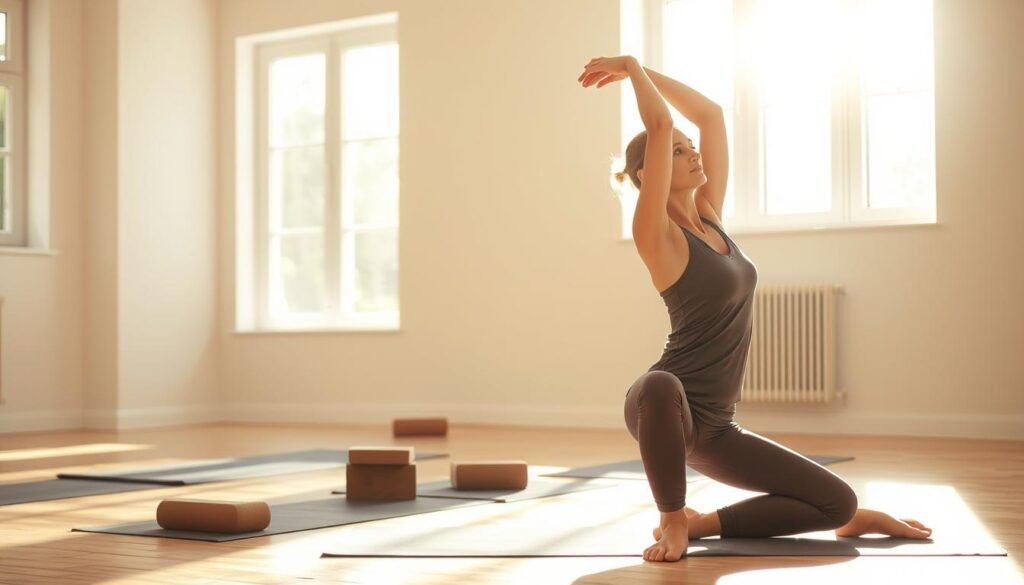
Can a few minutes a day really keep your joints happy as you age? You might think long sessions are needed, but a short, smart routine can make a big difference.
Start warm. If you’ve done strength or endurance work, stretch after those sessions. If not, walk for a few minutes to warm your muscles before you move into stretches.
This guide shows a simple step-by-step routine to improve flexibility and mobility. You’ll learn which exercises to do, how to breathe, and how to position your back, legs, and hands for safe range of motion.
Small sessions add up. Hold each stretch 10–30 seconds and repeat 3–5 times as it feels comfortable. Do short sets across the week so your body stays nimble without upending your life.
Why Flexibility Matters More After 35
As you pass 35, small changes in how you move each day make a big difference to comfort and function. Gentle work that stretches muscles helps joints move more freely so routine tasks feel easier. This lowers stiffness and supports steady movement across your week.
Better range of motion means you can bend, reach, and turn without feeling limited. That ease helps with chores, dressing, and staying active in the life you enjoy.
Key benefits
- Supports a fuller range motion so daily tasks become simpler and safer.
- Reduces common aches by letting muscles and joints slide through motion you use every day.
- Improves mobility and balance, lowering your chance of falls and related injury.
- Helps leg and hip muscles get you down to the floor and back up more comfortably.
- Complements other exercises during the week, making strength and cardio feel better.
Think of this as maintenance: a short, consistent routine keeps your body ready for what matters. A few minutes most days add up to real gains.
Flexibility Training
Simple lengthening routines let your body move freely so other exercise feels smoother.
These sessions are one of the four core exercise types—alongside strength, balance, and endurance. They don’t build power or stamina directly, but they let joints and muscles slide through a comfortable range. That ease helps daily movement and supports other workouts.
You’ll use gentle exercises that hold a position without bouncing. Start after a brief walk so your muscles are warm. Expect a mild pull, not pain, and aim to grow your range slowly as mobility improves.
“Consistent, short sessions reduce sticky spots and make bending, reaching, and lifting feel easier.”
- Focus on lengthening major areas: hips, shoulders, spine, and leg muscles.
- Choose movements that complement strength work so squats and hinges feel cleaner.
- Add short sessions after desk days to reverse long-held postures and restore motion.
Over time, you’ll notice smoother motion in walking, stairs, and chores. Small, steady work is the clearest path to improve flexibility and keep your body moving well.
When to Stretch for Best Results
Picking the right moment to stretch makes each move safer and more effective. Avoid stretching cold muscles because that can raise your risk injury. Instead, aim to work when your body already feels warm and pliable.
If you only plan to do flexibility work, walk for a few minutes first. A short walk wakes the muscles and prepares joints to move. When you pair stretching with cardio, do a 10–15 minute warm-up, then save static holds for after your cool-down.
- Stretch after you’re warm—post-workout or after a short walk on a busy day.
- Before strength sessions, use dynamic moves; hold static positions later when motion feels loose.
- Watch surfaces: cold ground or floor can chill your feet and legs; wear shoes if needed.
- Consistent timing—same times each week—helps your body relax on cue and gain more motion.
“A little warmth first lets you sense alignment and enter each position with control.”
Safety First: How to Stretch Without Raising Your Risk of Injury
A slow, controlled approach to each position protects knees, shoulders, and your back. Start by relaxing and breathing evenly before you move into any hold.
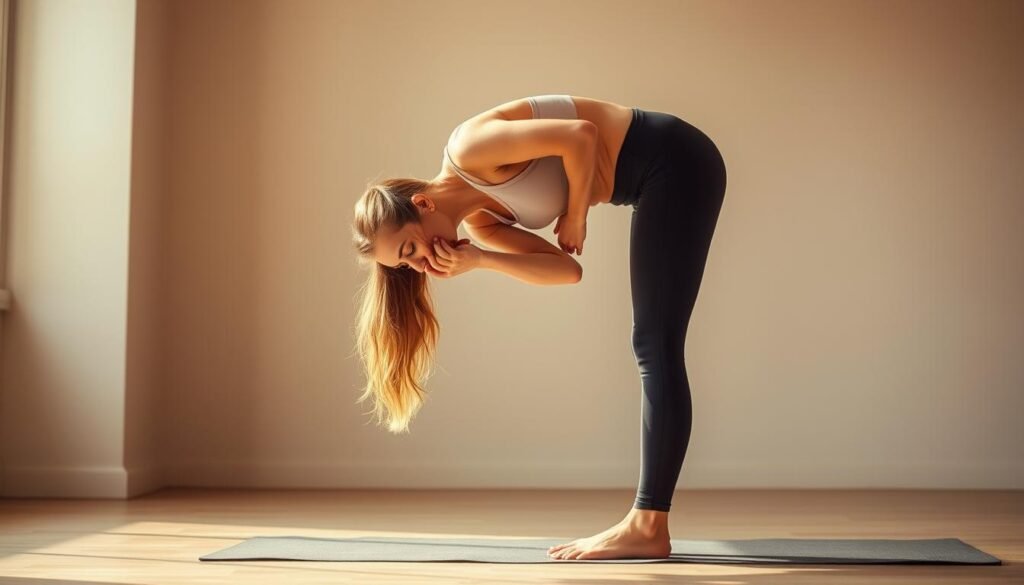
Breathe, move smoothly, and avoid locking your knees and elbows
Keep your breath steady so muscles relax and you can ease deeper without tension. Never hold your breath during a stretch.
Set up with a back straight feel, then soften as needed. Keep a gentle bend at the knee to protect the joint and avoid forcing a rigid spine.
- Keep your arms straight but not locked; a soft elbow protects tendons and joints.
- Use your hands for balance, not to yank a limb; a firm hand on a chair or wall helps control the move.
- Move slowly in and out of each position; avoid bouncing since it raises your risk injury.
- Seek mild tension across the muscles you target, and stop at any sharp or pinching pain.
- Align the knee to track with your toes; this protects the knee from twisting under load.
- Honor your current flexibility and repeat small controlled holds for steady progress.
- If balance feels shaky, stabilize your arms and back with a prop to build confidence.
- For recent injuries or medical concerns, ask your healthcare team before changing routine.
“Relax your breath and move slowly — safe setup beats deeper range every time.”
How Often and How Long: Your Weekly Flexibility Benchmarks
Set clear weekly targets to make steady gains in your range of motion. Aim to work on mobility 2–3 days per week so your body adapts without overload. Start with short sessions and build consistency before adding volume.
Hold each stretch 10–30 seconds. Begin near 10 seconds and move toward 30 as comfort grows. Repeat each hold 2–4 times; beginners can start with two repeats and add more across the next week.
- Plan on 2–3 days per week for these exercises so tissues recover and progress steadily.
- Space sessions a day apart when possible to help the leg and core muscles recover.
- If you only have a few minutes, do fewer stretches but keep holds consistent—quality beats quantity.
- Track one metric, like hold length or how close your leg gets to the target, to see motion improve over time.
“Short, steady work across the week brings real gains without forcing range.”
Warm-Up Made Easy: Five Minutes to Loosen Up
A short, five-minute warm-up wakes your muscles and sets the stage for safer stretching.
Walk at an easy pace for about five minutes, letting your breath settle into a calm rhythm before you start your stretches. If you only plan to stretch, this alone helps warm the major muscles in your legs and hips.

Add a few simple moves to prepare the rest of your body. Do ankle circles and toe-heel rocks to wake up your feet and improve lower-leg circulation.
March in place with soft knees to bring blood flow to hips and thighs. Swing your arms lightly and roll your shoulders to reduce upper-body stiffness and prep the joints for holds.
- Include controlled hip circles and torso turns to cue multi-plane movement.
- Keep each move smooth and steady—aim for warmth, not fatigue, to support mobility.
- If the ground is cold or slick, warm up indoors first; on a busy day, even three minutes helps.
“Use easy nasal breathing so your muscles accept the next position more willingly.”
Your Step-by-Step Flexibility Routine for the Whole Body
Use the short standing, seated, and lying sequences below to open tight areas across your body. The plan targets legs, hips, back, shoulders, and arms so you can improve flexibility and daily mobility.
Standing series: calves, hamstrings, and quads for legs and knees
- Calf stretch: Face a wall, step one leg back, keep the back leg straight with both heels on the floor. Bend the front knee so it stays behind the toes and press the back heel down for 10–30 seconds, then switch.
- Hamstring: Step one foot forward and keep that front leg straight. Hinge at the hips by bending the rear knee until you feel a gentle pull along the back of the leg. Lift the front toes to deepen the feel, then switch.
- Quadriceps: Hold a chair, bend one knee and draw the heel toward your buttock. Keep both knees pointing down and maintain a back straight setup. Hold, then change sides.
Seated series: neck, triceps, and shoulders for upper back and arms
- Neck: Place one hand behind your low back and the other on top of your head above the opposite ear. Ease your ear toward the shoulder and breathe for 30 seconds, then switch.
- Triceps: Raise one arm, bend the elbow and reach the hand to the upper back. Use the opposite hand to draw the elbow inward gently; hold and swap sides.
- Shoulder: Bring an arm across your chest and use the other hand above the elbow to pull it in. Keep breath steady as you change sides.
Lying series on floor or firm bed: biceps, spine twist, knee-to-chest, upward-facing dog
- Biceps on the floor: Sit with hands behind you and fingers pointing away. Slide your hips forward until you feel an opening in the front of the arm and chest.
- Spine twist: Lie on your back with arms at 90°. Bend one knee and guide it across your body with the opposite hand. Keep both shoulders near the floor and breathe to expand range motion.
- Knee-to-chest: Bring one knee toward your chest, place your hands on the lower leg (not the knee joint), and hold to ease the low back, then switch.
- Upward-facing dog: From prone, place your hands by your chest and press up until your arms are straight. Lift your head and upper back while hips stay on the floor — a classic yoga pose to open the front line.
Form cues
Keep your back straight and avoid locking joints. Keep arms straight but not hyperextended when pressed, and make sure the front knee stays behind your toes in standing moves.
“Work with steady breath and gentle progress — small holds add real range without forcing the body.”
Progressions: Improve Flexibility Week by Week
Small, steady shifts in how far you reach can unlock more motion each week. Start with holds of 10–30 seconds and two repeats per move. As your body adapts, gently increase one variable at a time.
Range of motion tweaks: reach farther, increase hold time, add reps
Each week, pick a single change: reach a little farther, add one repeat, or extend holds by 5–10 seconds. Keep breath and form calm before you add load.

- Track one area, like a tight leg or shoulder, so you can see objective range motion progress.
- If a stretch feels easy, shift position slightly until you feel a gentle, productive pull again.
- Add one extra cycle of holds when your breath and alignment stay steady across the session.
- Note adjustments each week so you build on what worked without guessing.
- Rotate focus by area so no single joint is overworked while others lag behind.
Progress should feel smooth. If alignment slips, reduce time or intensity and rebuild correctly. Celebrate small wins—reaching a strap or the floor more comfortably shows steady change.
“Better form first, then more time—quality reps are what improve flexibility safely.”
For ideas to pair with these steps, check a short plan designed for women over 35: fitness for women over 35.
Modify to Your Body: Options for Tight Hips, Sensitive Knees, or Limited Floor Access
Small adjustments let you work around tight hips, sore knees, or limited floor access. Use simple swaps so the session stays effective and safe for your current needs.
Chair and wall-supported choices
- Bed instead of floor: Do the lying series on a firm bed if getting down to the floor is hard. The ground isn’t mandatory for results.
- Protect sore knees: Place a folded towel under a knee during floor work or use chair versions that keep pressure off the joint.
- Wall for calf work: Use a wall so your hands stabilize you while you fine-tune distance and heel contact.
- Hold a chair with your right hand: Place right next to you on a stable side for balance during quad stretches.
- Seated figure-four: Try this on a firm chair for tight hips before attempting the floor version.
Swaps and gentle yoga options
- Use a strap: Loop a towel if reaching behind your back feels restricted to protect the shoulder.
- Pose swaps: Pick gentle yoga poses like sphinx instead of a full press-up if your back is cranky.
- Reduce depth, lengthen time: Shorten the range of motion and hold longer to get the same effect with less joint stress.
- Keep alignment: Keep feet aligned and a neutral back so supported versions still build good habits.
- Choose what fits today: Pick exercises that match your body now so you stay consistent and keep progressing.
Balance Your Routine: Strength, Mobility, Yoga, and Endurance Together
Mixing yoga, targeted strength, and steady cardio gives you durable movement for life.
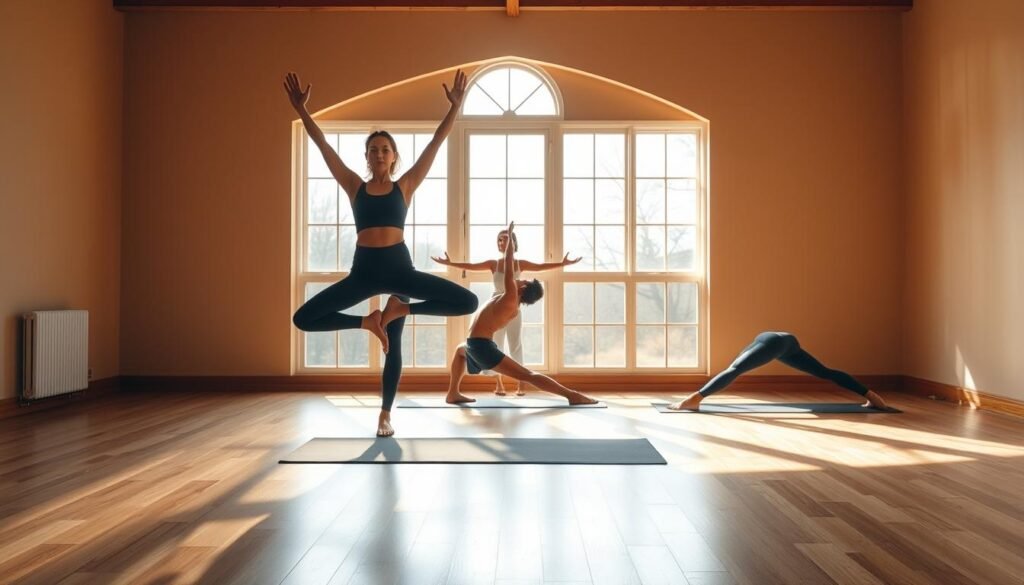
Pair flexibility with strength and balance to support life-long movement
Build a weekly plan that blends flexibility work with strength exercises on two days and endurance across the week.
Aim for at least 150 minutes of moderate aerobic activity per week and add two days of strength to protect knees, hips, and back.
- Use yoga sessions once or twice weekly to combine flexibility, balance, and light strength.
- Do short minutes of movement on busy days so momentum stays steady.
- Warm up with mobility prep before strength and finish lifts with static holds so range carries into your lifts.
- Choose endurance exercises you like — walking, cycling, or swimming — and pair them with bodyweight or band strength work.
- On leg days, restore length with calf, hamstring, and quad stretches after the session.
“Keep an eye on movement quality — better patterns beat longer, sloppy sessions.”
Common Stretching Mistakes That Hold You Back
Many common mistakes quietly limit your gains and raise your chance of pain while you stretch. Catching these habits helps you move safer and get better results each week.
Move slowly and with control. Don’t bounce in a stretch; jerky moves make muscles tighten and can increase your risk injury.
Keep joints slightly bent—avoid locking your knees or elbow. A tiny bend protects the joint and makes your breath calm.
- Never skip a warm-up; cold tissues feel stiff and strain more easily when you hold a position.
- Avoid forcing your back to hit the ground or trying to touch toes at any cost—progress gradually.
- Don’t yank with your right hand or grab too hard with your hands; that reduces control and sensitivity.
- Watch alignment: let knees track over toes and keep feet planted so the leg moves the right way.
- Alternate sides rather than always starting the same leg. Rushing through holds wastes time—stay present and breathe.
“Slow, steady breaths and small gains beat risky pushes every time.”
Conclusion
A steady, short routine gives you more comfortable motion in daily life without special gear.
Warm briefly, then pick a sequence and hold each position 10–30 seconds to improve flexibility safely. Aim for 2–3 sessions times a week so progress stays steady and gentle.
You can do this plan on the floor, a firm bed, or using a wall or chair. Choose the ways that fit your space and your schedule so you don’t skip a day.
Keep it simple: breathe, align, and add a repeat or a few seconds each week. Add a yoga session now and then to blend breath, balance, and mobility into life you enjoy.
If you have health concerns, check with your care team. Consistency beats perfection—small steps build lasting gains for your body and your life.
FAQ
What makes a stretching routine effective after 35?
An effective routine focuses on gentle, consistent movement that improves range of motion and reduces aches. Include both standing and seated stretches for legs, hips, back, shoulders, and arms. Prioritize form cues like a back straight, knees behind toes, and arms straight but not locked. Aim for 10–30 second holds, 2–4 repeats, two to three times per week to see progress.
When is the best time to stretch to protect joints and muscles?
You should stretch after a short warm-up or at the end of a workout when muscles are warm. Dynamic moves before exercise and static holds after training reduce risk of injury and help restore motion. A five-minute warm-up of light walking or marching in place works well before deeper stretches.
How do I avoid injury while stretching?
Breathe evenly, move smoothly, and never force a position. Avoid locking your knees and elbows and stop if you feel sharp pain. Use props like a chair or wall for support if balance or knee sensitivity limits your range. Gradual progress lowers risk and builds lasting mobility.
How often should I perform this routine each week?
For steady gains, practice mobility work two to three days per week with short daily warm-ups when possible. Hold static stretches for 10–30 seconds, repeat 2–4 times per side, and increase slowly over weeks. Consistency trumps intensity for long-term results.
What are simple warm-up moves I can do in five minutes?
Try marching in place, arm circles, gentle torso twists, and leg swings. These dynamic movements raise blood flow and prepare muscles for deeper stretches. They’re easy to do at home and reduce stiffness before you move into standing or seated stretches.
Which stretches should I include for a full-body session?
Combine a standing series for calves, hamstrings, and quads with a seated series for neck, triceps, and shoulders. Add lying moves like knee-to-chest, spine twists, and upward-facing dog to mobilize your spine and hips. Balance these with light strength work to support joints and daily activity.
How can I progress safely week by week?
Gradually reach a little farther, add a few extra seconds to holds, or increase reps. Track small wins—more range of motion, deeper breath, less stiffness. Avoid big jumps in intensity; steady small increases deliver better results and lower the chance of muscle strain.
What modifications help if I have tight hips or sensitive knees?
Use a chair or wall for support, perform stretches while seated or lying on a firm bed, and swap standing moves for gentler yoga poses like supported pigeon or reclining figure-four. Keep a small bend in sensitive knees and use a strap or towel to reach your hands without overreaching.
How do I combine mobility with strength and endurance training?
Schedule flexibility or mobility sessions on the same day as light strength work or after cardio to enhance recovery. Focus on functional moves that mimic daily life—hip hinges, squats, and shoulder presses—paired with dedicated stretching to maintain range and prevent compensations.
What are common stretching mistakes and how do I fix them?
Rushing through reps, holding breath, and bouncing are frequent errors. Fix these by slowing down, breathing deeply, and using controlled holds. Also avoid pushing past pain—aim for a comfortable stretch sensation and prioritize consistent practice over dramatic single-session gains.