
Curious if you can burn fat and protect your knees at the same time? You don’t have to choose between progress and pain. This guide shows how a low impact approach keeps your heart rate up while shielding vulnerable joints.
You’re looking for practical options that fit real life. Walking, cycling, swimming, and rowing deliver cardio and strength without pounding the ground. Each choice helps your body get fitter and stronger while cutting injury risk.
In plain terms: these exercises give big fitness and health benefits with kinder impact. You’ll get simple setup tips—like bike fit cues and rowing form—and quick interval ideas so every session is efficient and safe.
Keep reading to find ten joint-friendly options and the best way to mix water, machines, and outdoor sessions so your goals stay on track.
What Counts as Low-Impact Cardio Right Now—and Why It Matters
Not all cardio that raises your heart rate hits your joints the same way. Low impact means you limit the force your body absorbs at the joints while keeping real cardio effort. That split lets you chase heart and lung gains without extra wear and tear.
Think of it this way: water and machines smooth motion and remove pounding. Swimming, cycling, rowing, elliptical, vertical climbers, walking, and hiking all cut joint load. You can still drive intensity on the bike, rower, or climber to spike your heart rate.
- What it does: reduces joint stress while delivering cardio benefits and helping you meet the American Heart Association’s 150-minute weekly guideline.
- How machines help: control resistance and cadence so you scale intensity without impact spikes.
- When to choose water: for stiff joints or flare-ups—buoyancy lowers weight-bearing load.
Spot high-impact triggers like running and jumping, and swap them for these options on heavy days. Your goal: smooth motion, adjustable resistance, and a heart rate that matches your routine and progress.
10 Low-Impact Workouts That Burn Fat Without Stressing Your Joints
Below are ten smooth-motion options that build cardio and strength with minimal joint stress.
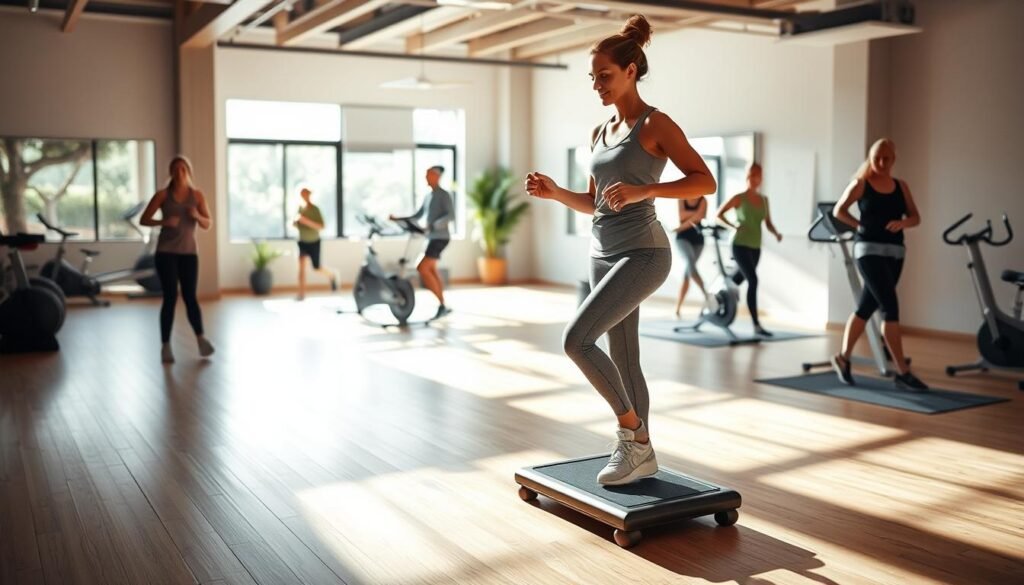
Pick activities that match your goals and pain level. Rotate water, machines, and outdoor sessions to keep variety and avoid repetitive strain.
- Swimming: Buoyancy in the water cuts load on your joints. Try freestyle, breaststroke, or backstroke to hit different muscles.
- Cycling: Stationary or outdoor riding keeps weight off your feet. Add gears or hills to raise intensity without impact.
- Rowing: A seated, total-body option. Drive with legs, then core and arms, and recover in reverse for smooth power.
- Elliptical training: Glide to remove jarring footstrikes while engaging upper and lower body.
- Vertical climber: Rhythm-based climbing that spikes your heart rate with near zero joint stress.
- Walking: Accessible and mood-boosting. Use 1–3 minute brisk intervals and light inclines for a cardio bump.
- Hiking: Trails offer softer ground and added nature benefits for your mental health.
- Skating: Lateral motion trains glutes and hip stabilizers differently than running.
- Yoga & Pilates: Improve mobility and core strength to protect joints and boost functional strength.
- Shadowboxing: Fast combinations keep intensity high without jumps, testing coordination and cardio.
For more ways to shape a safer routine, see fitness for women over 35 for tips on progression and form.
Benefits and Joint-Protection Basics of Low-Impact Workouts
A smarter approach to cardio lets you raise effort and lower wear-and-tear on your body.
What you gain: low impact training delivers clear benefits. It improves heart and lung function, aids weight control, and helps blood pressure and cholesterol — real markers of long-term health.
Protect joints by reducing pounding. That eases joint pain and joint pain stiffness while you steadily build fitness. Swimming, cycling, and rowing keep weight off your feet and limit jarring ground contact.
Accessibility and cross-training: these low impact exercises suit many ability levels. Mix them to lower injury risk and recover without losing cardio gains.
Intensity vs. impact: you can push your heart rate high without pounding. Dial resistance, cadence, or incline to increase effort. This is the safest way to combine hard sessions with joint-friendly form.
- Plan higher and lower impact days to manage risk.
- Add core and mobility work to boost strength and balance.
- Result: fewer setbacks, steady progress, and workouts you can repeat.
How to Build Your Low-Impact Cardio Routine
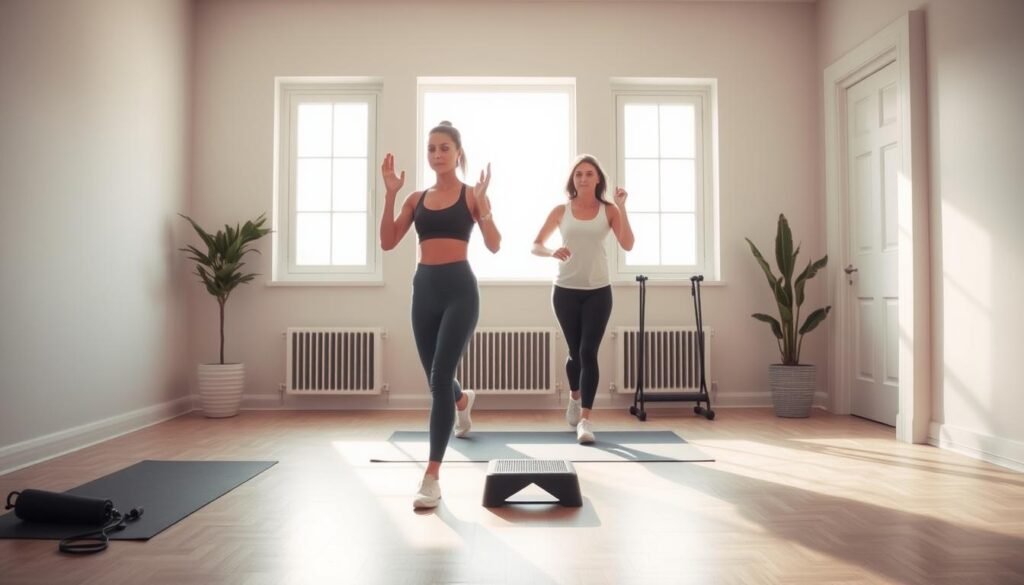
Build a practical weekly plan that keeps your heart strong while sparing your joints.
Your weekly plan: Aim for at least 150 minutes of moderate-intensity cardio spread over 3–5 days. That keeps momentum without overloading any one set of joints. Mix longer steady sessions and shorter interval efforts so each week advances your fitness and supports your goals.
Interval ideas: For walking, alternate 2 minutes brisk with 1 minute easy. For cycling, do hill repeats: higher resistance for 1–3 minutes, then spin easy. On a rower, try 20–30 second power bursts followed by 60–90 seconds smooth recovery. These patterns raise heart rate and build conditioning without high impact.
Form and setup tips: On the bike keep a slight knee bend at full extension and set handlebars to avoid slouching. On the rower strap in, start with shins vertical, push through your heels, drive legs → core → arms, then reverse to recover. These cues protect knees, hips, and back and lower injury risk.
- Progress slowly: add 5–10 minutes or one extra interval each week.
- Mix modes: rotate machine, water, and outdoor sessions to cross-train and spare specific joints.
- Track effort: use breath or heart rate to control intensity so you push hard on purpose, not by accident.
- Finish calm: your joints should feel steady after a session even when your lungs and legs worked hard.
“Build consistency first, then intensity — it’s the safest way to get fitter and reduce long-term risk.”
Conclusion
Wrap up with this: smart, joint-friendly choices let you push intensity without extra impact. ,
You’ve got a clear path: choose low impact exercise, keep effort honest, and stay consistent to protect your joints and improve cardio.
When joint pain flares, shift to swimming or another low impact cardio option so you keep training without adding pain.
Rotate sessions across water, machines, and outdoor days. Check breathing and effort during each cardio workout so you balance work and recovery.
Pick the session that lets you move well today and again tomorrow. That way you build fitness, avoid setbacks, and enjoy your routine.
FAQ
What counts as low-impact cardio and why should I choose it?
Low-impact cardio includes activities that keep at least one foot on the ground or remove bodyweight from the joints, such as swimming, cycling, elliptical training, rowing, and walking. You should choose it if you have joint pain, stiffness, or a history of injury, or if you want safer ways to raise your heart rate while protecting knees, hips, and ankles.
Can these exercises really burn fat without stressing my joints?
Yes. Exercises like swimming, rowing, and cycling raise heart rate and burn calories while minimizing ground reaction forces. If you combine moderate- to high-intensity intervals with consistent sessions and good nutrition, you can lose fat without heavy joint loading.
How often and how long should I do low-impact cardio each week?
Aim for at least 150 minutes of moderate-intensity cardio per week or 75 minutes of vigorous activity. You can split that into 30-minute sessions five times per week or shorter intervals. Mix steady-state sessions with interval training for better cardiovascular gains and fat loss.
Which options are best if I have knee or hip pain?
Water-based exercise like swimming or water walking, cycling (stationary or outdoor), and the elliptical reduce joint load. Rowing can work too if your technique is solid. Prioritize proper bike fit and easy resistance, and stop if pain spikes.
How do I protect my joints while using an indoor bike or rowing machine?
Set the seat and pedal position so your knee has a slight bend at the pedal’s bottom. For rowing, focus on smooth drive and recovery, keep a neutral spine, and use legs first, then back and arms. Start with light resistance and increase intensity before adding load.
Is walking effective for fat loss if I can’t do higher-intensity activity?
Absolutely. Walking is accessible and sustainable. Increase intensity with brisk pace, incline, hills, or intervals. Consistent walking improves cardiovascular health, mobility, and mood while lowering injury risk compared with running on hard surfaces.
Can I include strength training with these routines to protect joints?
Yes. Adding resistance work for hips, glutes, quads, hamstrings, and core improves joint stability and reduces pain risk. Bodyweight exercises, resistance bands, and machine-based strength sessions pair well with cardio to build muscle and support joints.
What role does intensity play when I want low impact but big results?
You don’t need high impact to get high intensity. Use interval training—short bursts of effort followed by recovery—on a bike, rower, elliptical, or in shadowboxing. This raises heart rate and metabolic cost while keeping ground forces low.
Are there specific tips for hiking or trail walking to protect joints?
Choose softer trails, wear supportive shoes with good cushioning, use trekking poles to reduce load on knees, and control downhill pace to limit impact. Gradually increase distance and incorporate rest to avoid flare-ups.
How do I know when I should see a doctor about joint pain related to exercise?
See a healthcare provider if pain worsens despite rest, limits daily activities, causes swelling or instability, or follows a traumatic injury. Persistent or sharp pain during motion needs evaluation before you continue or progress your routine.