Have you ever wondered which simple moves can keep you steady as you age? Falls send over three million older Americans to the ER each year. That stat alone makes this worth your time.
You’ll learn what Balance and Stability really mean for daily life. Small shifts in muscle mass and reaction speed change how your feet meet the ground.
This short guide shows why targeting glutes, quads, hamstrings, and your core matters. A few minutes of targeted fitness and smarter movement can cut fall risk and protect you from serious injury.
Inside, you’ll get seven practical exercises that fit any schedule. Each move uses clear cues so you build strength without extra gear.
Quick takeaway: Consistent practice buys confidence, better footing, and more independence in daily tasks.
Why Balance and Stability Matter After 35
Keeping steady after 35 means more than fewer stumbles — it preserves your freedom to move each day.
Balance is the even spread of weight that helps you stay upright. Stability is your body’s alignment system that limits excess motion from foot to torso.
As you age, muscle mass and reaction speed drop. That combination raises the chance a trip becomes a fall. Each year more than three million older adults visit emergency rooms after a fall, and these incidents are a leading cause of injury and death for those 65+.
Lower-body movers — glutes, quads, hamstrings — plus a strong core help absorb force and reduce knee stress. That support makes everyday activities like walking, stairs, and carrying groceries safer and less tiring.
How this affects daily life
- You use balance to shift weight when you reach, turn, or pivot during routine movement.
- Stability keeps joints stacked and your torso controlled so small slips don’t escalate into injury.
- A few focused minutes of fitness each day deliver long-term benefits, giving you steadier steps and more confidence throughout your body.
To learn practical ways to build strength and cut fall risk, check a targeted routine for older adults like this fitness plan for women over 35.
How to Do 7 Balance Exercises to Prevent Falls
Start with clear, safe steps that train your feet, ankles, and hips for steadier daily movement.
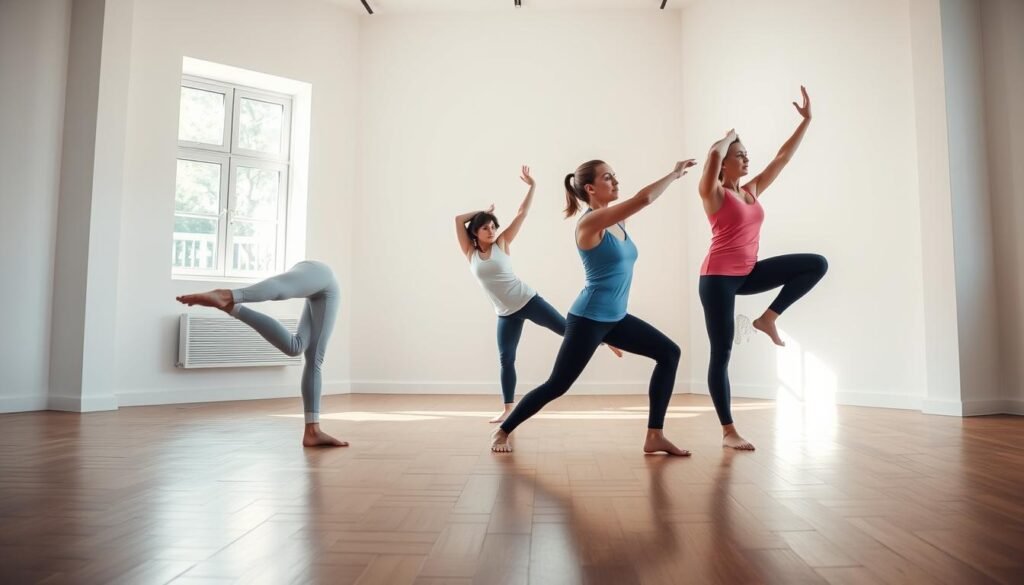
Use these seven focused moves to build foot control, knee tracking, and hip strength. Move slowly, keep a safe starting position, and breathe between reps.
-
Walk the Line
Set heel-to-toe in a straight line. Place your right foot in front so the left foot toes touch the right heel. Hold 1-2 seconds each step, then switch so the left foot leads. Repeat at least five steps per side. Use a wall or chair if needed.
-
Single-Leg Stance Series
Practice backward, front, and lateral holds. Lift the right foot behind for 10 seconds, then the right leg in front, then to the side. Do up to three sets per leg. Keep the plant knee soft; extend your arms for counterbalance if you need.
-
Rise Up (Calf Raises)
Stand with feet together. Slowly rise onto your toes, hold 3 seconds, then lower. Do 5–20 reps to strengthen small ankle muscles that support every step.
-
Sit-to-Stand
From a firm chair, use a safe starting position: knees shoulder-width, toes slightly turned out. Sit down under control, pause, then push through your heels to stand. Repeat 3–5 times to train knee tracking and hip power.
-
Step-Ups
Face a stable step. Lead with the right foot, then bring the left foot up; step down right then left. Repeat 10 times, then start with the left foot for symmetry. Track repeat times as you progress.
-
Core Stability Add-Ons
Forearm plank: elbows under shoulders, press through forearms and toes to hold a straight line from shoulders to feet for 30 seconds. Repeat four times to engage the core without letting hips sag.
-
Glutes and Hips
Do glute bridges (20 reps): drive through heels to lift hips to shoulders-to-knees alignment. Add band walks: band above the knees or at the ankles, hinge slightly and take 10 steps to the right and left for four reps total.
“Progress only when you can hold each position for the recommended seconds without losing alignment.”
Tip: Move deliberately; the goal is a smooth, controlled process, not speed. These balance exercises improve foot control, knee support, and hip strength so you feel steadier on your feet.
Build Balance and Stability Into Your Routine
A few micro-habits build lasting control so movement feels safer and easier.
Daily micro-habits
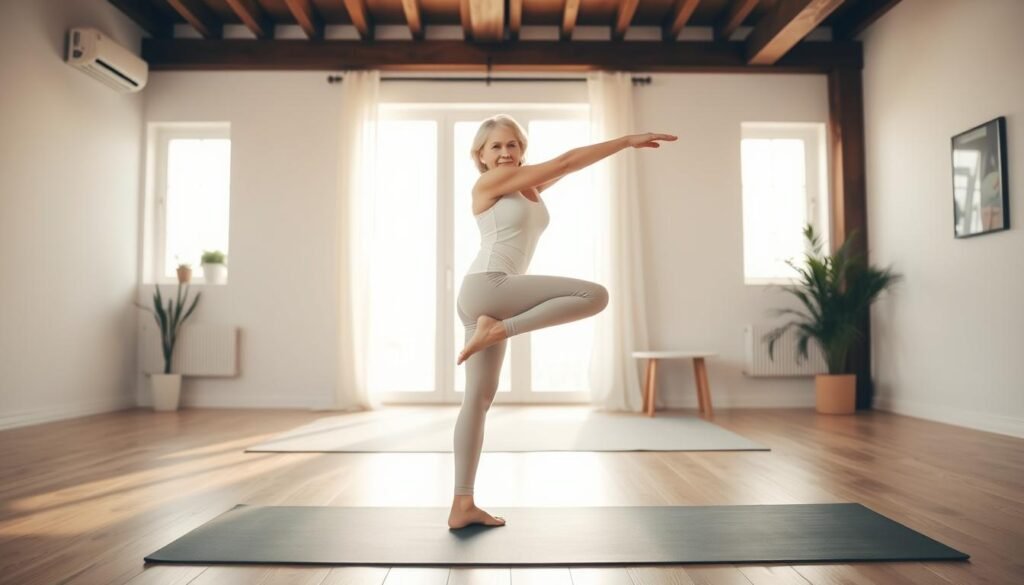
Stand on one leg while you brush your teeth. Switch feet halfway through to train both sides without extra time.
Use this simple routine to steadily improve your ability while you go about daily activities.
Progressions
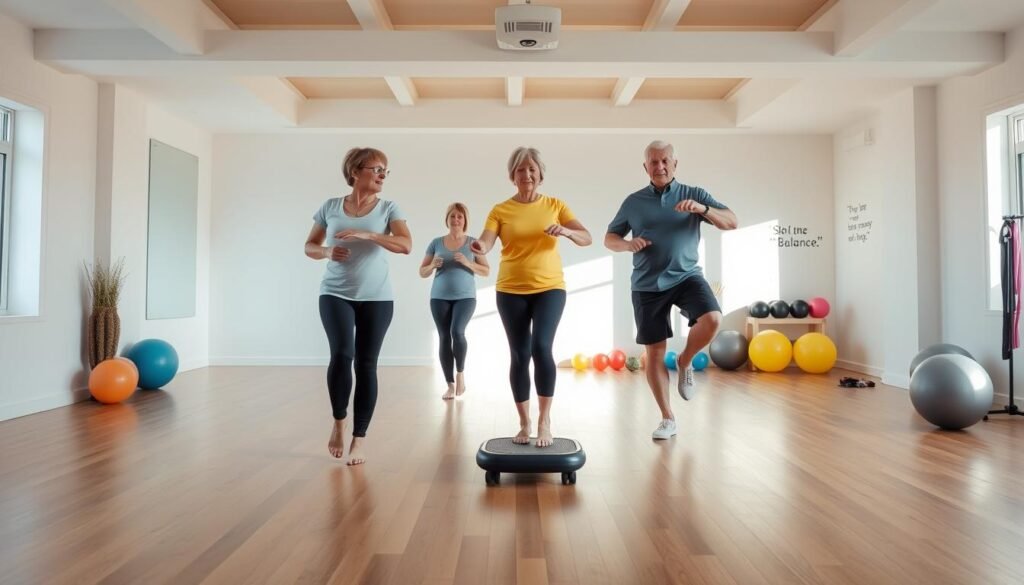
Start on firm ground. When you hold form for 20–30 seconds, level up to a foam pad or a BOSU to increase challenge safely.
Form first
Keep your torso stacked, hips level, and knee tracking over toes. If the knee caves in or your torso tilts, step back to solid ground and rebuild control.
- Blend short blocks of training into breaks — 10 step-ups, a quick plank — to make a consistent routine.
- Mix resistance training, yoga, and light strength work so different types of fitness support real-world movement.
- Track what felt shaky; a one-time assessment with an exercise physiologist can personalize progress and help prevent injury.
“Small, regular practice beats rare, long sessions for sustainable benefits.”
Conclusion
Small, steady practice builds real gains in how your feet and hips respond to daily tasks.
Use the simple toolkit you learned — tandem walking, single-leg holds, calf raises, sit-to-stands, step-ups, plus core and hip work — most days for short blocks.
Keep a clean starting position, count holds in seconds, and track repeat times so each rep stays controlled. Alternate starting with the right foot and left foot during walking and step-up drills.
Progress from firm ground to a slightly unstable surface only when hips stay level and knees track over your toes. If you want a plan to match your needs, see this helpful guide for building lasting fitness: foundations of physical fitness.
Respect form, move slowly, and make this short routine a daily habit to help prevent injury and improve movement throughout your body.
FAQ
What basic exercises help improve balance after 35?
Start with simple moves you can do at home: tandem stance (walk the line), single‑leg holds, calf raises, sit‑to‑stand repetitions, step‑ups, forearm planks, and glute bridges. These target feet, ankles, hips, and core — all key to preventing falls and boosting your ability to stay steady.
How often should you practice these exercises to see progress?
Aim for short sessions three to five times weekly. Do two to three sets of each exercise, holding balance poses for 15–30 seconds and repeating movements 8–12 times. Consistency over weeks improves strength, reaction time, and movement control.
Can you do these moves if you have mild knee or hip pain?
Yes, with modifications. Use a chair for support during single‑leg holds, reduce range on step‑ups, and keep sit‑to‑stand slow and controlled. Focus on form — hips level, knees tracking over toes — and stop if pain increases. Consider checking with a physical therapist for tailored guidance.
How do you progress when these exercises become easy?
Increase challenge by extending hold times, adding light resistance (bands or dumbbells), moving from firm ground to a foam pad or BOSU, or trying single‑leg variations with small movements. Always keep form first to prevent injury.
Are core exercises really needed for steadiness?
Absolutely. A strong core keeps your torso aligned and transfers forces from feet to hips. Forearm planks and controlled pelvic bridges help stabilize your spine and hips so you react faster to trips or uneven ground.
What daily habits reinforce progress outside formal workouts?
Use micro‑habits: stand on one foot while brushing your teeth, take the stairs instead of the elevator, and practice walking a straight line at home. These small actions build proprioception and make gains more durable.
Is resistance training important for preventing falls?
Yes. Strength work for legs and hips — like step‑ups, squats, and band walks — reduces muscle loss and improves power. Strong muscles let you recover from stumbles and lower your overall injury risk.
When should you seek professional help for balance issues?
See a healthcare provider if you have frequent dizziness, sudden loss of coordination, repeated falls, or mobility that limits daily activities. A physical therapist can assess gait, prescribe tailored exercises, and suggest assistive devices if needed.