
Could a simple change in your daily plate cut cravings, steady energy, and help your body handle shifting hormones?
As you move into midlife, appetite and fat distribution often change. Yet only about 7% of Americans hit the recommended daily target. That gap leaves many people missing a big health lever.
This guide gives a clear roadmap: how many grams to aim for each day, why that number matters, and how small shifts can make a real difference in gut health, blood sugar, cholesterol, and weight.
You’ll get practical tips you can use in your morning routine and at dinner, plus a simple plan to raise intake the right way so you avoid discomfort. Want the full blueprint and U.S.-friendly food ideas? See a deeper guide here: nutrition blueprint for women over 35.
Why Fiber Matters More After 35 for Your Health, Hormones, and Energy
As estrogen levels shift around your mid-30s, your body changes how it stores energy and where fat collects. This can raise LDL cholesterol, alter blood sugar control, and nudge appetite cues toward more frequent cravings.
Eating more plant-based carbohydrate and roughage helps steady those shifts. It keeps you feeling full longer, reduces sugar spikes that sap energy, and supports healthy cholesterol and insulin action.
Your gut is central to whole-body balance. Beneficial microbes feed on plant carbohydrates and produce compounds that lower inflammation and support metabolism. A happier gut often means better digestion and a steadier mood.
Small, steady changes win. Add legumes, oats, berries, and vegetables across the day, and drink enough water as you increase intake. These swaps cut cravings, improve heart and blood markers, and make daily energy more reliable without a major diet overhaul.
- Steadies appetite and supports cholesterol
- Reduces blood sugar swings and eases insulin load
- Feeds microbes that lower inflammation and aid digestion
How Much Fiber You Need Each Day—and Why It Changes in Midlife
Knowing the right daily target makes it easier to pick meals that actually support appetite control and steady energy.
Your daily target in grams
Leading groups recommend about 25–30 grams a day for most adults assigned female at birth and 38 grams for men. Very few people meet these numbers—only around 7% of the U.S. population.
Why estrogen changes alter body composition
During menopause, estrogen levels drop and the body tends to shift fat toward the abdomen. Raising your grams toward the recommendation helps with satiety, cholesterol, and better blood sugar responses that support healthier body composition.
Hydration and gradual increases
Increase intake slowly—add 3–5 grams each week—and drink extra water so your gut moves food comfortably. Start with cooked veg, oats, and beans if you’re sensitive, then add raw produce and whole grains.
- Aim for 25–30 grams a day and track a few days to find your baseline.
- Spread grams across meals to keep blood sugar and digestion balanced.
- Pair plant carbs with lean protein and healthy fats for lasting fullness.
Soluble vs. Insoluble Fiber: What Each Type Does for Your Body
Not all roughage behaves the same in your body — some soothe blood sugar while others speed digestion. Knowing the difference helps you pick foods that support appetite, energy, and long-term health.

Soluble: steady blood sugar and heart support
Soluble fiber forms a gentle gel that slows carbohydrate absorption and smooths blood sugar levels after meals. It also feeds good microbes in the gut and boosts GLP-1, a hormone that aids appetite control and insulin efficiency.
Just 5–10 grams daily of soluble type can lower LDL cholesterol by about 5%, a meaningful boost to heart health.
Insoluble: regularity, bulk, and satiety
Insoluble fiber adds bulk and speeds transit through the gut. That helps keep you regular, supports digestion, and makes meals more filling so you eat less overall.
A practical ratio and easy ways to get both
- A simple rule: aim roughly 2:1 insoluble to soluble, but don’t overthink the ratio — variety wins.
- Choose whole grains, oats, beans, lentils, fruit with skins, vegetables, nuts, and seeds to boost grams naturally.
- Combine grains with legumes at a meal (like barley and lentils) to cover both types without extra planning.
The Midlife Benefits: Weight Management, Blood Sugar, Gut Health, and Heart Health
Small shifts to what you eat each day can lower belly fat and steady your energy without drastic diets. These changes help body composition, steady hormones, and make hunger easier to predict.
Weight and visceral fat
Estrogen loss in perimenopause ties to rises in visceral fat—research shows a 10–20% uptick over several years. Raising soluble intake by 10 grams has been linked to about a 3.7% cut in visceral fat across five years. That translates into real progress in weight management without extreme measures.
Blood sugar and insulin
Eating more whole-plant carbs slows sugar absorption and limits insulin spikes. Smoother blood sugar levels mean fewer cravings and steadier energy through the day.
Gut health and inflammation
These foods act as prebiotics, feeding beneficial microbes that lower inflammation and support metabolic efficiency. Better gut health often equals steadier digestion and mood.
Heart health and cholesterol
Soluble choices can lower LDL by roughly 5% with 5–10 grams daily, giving added heart protection as you age.
- Pair plant carbs with lean protein to boost fullness.
- Track grams and personal signals—regularity, appetite, and energy—then adjust slowly.
Fiber for Midlife Women: Best Foods, Smart Swaps, and Supplements
Keeping a short list of pantry staples makes it easy to raise daily intake and keep hunger in check.
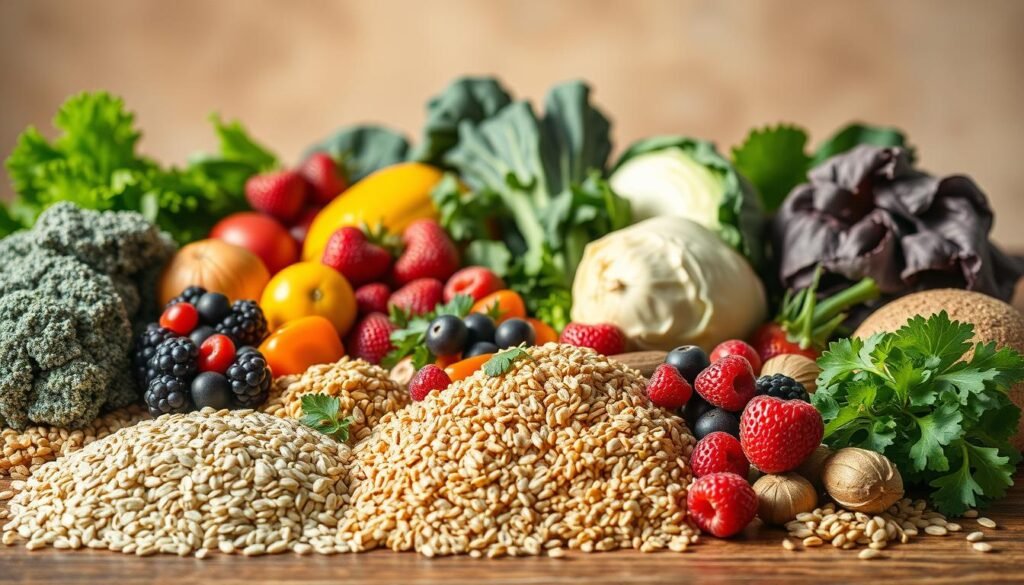
Top foods to keep on repeat
Stock pantry and fridge with reliable choices you enjoy. Lentils, black beans, oats, chia, and raspberries pack big returns in small portions.
Whole grains and simple swaps
Trade white rice or bread for quinoa, barley, or 100% whole grain bread to boost grams without fuss. Build bowls with beans and a grain to hit targets fast.
Produce strategy and hydration
Eat skins-on fruit and colorful non-starchy vegetables. Drink extra water as you increase intake so digestion stays smooth.
Supplements that can help
- Psyllium for regularity and cholesterol support.
- Inulin to feed beneficial microbes in the gut.
- Methylcellulose or wheat dextrin if gas is an issue.
“Add 3–5 grams at a time, spread across meals, and your body will adapt more comfortably.”
What to limit
Cut refined carbs and added sugar that spike blood sugar and undermine long-term management. Pair fiber with protein to stay full and keep energy steady.
Timing Your Fiber: Morning, Evening, and All-Day Wins
Small shifts in when you eat plant-rich foods can smooth blood glucose and curb late-night cravings. Spreading intake through the day helps your gut handle more roughage and supports steady blood sugar levels and insulin balance.
Morning meals to blunt sugar and steady appetite
Start with oats, berries, and nuts to slow sugar absorption and set a calm appetite through late morning. Add protein—Greek yogurt or an egg—to lengthen fullness and steady energy.
Why it works: soluble choices at breakfast slow carbohydrate uptake and lower peaks in blood levels, which reduces mid-morning hunger and keeps your day balanced.
Evening plates for satiety, digestion, and better sleep
At dinner, include vegetables and beans so you wake with less urge to snack. A fiber-forward evening meal can ease overnight digestion and support more restful routines.
Hydrate with a full glass of water at meals so the roughage moves well and you avoid bloating. On active days, pair balanced macros to keep fuel steady for exercise and recovery.

- Start mornings with oats, berries, and nuts to blunt spikes.
- Combine fiber with protein at breakfast for longer energy.
- Use legumes and whole grains at lunch to prevent afternoon slumps.
- Add vegetables and beans at dinner to reduce late-night snacks.
- Spread fiber across meals and drink water with food to ease digestion.
The Long Game: Fiber, Quality Carbs, and Healthy Aging
Choosing nutrient-dense carbs now can change how you age—physically and mentally. In a large cohort, higher intake of high-quality carbohydrates and dietary fiber during midlife was linked to a 6–37% greater chance of healthy aging.
High-quality carbohydrates, dietary fiber, and your odds of aging well
Whole grains, fruits, vegetables, and legumes pack fiber and micronutrients that support stable blood sugar and a healthier heart. Refined carbs and starchy processed options were tied to about a 13% lower chance of aging well.
Make these choices a habit: aim for varied plant foods most days and hit your grams goal regularly to nourish your gut health and lower inflammation.
From perimenopause onward: pairing fiber with protein, movement, and sleep
Pair plant carbs with protein at meals to protect muscle and support hormones during perimenopause and after. Strength training twice weekly plus 150 minutes of moderate exercise boosts the impact of your diet.
- Rotate whole grains and beans several times a week.
- Prioritize sleep and stress management to keep appetite and blood sugar steady.
- Think long-term: consistent nutrition habits compound into better heart, brain, and functional health.
“Small, steady choices today raise your odds of living stronger and clearer later in life.”
Conclusion
Consistent, simple choices can lower inflammation, steady sugar levels, and protect heart and metabolic health over time.
You now have a clear daily target: aim for 25–30 grams and use whole grains, beans, fruit, and veg to hit it. Tracking grams for a week helps you spot easy swaps that stick.
Fiber helps steady blood sugar and support healthier cholesterol, which supports weight and body composition as you age. Pair each meal with protein, hydrate well, and add strength plus cardio exercise each week to amplify the results.
Make gradual changes, note what fits your routine, and rely on this guide as a practical nutrition road map. Small, repeatable steps add up into better health today and healthier years ahead.
FAQ
How much fiber do I really need each day after 35?
Most major organizations recommend about 25–30 grams daily for adult women, though needs rise slightly with age and metabolic changes. Aim to reach that gradually and pair it with protein and water so your body adapts comfortably.
Why does this matter more during perimenopause and menopause?
Hormone shifts — especially lower estrogen — change where your body stores fat and how it handles blood sugar. Increasing soluble and insoluble sources helps steady glucose, support a healthy gut, and reduce visceral fat risk over time.
What’s the difference between soluble and insoluble sources and which should I prioritize?
Soluble types (oats, beans, psyllium) slow digestion and help control blood sugar and LDL cholesterol. Insoluble types (whole grains, vegetable skins) speed gut transit and reduce constipation. You need both; a simple balance works better than obsessing over ratios.
Can upping intake make me bloated, and how do I avoid that?
Rapid increases can cause gas and bloating. Go up slowly over several weeks, drink plenty of water, spread fiber across meals, and include fermented foods. If you try supplements like psyllium or inulin, start with small doses and monitor how you feel.
Which foods give the biggest boost without a lot of calories?
Beans, lentils, berries, oats, chia or flax, and non-starchy vegetables deliver high returns. Swap refined grains for whole grains like barley or quinoa and choose legumes regularly to increase intake while keeping calories in check.
Are supplements like psyllium or inulin safe and effective for midlife nutrition?
Yes, many supplements help reach targets and support blood sugar and cholesterol control. Psyllium and methylcellulose are gentle options; inulin feeds beneficial bacteria but may cause more gas. Check labels, start low, and consult your clinician if you take medications.
How does this help with blood sugar and insulin resistance?
Slower carbohydrate absorption from soluble sources blunts post-meal glucose spikes and lowers insulin demand. Regularly choosing high-quality carbohydrates paired with protein and fiber improves stability across the day.
When’s the best time to focus on higher intake — morning or evening?
Both times matter. Morning fiber helps curb mid-morning cravings and steadies blood sugar. Evening fiber can increase satiety and support overnight digestion. Spread your servings across meals and snacks for consistent benefits.
Can more fiber help heart health and cholesterol?
Yes. Soluble sources bind bile acids and help lower LDL cholesterol. Regularly eating oats, beans, and psyllium is linked to modest but meaningful improvements in heart risk markers.
How much water should I drink when increasing intake?
Increase fluids alongside higher intake to aid motility and reduce constipation. A practical target is to sip water throughout the day and be mindful of urine color — pale straw is a good sign. Adjust if you’re exercising or in hot weather.
Will higher intake help with weight and body composition?
Yes. Foods rich in this nutrient increase fullness, reduce calorie density, and can lower visceral fat when paired with protein, resistance exercise, and consistent habits. It’s one useful tool in a broader lifestyle approach.
Are there foods I should avoid that undermine these benefits?
Limit refined grains, sugary snacks, and highly processed foods that spike glucose and displace whole foods. Those choices reduce the positive effects of high-quality carbohydrates and prebiotic-rich options on your microbiome and blood sugar.
How do I add more without overthinking meal prep?
Make simple swaps: choose beans for one meal a day, breakfast oats or chia pudding, berries as snacks, and keep a bag of frozen vegetables on hand. Batch-cooking lentils or whole-grain salads makes consistent intake much easier.
Should I track grams each day or focus on food choices?
Start by improving choices and adding one high-yield item per meal. Tracking grams can help you reach a target if you need precision, but most people get better results by consistently choosing whole, fiber-rich foods paired with protein and healthy fats.