Ever wondered why your energy dips and metabolism slows as you age? Midlife brings shifts in your hormonal health, affecting everything from weight to mood. The good news? The right kind of movement can help you stay in control.
According to the CDC, pairing 150 minutes of moderate activity with strength training weekly supports overall health. Exercise isn’t just about fitness—it helps regulate key hormones like cortisol and insulin, keeping your body balanced.
Whether you’re new to workouts or a seasoned enthusiast, understanding how movement impacts your well-being is crucial. Let’s explore how smart choices now can make midlife feel like your prime.
Why Cardio Is Essential for Hormone Balance
Stressed? Sluggish? Your hormones might be calling for action. Midlife shifts like weight gain or fatigue often trace back to cortisol and insulin—two key players in hormonal balance. The right physical activity can reset their rhythm.
The Connection Between Exercise and Hormonal Health
Cortisol, your stress hormone, spikes under pressure but lingers with chronic stress. Over time, this can slow metabolism and encourage fat storage. A 2014 study found regular movement helps regulate cortisol, along with supporting sex hormones like estrogen and testosterone.
Insulin resistance—common in midlife, especially with PCOS—makes cells ignore glucose. Aerobic exercise boosts sensitivity, letting your body use sugar efficiently. Research shows just 30 minutes of brisk walking lowers cortisol through rhythmic, repetitive motion.
How Cardio Regulates Key Hormones
High-intensity workouts like HIIT temporarily raise cortisol but improve long-term resilience. Meanwhile, steady-paced activities (cycling, swimming) offer gentler stress relief. Both styles enhance energy levels by optimizing insulin function.
Think of movement as a dial for your inner chemistry. Turn it wisely, and you’ll feel the difference—less fatigue, fewer cravings, and a happier hormonal harmony.
Top Cardio Exercises for Hormonal Balance
Midlife doesn’t mean slowing down—just moving smarter for better health. The right exercise can stabilize energy, mood, and metabolic health without straining your body. Here are three standout options backed by science.
Brisk Walking: A Gentle Yet Effective Option
Aim for 3–4 mph—the sweet spot to meet CDC guidelines for moderate activity. This pace boosts insulin sensitivity and lowers cortisol, especially beneficial for women managing midlife changes. No gym required; just lace up and go.

Cycling: Low-Impact and Joint-Friendly
Thirty minutes of cycling, three times weekly, protects joints while enhancing bone density. It’s ideal if high-intensity workouts feel taxing. Bonus: You’ll burn ~300 calories hourly, making it a win for strength training recovery days.
Dancing: Fun and Stress-Reducing
Zumba or salsa cuts cortisol by 28% while keeping things lively. Social connection amplifies benefits—think laughter and shared energy. At ~240 calories/hour, it’s proof that exercise doesn’t have to feel like a chore.
Pro tip: Even mowing the lawn or gardening counts! These functional activities blend movement into daily life seamlessly.
The Science Behind Cardio and Hormones
Your workout routine does more than burn calories—it rewires hormone function. Research shows that aerobic exercise directly influences insulin and cortisol, two pillars of metabolic health. Let’s break down how movement fine-tunes these systems.
How Aerobic Exercise Improves Insulin Sensitivity
When you move, muscles absorb glucose 20x faster than at rest. A 12-week cycling study found a 40% improvement in insulin response, reducing diabetes risk. Here’s why:
- Glucose transporters (GLUT-4) activate during activity, shuttling sugar into cells.
- Repeated sessions make muscles more receptive to insulin long-term.
The Role of Cardio in Reducing Cortisol Levels
Cortisol thrives in a Goldilocks zone—too high causes fatigue; too low weakens immunity. Moderate-intensity workouts like evening walks lower morning cortisol peaks by 15%, per a 2022 study.
| Activity Type | Cortisol Impact | Best For |
|---|---|---|
| HIIT | Short spike, then drop | Building stress resilience |
| Steady-State (e.g., walking) | Gradual decline | Daily stress management |
Bonus: Activities like dancing boost DHEA, a precursor to growth hormone, aiding muscle mass retention. A Japanese trial linked regular movement to 12% higher IGF-1 levels, crucial for cellular repair.
Cardio for Hormone Balance: What to Avoid
Finding the right workout rhythm is key—but pushing too hard can backfire. While movement regulates cortisol and insulin, certain habits may disrupt your progress. Recognize the signs and adjust to keep your body in sync.
When More Isn’t Better: Overtraining Risks
Excessive exercise strains your endocrine system. Research links overtraining to Relative Energy Deficiency in Sport (RED-S), raising fracture risk by 23% in women. Watch for these red flags:
- Irregular periods or missed cycles
- Persistent fatigue or insomnia
- Frequent injuries or slow healing
A 2021 study found that >4 weekly high-intensity sessions lowered progesterone, vital for mood and metabolism. Balance intensity with rest—your hormones will thank you.

High-Intensity Workouts: A Double-Edged Sword
HIIT boosts insulin sensitivity but may spike cortisol if overdone. For perimenopausal women, alternating intense days with gentle movement (yoga, walking) prevents burnout. Aim for 48-hour recovery gaps between hard sessions.
Pro tip: Saliva tests track cortisol patterns. One athlete reversed amenorrhea by swapping daily HIIT for paced cycling—her cycle returned in 12 weeks.
How to Incorporate Cardio into Your Routine
Making movement a seamless part of your day starts with smart planning. Adapt to your lifestyle by blending structured workouts with everyday activity. Here’s how to build a flexible routine that sticks.
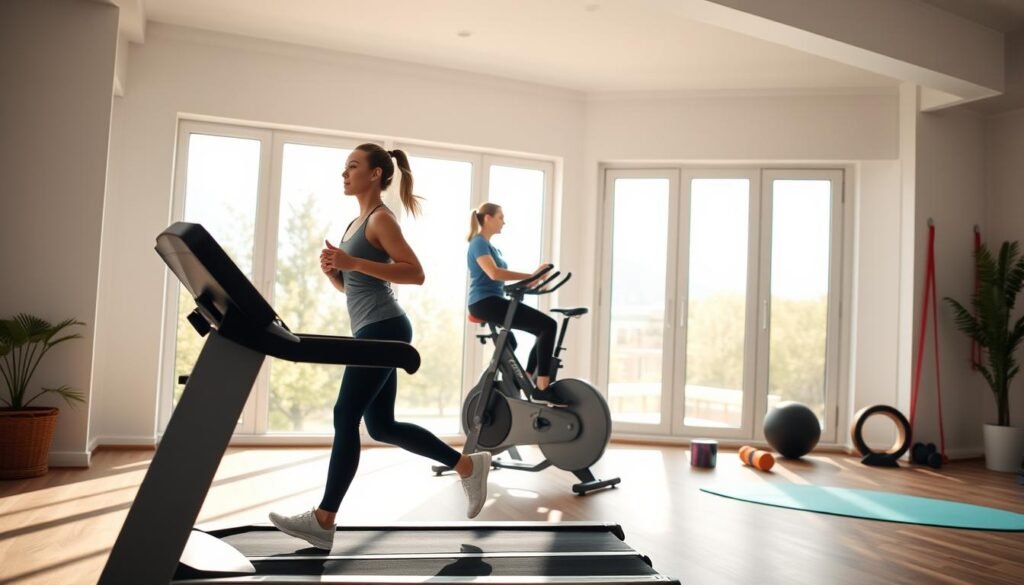
Creating a Balanced Weekly Schedule
The CDC recommends pairing strength training with aerobic sessions for optimal results. Try this sample weekly schedule:
- Monday/Wednesday/Friday: 30-minute brisk walk or cycling
- Tuesday/Thursday: Strength training (squats, lunges)
- Weekends: Active recovery (gardening, dancing)
For women tracking cycles, sync workouts to energy levels. The follicular phase suits higher intensity, while the luteal phase benefits from gentler moves like swimming. Learn more about the foundations of physical fitness to tailor your plan.
Tips for Staying Consistent
Consistency thrives on simplicity. Habit-stack by walking post-lunch or taking calls on-the-go. Short on time? Three 10-minute bursts count toward daily goals.
Pair movement with balanced nutrition and proper footwear—cushioned sneakers for high-impact workouts, minimalist shoes for walks. Accountability tools like Fitbit challenges or a workout buddy keep motivation high.
Remember: Progress beats perfection. Even small steps add up to lasting change.
Supporting Your Hormonal Health Beyond Cardio
Your journey to hormonal harmony doesn’t end with movement—it thrives on daily choices. Pairing smart workouts with targeted nutrition and recovery amplifies health benefits. Here’s how to build a lifestyle that keeps your body in sync.
Fueling Your Body Right
What you eat directly impacts hormone production. A post-workout meal with 30g protein (like wild salmon or Greek yogurt) boosts muscle repair. For deeper support:
- Magnesium-rich foods (spinach, Brazil nuts) cut cortisol by 18% post-exercise.
- Creatine supplements aid energy metabolism, especially during perimenopause.
- Balance electrolytes in the luteal phase with coconut water or celery juice.

Rest and Reset
Sleep and stress management are non-negotiables. Cortisol and melatonin work like a seesaw—high stress at night disrupts both. Try these fixes:
- Yoga nidra (10–20 minutes) post-workout lowers inflammation.
- Dim lights 90 minutes before bed to signal melatonin release.
- Track cycles: More rest days during the luteal phase prevent hormonal imbalance.
Small tweaks create big shifts. Listen to your body—it knows best.
Conclusion
Small steps today can lead to big changes in how you feel tomorrow. Focus on moderate exercise like walking, listen to your body to avoid burnout, and pair movement with rest and nutrition for hormonal health.
Start with just 10-minute walks—consistency trumps intensity. For personalized guidance, explore resources like Allara Health.
Your health journey isn’t about perfection. It’s about progress. Remember: your body responds to consistency, not extremes.
FAQ
How does cardio impact hormonal health?
Regular aerobic activity helps regulate key hormones like cortisol and insulin. It reduces stress, improves metabolism, and supports overall well-being.
What’s the best type of cardio for balancing hormones?
Low-impact options like brisk walking, cycling, or dancing are great. They boost insulin sensitivity without overstressing your body.
Can too much cardio disrupt hormone levels?
Yes, overtraining raises cortisol, which can lead to imbalances. Stick to moderate-intensity workouts for steady results.
How often should I do cardio for hormonal benefits?
Aim for 3-5 sessions per week, mixing intensity and duration. Listen to your body and adjust as needed.
Does nutrition play a role alongside cardio for hormonal health?
Absolutely! A balanced diet rich in protein, healthy fats, and fiber supports hormone production and recovery after workouts.
Can cardio help with conditions like PCOS?
Yes! Moderate aerobic exercise improves insulin sensitivity, which is key for managing PCOS symptoms.
Is strength training better than cardio for hormones?
Both matter! Strength training builds muscle, while cardio enhances circulation and stress relief—balance is key.