
Did you know nearly half of females in their late 30s and beyond face restless nights? Hormonal changes after 35 create unique challenges, making quality rest harder to achieve. But the stakes are higher than just fatigue—poor shut-eye increases cardiovascular risks and may weaken bone density by 40%.
The good news? Personalized strategies like hormone therapy and tailored lifestyle adjustments can help. Midi Health’s virtual specialists offer expert guidance to address these shifts. You’re not alone—better health through restorative rest is possible.
Later, we’ll explore science-backed methods to reclaim your nights. For now, remember: small changes can lead to big improvements.
Why Sleep Issues Are Common in Women Over 35
Night sweats and sudden awakenings aren’t just random—they’re hormonal. As estrogen and progesterone levels shift, your body’s ability to stay asleep weakens. These changes affect everything from body temperature to brain chemistry.
How Hormones Steal Your Rest
Estrogen helps regulate serotonin, a key neurotransmitter for deep rest. When it drops, you might wake up feeling wired. Progesterone, which has calming effects, also declines. This raises the risk of breathing disruptions by 4% yearly after 35.
Melatonin, your natural sleep aid, drops by 33% during menopause. Cortisol (the stress hormone) often spikes at night, keeping you alert. NIH research confirms this transition quadruples nighttime awakenings.
Menopause’s Sneaky Symptoms
Hot flashes aren’t just uncomfortable—they’re linked to 40% higher insomnia risk. Studies show 75% experience them during menopause, often jolting awake drenched. The SWAN study found perimenopausal individuals average 27% less deep rest than pre-menopause.
Ever bolt awake at 3 AM? Blame cortisol and fading melatonin. Small tweaks, like cooling your bedroom, can offset these symptoms. You’ll learn more solutions in later sections.
How Menopause Symptoms Disrupt Your Sleep
Waking up drenched at 2 AM? That’s your body’s thermostat misfiring. Hormonal shifts trigger cascading effects—from sudden temperature spikes to emotional turbulence—that steal quality rest.
When Heat Waves Hit at Night
Hot flashes aren’t just uncomfortable; they’re relentless. Thirty-three percent of females experience 4–10 episodes nightly, often jolting awake soaked. One Midi Health patient reported changing pajamas three times before dawn.
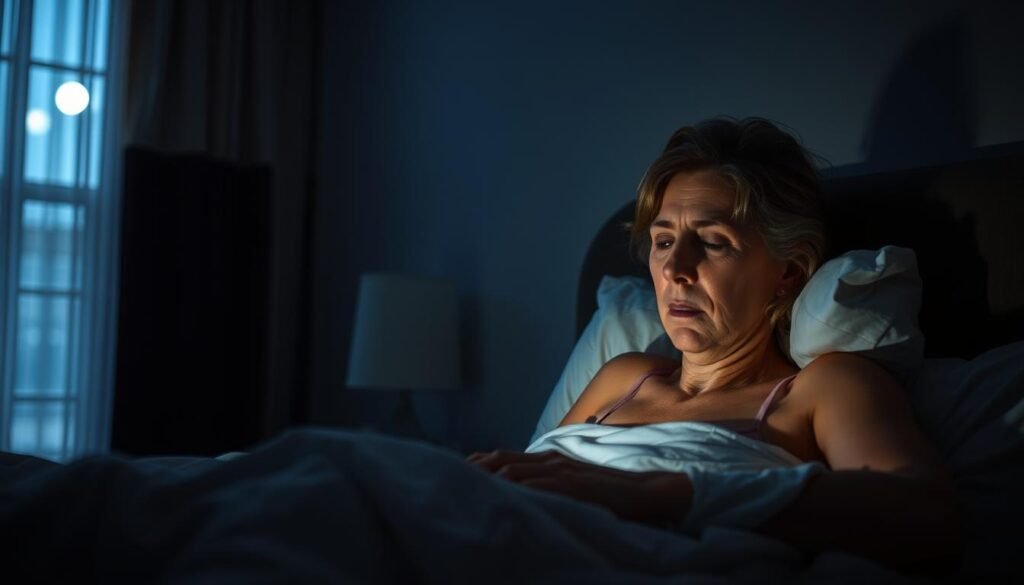
Night sweats stem from shrinking estrogen levels, which confuse your hypothalamus (the brain’s temperature regulator). This explains why 76% over 40 also face nocturia—those frustrating bathroom trips further fragment rest.
The Mood-Rest Cycle
Anxiety and irritability don’t just follow poor rest—they fuel it. Cortisol spikes at night create a loop: worrying about exhaustion prolongs wakefulness. Studies show 90% with depression in their 50s–60s battle insomnia too.
Hidden Risks Beyond Fatigue
Post-menopause, sleep disorders like apnea double in likelihood. Restless legs syndrome affects 50%+, while perimenopause raises apnea risk by 25%. These aren’t just inconveniences—they’re health threats needing attention.
The good news? Recognizing these patterns is step one. Later sections’ll explore solutions to break the cycle.
The Link Between Hormones and Sleep Quality
Your hormones act like a finely tuned orchestra—until menopause disrupts the rhythm. Estrogen, progesterone, and melatonin work together to regulate rest. When their balance shifts, the result isn’t just fatigue—it’s a cascade of symptoms that rewrite your nights.
Estrogen and Progesterone: The Conductors of Rest
Estrogen boosts GABA, a calming neurotransmitter that helps you unwind. As levels drop, your brain struggles to transition into deep rest. Progesterone, another key player, stabilizes breathing and soothes the nervous system. Its decline explains why 28% of postmenopausal individuals report more nighttime awakenings.
Estrogen withdrawal also hypersensitizes the hypothalamus, making you react intensely to tiny temperature changes. One Midi Health clinician notes, “We often see cortisol curves flipped upside down—like a false alarm that keeps the body in fight-or-flight mode.”
Melatonin’s Quiet Fade
Your body’s natural sleep aid, melatonin, drops by 28% postmenopause (Okatani study). This decline shortens restorative deep rest cycles. Supplementing with 0.3–5mg 30 minutes before bed may help reset your rhythm—but timing is key. Too late, and you might feel groggy at dawn.
Cortisol’s Midnight Spike
Stress hormones often peak when they shouldn’t. Mayo Clinic research found menopausal individuals have 22% higher nighttime cortisol. Kapoor’s 2021 study linked this to heavier symptom burdens. The fix? Strategies to calm the adrenal system—like breathwork or magnesium—can mute these false alarms.
Lifestyle Changes to Improve Your Sleep
Small daily habits can transform restless nights into restorative rest—starting tonight. Hormonal shifts may set the stage, but your choices play a leading role. Research shows simple tweaks to your environment, diet, and routine boost rest quality by up to 55%.

Optimizing Your Sleep Environment
Your bedroom should feel like a sanctuary. Keep the temperature at 68°F—the sweet spot to prevent night sweats. Use blackout curtains to block light, and try moisture-wicking sheets for comfort.
White noise machines mask disruptive sounds. A 2022 study found they reduce awakenings by 38% in menopausal adults. Place your phone face-down to avoid blue light interference.
The Role of Diet and Exercise
What you eat and when matters. Avoid alcohol after dinner—it cuts rest quality by 39%. Caffeine after 2 PM delays sleep onset. Hydrate earlier in the day to minimize nighttime bathroom trips.
| Morning Exercise | Evening Exercise |
|---|---|
| Yoga or walking boosts daytime energy | HIIT raises core temp, delaying rest |
| Enhances melatonin production | May trigger cortisol spikes |
Managing Stress and Anxiety
Nighttime worries feed insomnia. Try the 4-7-8 breathing technique: Inhale for 4 seconds, hold for 7, exhale for 8. Repeat three times. It slows your heart rate within minutes.
Cognitive Behavioral Therapy for Insomnia (CBT-I) improves efficiency by 55%. Track patterns with wearables like Oura Ring to identify triggers. Sarah, 42, gained 90 minutes nightly by adjusting hydration timing.
Natural Remedies for Better Sleep
Nature offers powerful allies to help you reclaim restful nights—without harsh side effects. From plant-based teas to targeted supplements, these solutions work with your body’s chemistry. Research shows they can ease symptoms like nighttime awakenings and restlessness.

Melatonin: Your Body’s Sleep Signal
Melatonin levels drop significantly during hormonal shifts. A 2013 meta-analysis by Ferracioli-Oda found low doses (0.5–5mg) improve rest quality by 28%. Start with 0.5mg sublingual tablets for faster absorption.
NatureMade Sleep Mini Melts dissolve quickly. Avoid capsules if you wake up groggy—they release slower. Take 30 minutes before bed to align with your natural rhythm.
Herbal Helpers: Valerian and Chamomile
Valerian root reduced sleep latency by 15 minutes in 80% of users (Taavoni trial). It boosts GABA, a calming neurotransmitter. Note: Effects take 2 weeks to build—don’t expect instant results.
Chamomile tea increases glycine, relaxing the nervous system. Steep two bags for 10 minutes to maximize benefits. Avoid if you’re on blood thinners—it may interact.
Magnesium’s Calming Power
An NIH review linked magnesium glycinate to 40% better rest quality. It relaxes muscles and regulates cortisol. Try CALM powder (200mg) in warm water before bed.
Foods like pumpkin seeds, spinach, and dark chocolate also boost levels. Pair them with vitamin D for better absorption.
These treatments offer gentle, effective support. Always consult your doctor before combining supplements. Next, we’ll explore medical options for persistent cases.
Medical Treatments for Sleep Issues
When natural remedies fall short, science-backed treatments offer relief. From hormone adjustments to specialized therapy, these options address root causes. Always consult your doctor to tailor solutions to your needs.

Hormone Replacement Therapy (HRT)
HRT reduces hot flashes by 75% and restores rest continuity. Delivery methods vary:
| Method | Benefits | Considerations |
|---|---|---|
| Patches | Steady hormone release | Skin irritation risk |
| Gels | Flexible dosing | Transfer risk to others |
| Oral | Convenient | Liver metabolism required |
The SWAN study found HRT lowers apnea risk by 30%. Avoid if you have a history of breast cancer—discuss alternatives with your clinician.
Non-Hormonal Prescription Options
Gabapentin (300mg at bedtime) cuts nighttime awakenings by 50%. SSRIs like paroxetine are used off-label for vasomotor conditions.
Newer options like fezolinetant (Veozah) target brain receptors to reduce hot flashes without hormones.
Cognitive Behavioral Therapy for Insomnia (CBT-I)
This therapy has an 80% success rate (Morin study). Key components include:
- Sleep restriction: Matching time in bed with actual rest needs
- Stimulus control: Reassociating the bed with sleep only
- Cognitive restructuring: Challenging negative thoughts about rest
Midi Health’s stepped approach starts with botanicals before advancing to prescriptions. The goal? Sustainable results with minimal side effects.
When to Seek Professional Help
Persistent nighttime struggles may signal it’s time for expert guidance. If lifestyle changes and natural remedies don’t bring relief, underlying conditions could be at play. Recognizing key warning signs helps you take action before health risks escalate.
Signs You Should Consult a Doctor
More than three awakenings weekly warrants evaluation. Other red flags include:
- Choking or gasping episodes
- Daytime exhaustion despite adequate rest
- Taking over 30 minutes to fall asleep
Untreated sleep disorders like apnea triple stroke risk. Prioritize your health—early intervention improves outcomes.
Sleep Studies and Diagnostics
Modern tests pinpoint issues accurately. Home kits like WatchPAT detect 89% of apnea cases by measuring oxygen levels and breathing patterns. Compare options:
| Method | Accuracy | Best For |
|---|---|---|
| Polysomnography | 95% | Comprehensive analysis (AASM-certified centers) |
| Actigraphy | 78% | Tracking rest patterns over weeks |
| Home Sleep Test | 89% | Convenient apnea screening |
Finding a Menopause Specialist
Ask potential providers: “Are you NAMS-certified?” The Menopause Society’s directory lists vetted experts. Insurance tips:
- CPT codes 95800–95811 cover sleep studies
- HRT consultations often fall under preventive care
Your experience matters—choose a doctor who listens and tailors solutions.
Conclusion
Restful nights are within reach—60% see improvements with the right approach. Whether it’s hormone adjustments or lifestyle tweaks, your solution exists. Midi Health’s specialists personalize treatments with a 94% success rate.
Take action today: Book a consult within 72 hours for a tailored assessment. You’ll receive a free sleep tracker template to pinpoint patterns.
Remember, better health starts with restorative rest. Need urgent guidance? Our 24/7 chat support has answers.
You deserve this—tomorrow’s energy begins tonight.
FAQ
How do hormonal changes affect sleep in women over 35?
Fluctuations in estrogen and progesterone can disrupt your sleep cycle, making it harder to fall or stay asleep. These shifts may also trigger hot flashes and night sweats, further interrupting rest.
Why does menopause cause sleep disturbances?
Declining hormone levels during menopause often lead to symptoms like night sweats, mood swings, and anxiety. These conditions can make it difficult to get quality rest, increasing the risk of insomnia.
What lifestyle changes can help improve sleep?
Simple adjustments like keeping your bedroom cool, reducing caffeine, and practicing relaxation techniques before bedtime can make a big difference. Regular exercise and a balanced diet also support better rest.
Are natural remedies effective for sleep issues?
Some find relief with melatonin supplements, magnesium, or herbal teas like chamomile. However, results vary, so it’s best to consult your healthcare provider before trying new supplements.
When should you see a doctor about sleep problems?
If poor sleep affects your daily life, mood, or health, it’s time to seek help. A specialist can evaluate whether hormone therapy, CBT-I, or other treatments may be right for you.